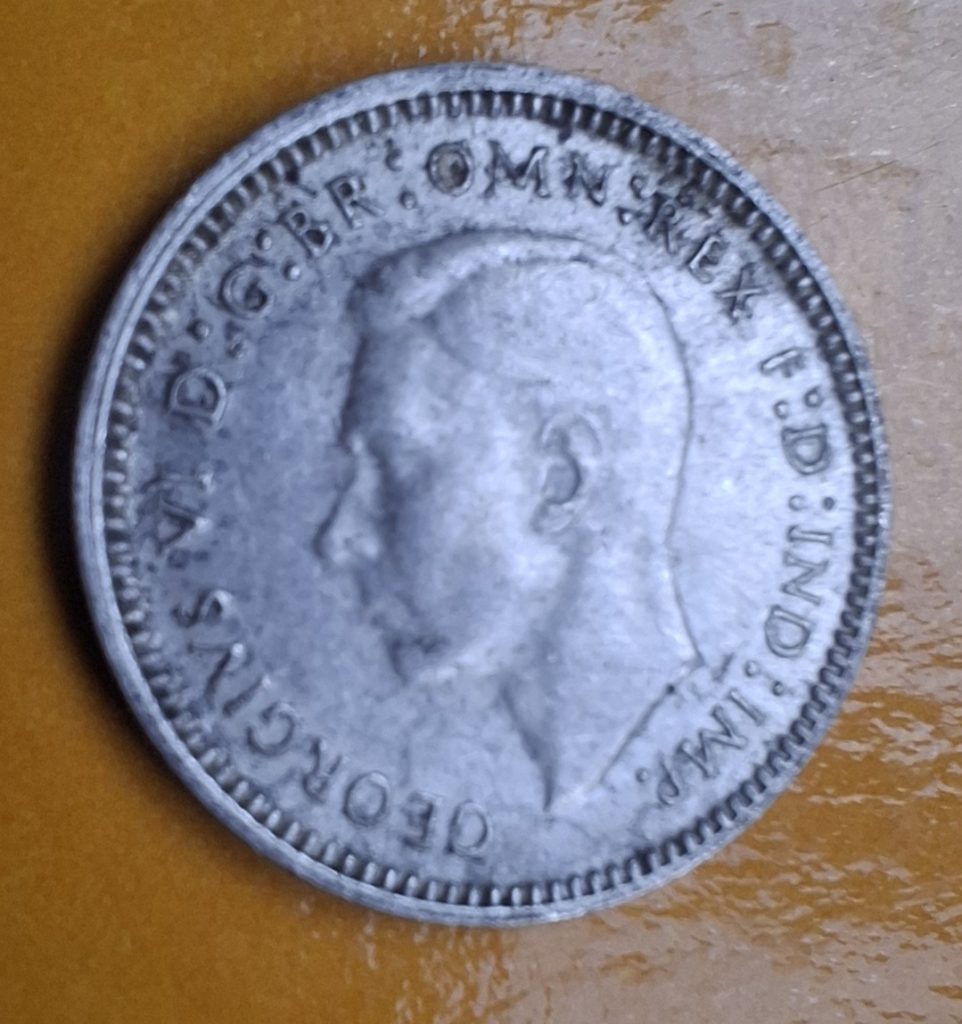
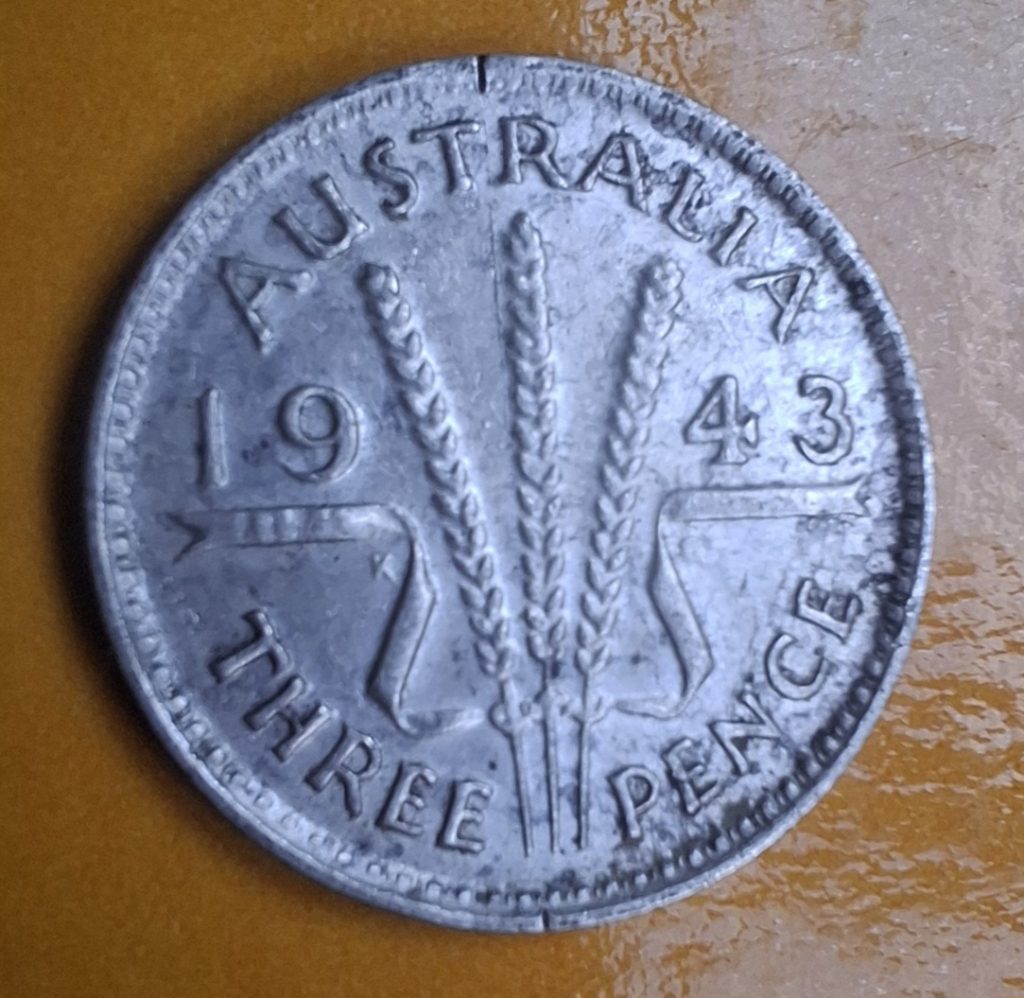
The 1943 Australian threepence is a small but highly appreciated coin among collectors of George VI–era Australian currency. It was minted during World War II — with part of its production outsourced to U.S. mints — and today it is sought after both by theme collectors (Commonwealth / KGVI) and by those who enjoy small silver denominations.
1. Description and technical details
- Country: Australia
- Year: 1943
- Denomination: Threepence (3d)
- Diameter: 16.0 mm
- Weight: ~1.41 g
- Edge: plain
- Composition: sterling silver (92.5% Ag + 7.5% Cu), used from 1938 to 1944
- Obverse: portrait of King George VI (left-facing), designed by Thomas H. Paget
- Reverse: three wheat stalks tied by a ribbon, date split around the design, by George Kruger Gray (initials “KG” usually visible)
2. Where it was minted — mintmarks and variants
Due to wartime production needs, Australia minted threepence coins in multiple locations in 1943:
- Melbourne (no mintmark) — largest mintage (~24.9 million)
- Denver (D) — approx. 16 million minted, mark “D” under the ribbon
- San Francisco (S) — approx. 8 million, mark “S” under the ribbon
These figures may vary slightly depending on catalog sources but are broadly consistent across numismatic references.
3. Rarity
The total mintage for 1943 was high, especially from Melbourne, so circulated examples are easy to find. However, uncirculated (UNC/MS) specimens are significantly more valuable — particularly those with U.S. mintmarks in high grades.
4. Approximate market values (guide only)
Value depends on mintmark, grade, eye appeal, and market demand. The following ranges are typical (in AUD):
- Circulated (VG–F): A$2 – A$10
- Fine to Extremely Fine (VF–EF): A$5 – A$40
- Almost Uncirculated / low Mint State (AU–MS60): A$20 – A$80+
- High-grade Mint State (MS63–MS66): A$100 – A$300, depending on mintmark and quality
Note: The silver melt value is low for this coin (around US$2–4 depending on silver price), so even worn pieces usually hold more value as collectibles than as bullion.
5. Varieties and errors to look for
- Mintmarks: D and S beneath the ribbon on the reverse
- Minor die varieties: small die cracks, dots or strike anomalies appear occasionally and can increase desirability
- Check for cleaning: harsh cleaning decreases value
6. How to judge if your coin is a good collectible
- Check weight and diameter to confirm authenticity
- Identify the mintmark (D or S) or confirm none (Melbourne)
- Inspect for original surfaces — luster adds value
- Avoid cleaning the coin
- Grading by PCGS/NGC can significantly increase marketability, especially in high MS grades
7. Buying and selling tips
- Compare values across catalogues and recent online sales
- Separate coins by mintmark — a 1943 D or 1943 S in UNC is often more valuable
- Provide sharp photos if requesting an appraisal
- Consider professional grading for especially clean coins
Conclusion
The 1943 Australian threepence is a charming piece of World War II history — small, elegant, and widely collectible. For beginners, it’s an affordable entry into pre-decimal Australian numismatics; for seasoned collectors, high-grade or U.S.-minted examples offer strong numismatic interest and potential value appreciation.