In 2016, the United Kingdom minted one of the most symbolic coins in recent British history: the round £1 coin, recognized as one of the last editions of this traditional shape before the introduction of the new 12-sided coin in 2017. This coin marks the end of an era in British numismatics, making it highly sought after by collectors.
Historical Context
The £1 coin was first introduced in 1983 and circulated for over three decades as the standard £1 piece. In 2016, The Royal Mint issued the last version of the round coin before it was officially replaced by the new 12-sided coin in 2017, designed to make counterfeiting more difficult.
The round coin remained legal tender until 15 October 2017, after which it was no longer accepted for daily transactions and could be exchanged at banks or kept by collectors.
Description and Design
Obverse (Heads Side)
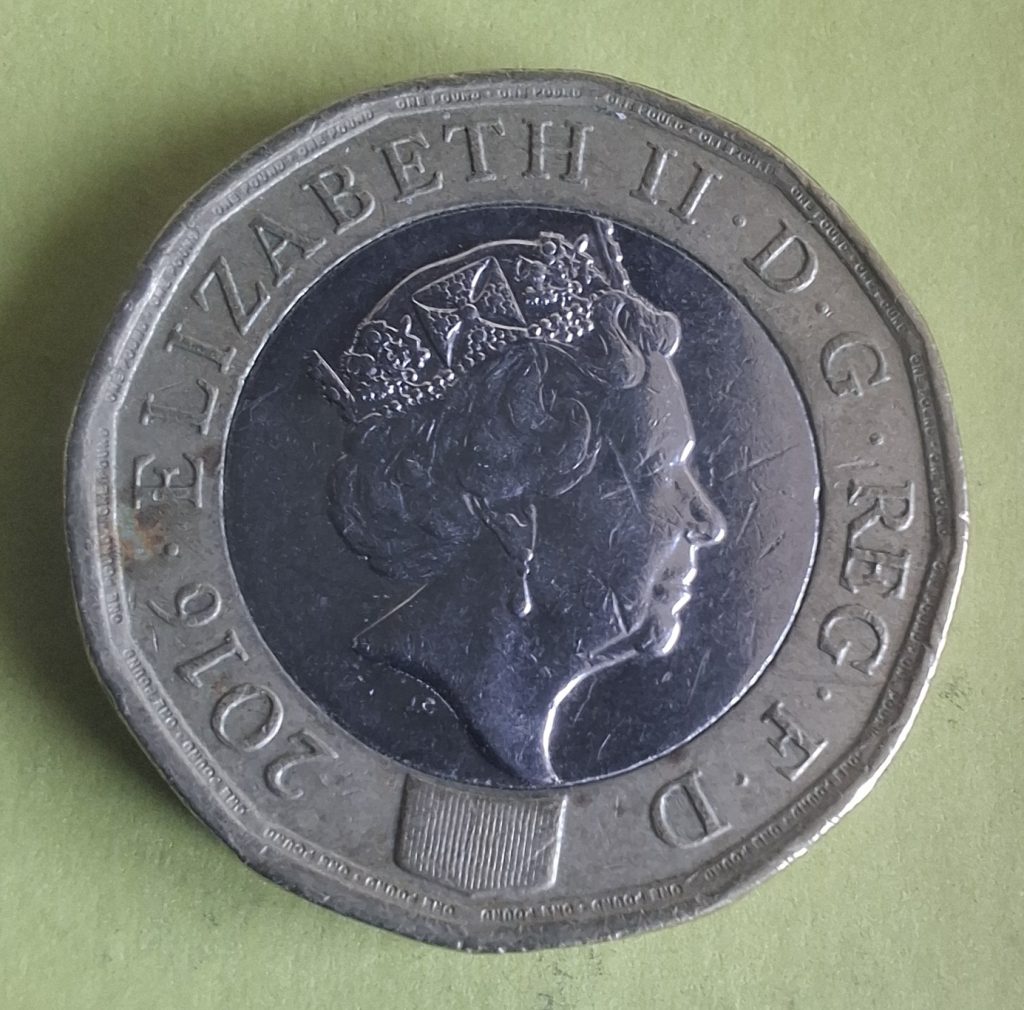
The obverse features the fifth crowned portrait of Queen Elizabeth II, facing right, with a security hologram below and the traditional Latin inscription.
Reverse (Tails Side)
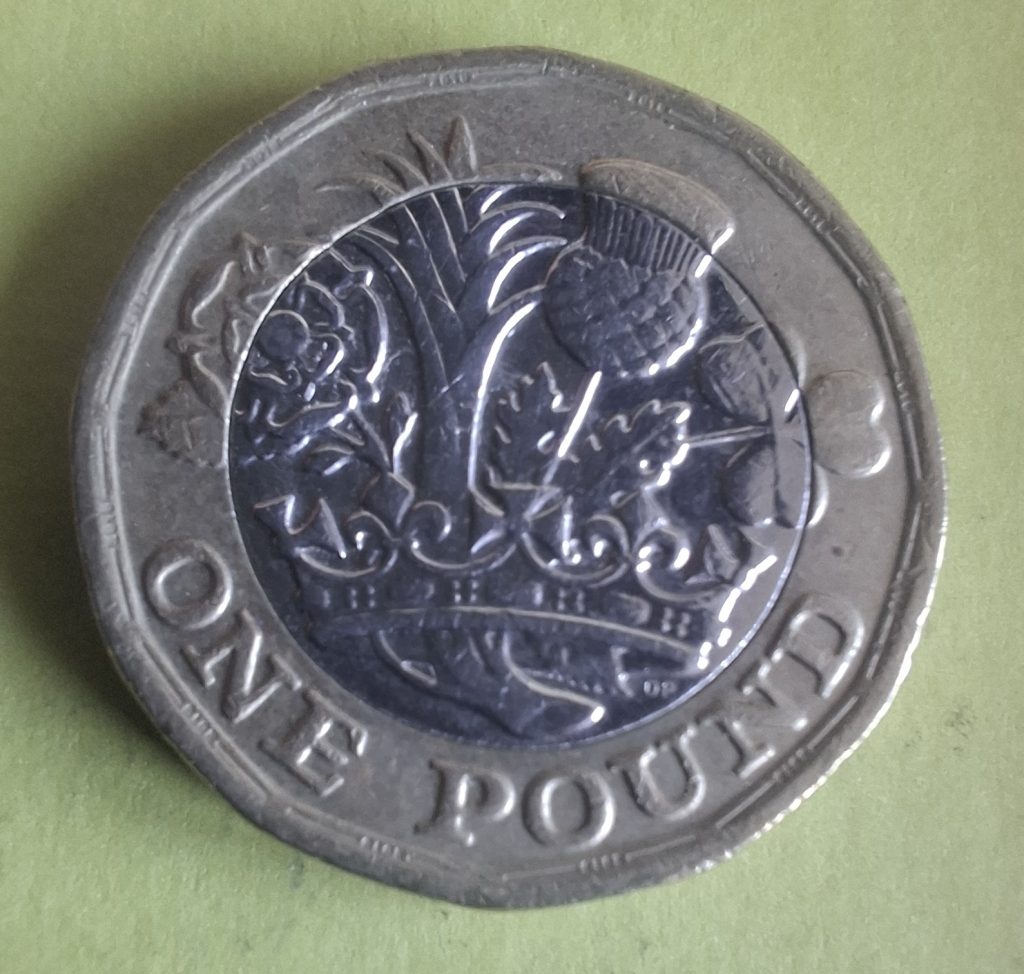
The reverse showcases a design representing the nations of the United Kingdom:
- Rose of England
- Leek of Wales
- Thistle of Scotland
- Shamrock of Northern Ireland
These emblems emerge from a single stem beneath a royal crown—a symbolic image of the union of the four nations.
Technical Specifications
| Feature | Detail |
|---|---|
| Denomination | £1 (One Pound Sterling) |
| Year of Issue | 2016 |
| Composition | Nickel-brass (bimetallic for circulation) |
| Weight | 8.75 g (approx. 9.5 g according to some sources) |
| Diameter | ~23.4 mm (round) |
| Shape | Round |
| Minting Technique | Struck |
| Catalog References | KM#1378 / Numista#100658 |
Numismatic Value (Collector’s Market)
Common Coin
The 2016 £1 coin is not considered rare in circulated condition—hundreds of millions were minted. Its market value for standard examples is generally just above face value, typically ranging from £1.80 to £2.40 (approx. €2–€3) depending on condition (UNC, XF, VF, etc.).
Special Conditions
- Uncirculated (UNC) coins or exceptionally well-preserved pieces can command slightly higher prices.
- Prices listed by private sellers (sometimes speculative) may suggest higher values (€50+, €100–€800), but these rarely reflect the true market value for coins without certification or known minting errors.
Errors and Varieties
There are mentions of rare variants, such as coins with unusual micro-engraving or minting errors, which can fetch significantly higher prices at auctions or among specialized collectors. These cases are extremely rare and require certification by experts.
Why Collectors Are Interested
Although most coins are not especially valuable, the 2016 coin holds interest because:
- It represents a historical milestone: the last round pound coin before the modern 12-sided design.
- It is part of complete UK coin collections.
- It features a symbolic design representing the four nations of the UK.
Conclusion
The 2016 One Pound coin from the United Kingdom is a historically significant piece, especially for collectors of British coins or modern decimal coinage. While most examples are only worth slightly above face value in the collectors’ market, its historical and sentimental value can be higher, particularly in pristine condition or rare variants.