The 1901 1 Heller coin was issued by the Austro-Hungarian Empire, one of Europe’s major powers at the turn of the 20th century. This small denomination coin, now of numismatic interest, reflects the economic and monetary life of the period and the reign of one of Central Europe’s longest-ruling emperors.
Historical Context
In 1901, Austria was part of the Austro-Hungarian Empire, ruled by Emperor Franz Joseph I (1848–1916), whose reign spanned nearly the entire existence of the Empire. The 1 Heller represented the smallest denomination of the Austrian crown (Krone) and was widely used in everyday transactions by workers, merchants, and the general population.
Design and Technical Specifications
The coin has the following physical and minting characteristics:
- Denomination: 1 Heller (1/100 of a crown)
- Year: 1901
- Country: Austro-Hungarian Empire (Austria)
- Composition: Bronze, typically an alloy of copper, tin, and zinc
- Weight: Approximately 1.66–1.67 grams
- Diameter: About 17 mm
- Edge: Plain
- Mint: Vienna, the main imperial mint
- Mintage: Around 52,096,000 pieces struck in 1901
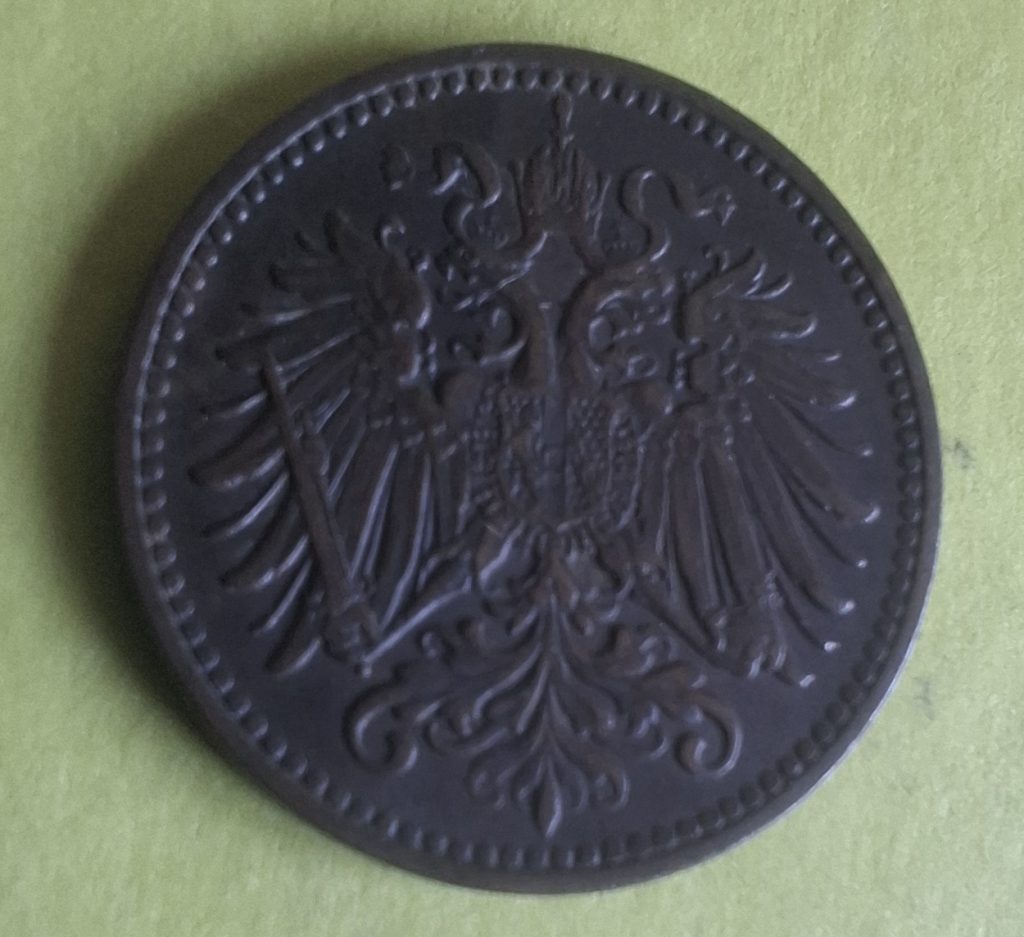
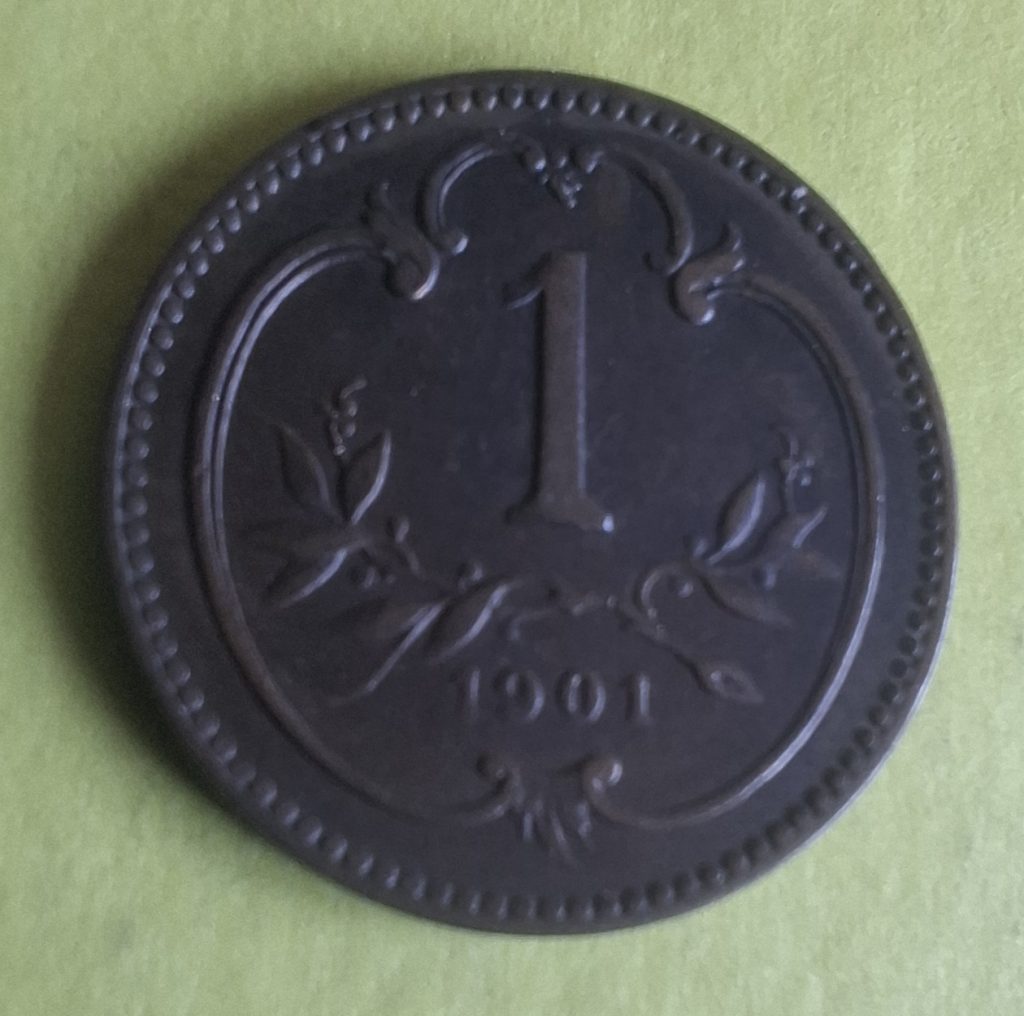
The obverse generally features the imperial coat of arms with the double-headed eagle, symbolizing the unity and authority of the Empire, while the reverse displays the denomination “1” and the year “1901” within a simple decorative design intended for everyday use.
Function and Circulation
The Heller was designed to facilitate small, daily purchases such as food items, basic goods, and minor services. It served a role comparable to modern cents or pennies and circulated widely among the lower and middle classes, making it a true coin of everyday life.
Current Numismatic Value
In today’s collectors’ market, the value of a 1901 1 Heller coin depends largely on its state of preservation. Factors such as wear, scratches, patina, and improper cleaning significantly affect its market price.
Approximate market values are as follows:
- Heavily circulated condition (Good / VG / Fine): about €0.40 to €0.50
- Moderate condition (VF / XF): around €0.48 to €0.52
- Very well preserved or nearly uncirculated examples: slightly higher values, though still modest overall
These prices are indicative and may vary depending on collector demand, professional grading, and market trends. Coins in exceptionally high condition, especially those certified by professional grading services, may achieve above-average prices at specialized auctions or numismatic fairs, although the coin is not considered rare or highly valuable.
Rarity and Collector Interest
The 1901 1 Heller is generally classified as common to moderately scarce, with its high mintage reducing its rarity compared to coins from lower-production years. Collector interest is strongest among those assembling complete sets of Austro-Hungarian coinage or focusing on historical European small denominations.
Due to its affordability, it is often chosen by beginner collectors as well as by more experienced numismatists seeking to complete chronological or thematic collections.
Conclusion
The 1901 Austrian 1 Heller is a representative example of everyday numismatic history. It embodies both the economic reality of the early 20th century and the cultural identity of the Austro-Hungarian Empire under Emperor Franz Joseph I. While its monetary value remains modest, its historical significance and accessibility make it a meaningful and attractive coin for collectors interested in European imperial coinage.