Historical Context and Background
The 10 Agorot coin is part of the Israeli New Shekel (ILS) currency system, which has been in use since 1986. The New Shekel is divided into 100 agorot, and the 10 agorot denomination was widely used in everyday transactions in Israel during the late 20th century.
The 1991 issue is a regular circulation coin, not a commemorative release. However, there are known special variants from the same year, such as limited Hanukkah-related issues, which were minted in smaller quantities and are more desirable among collectors.
Technical Specifications
Material and Dimensions
- Composition: copper–aluminum–nickel alloy (approximately 92% copper, 6% aluminum, 2% nickel), chosen for durability and cost efficiency
- Weight: approximately 4 grams
- Diameter: approximately 22 mm
- Edge: smooth
Design Details
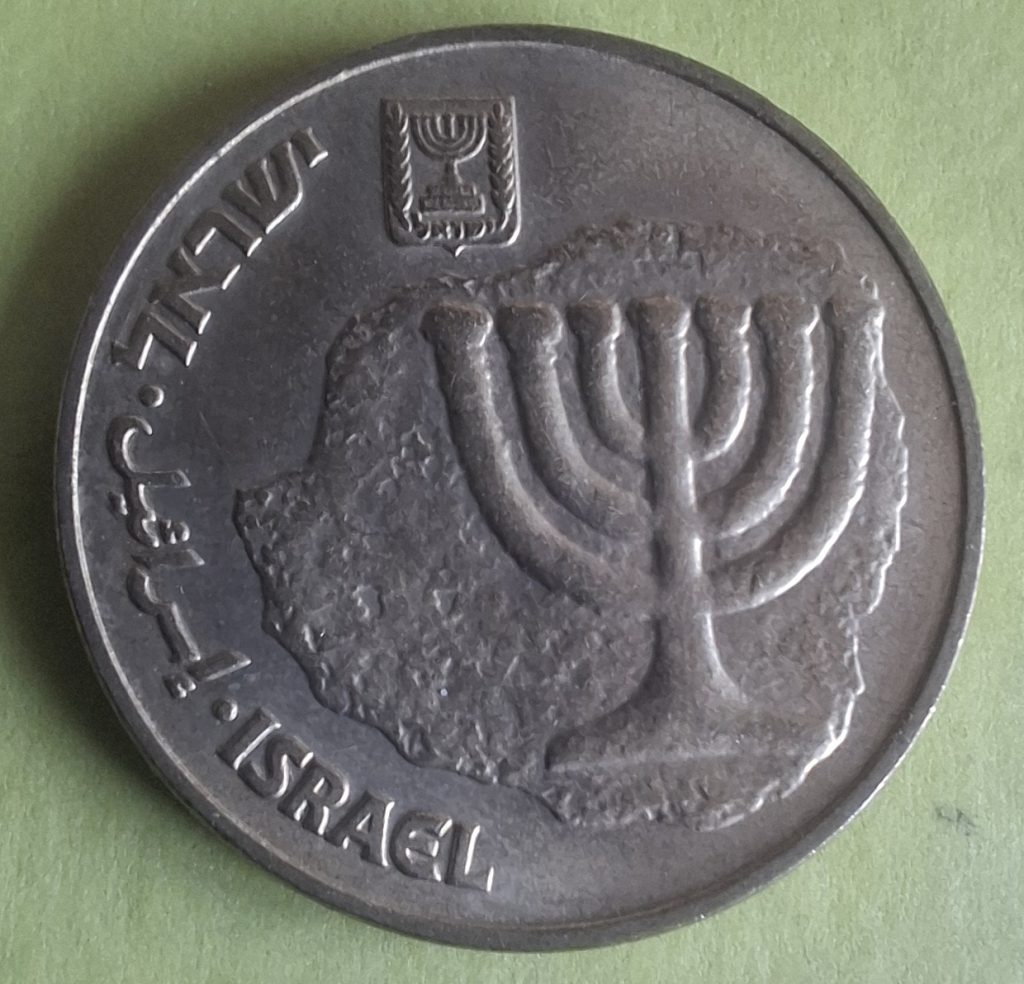
- Obverse: features the national emblem of Israel — the seven-branched menorah flanked by olive branches. The country name appears in Hebrew, English, and Arabic, symbolizing Israel’s multicultural and multilingual identity.
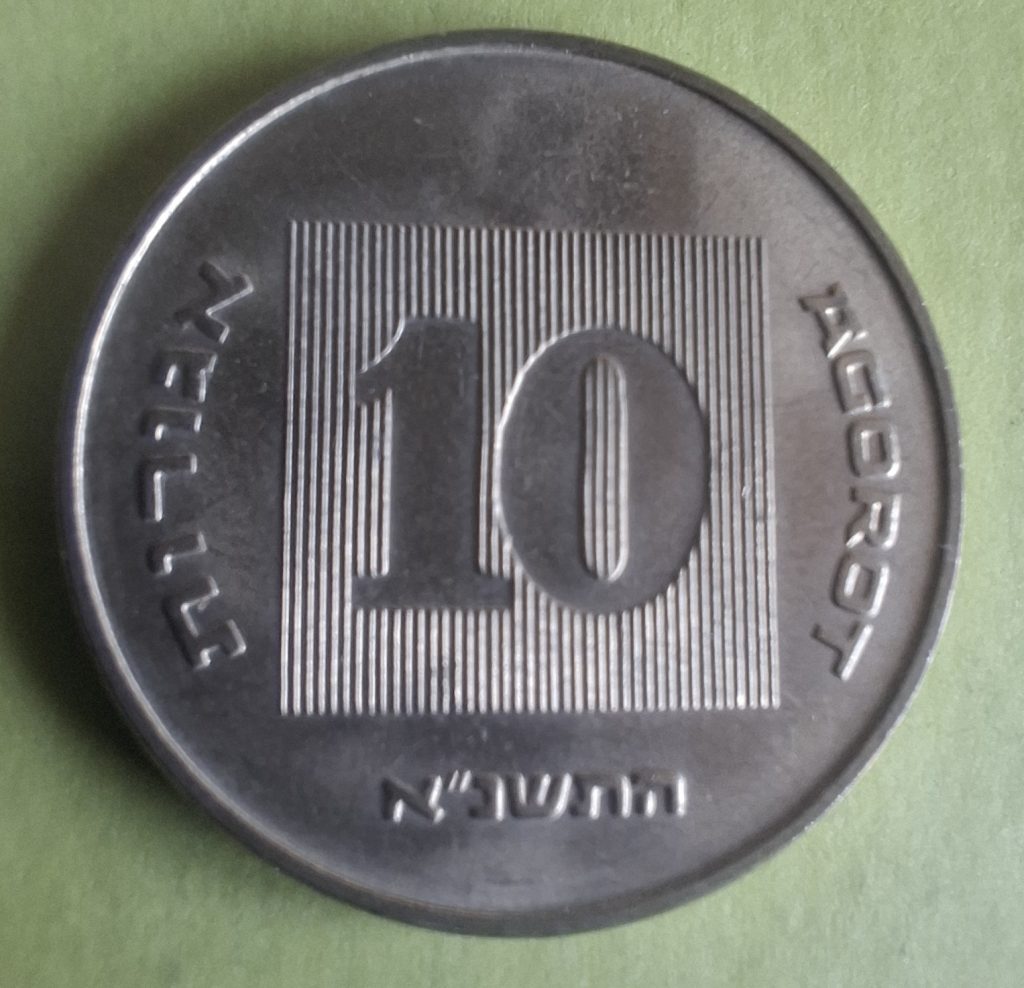
- Reverse: displays the denomination “10 Agorot” in Hebrew and the Hebrew year התשנ"א, corresponding to 1991 (Hebrew year 5751). The value is set within a geometric square frame, characteristic of modern Israeli coin design.
Minor design variations may exist depending on minting batches, which can influence collectability.
Mintage and Rarity
The regular circulation issue of the 1991 10 Agorot coin had a relatively high mintage, estimated at approximately 11,905,000 pieces, making it common on the numismatic market.
Some catalogues also list variants with significantly lower mintages, around 1,488,000 pieces, often associated with special or non-standard issues. These coins are less common and generally more attractive to collectors.
Overall, the coin is considered low in rarity, due to its large production numbers and extensive circulation.
Numismatic and Market Value
The numismatic value of a 1991 Israeli 10 Agorot coin depends heavily on its state of preservation:
- Coins in circulated condition usually hold minimal monetary value, often below a few euros or dollars.
- Examples in Very Fine (VF) to Extremely Fine (XF) condition may command higher prices, reflecting better detail retention.
- Uncirculated (UNC) specimens, especially those with original mint luster, can achieve significantly higher prices in collector markets, occasionally reaching tens of euros or dollars, particularly through auctions or specialized dealers.
Prices should be considered indicative, as market demand, condition grading, and regional interest can cause fluctuations.
Collecting and Preservation
For collectors of modern coinage, the 10 Agorot series represents an important phase in Israel’s monetary history, reflecting the stabilization of the New Shekel system. Proper storage in protective capsules or albums is recommended to preserve surface quality and long-term value.