The XX Centavos 1944 coin is an interesting piece of Portuguese numismatics from the Estado Novo period and belongs to the series of escudo coins that circulated in Portugal during much of the 20th century. Despite its low original face value, this coin attracts collectors because of its age, design, bronze composition, and historical context. For anyone wondering how much the 1944 XX Centavos coin from Portugal is worth, it is important to consider not only the year but also the condition and collector demand.
Characteristics of the 1944 XX Centavos Coin
The 20 Centavos 1944 coin, identified in major catalogues as KM#584, was minted at the Lisbon Mint. The mintage was 7,290,000 pieces, a quantity that helps explain why the coin can still be found by collectors today.
The coin is made of bronze, with a composition generally indicated as approximately 95% copper, 3% zinc and 2% tin. It weighs around 3 grams and has a diameter of approximately 20.5 mm, with a plain edge.
The design is associated with engraver Marcelino Norte de Almeida, an artist responsible for several Portuguese coins from this period. The simple but distinctive design makes the coin easily recognizable to collectors interested in Portuguese escudo coinage.
Obverse of the Coin
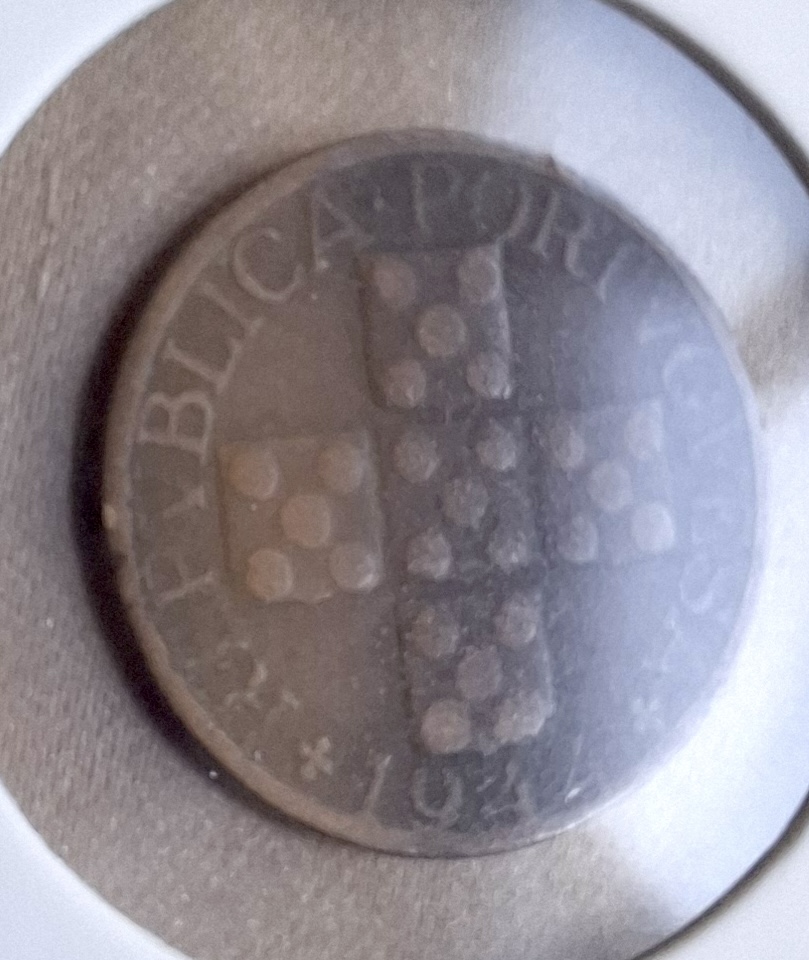
The obverse features the Portuguese coat of arms, consisting of the five shields arranged in a cross, together with the inscription “REPVBLICA · PORTVGVESA” and the date 1944.
The use of the Latin-style letter “V” in “REPVBLICA” and “PORTVGVESA” is one of the characteristics that makes this issue easy to identify.
The Portuguese coat of arms is one of the most traditional elements found on Portuguese coins and gives the piece a strong connection with the country's history and national identity.
Reverse of the Coin
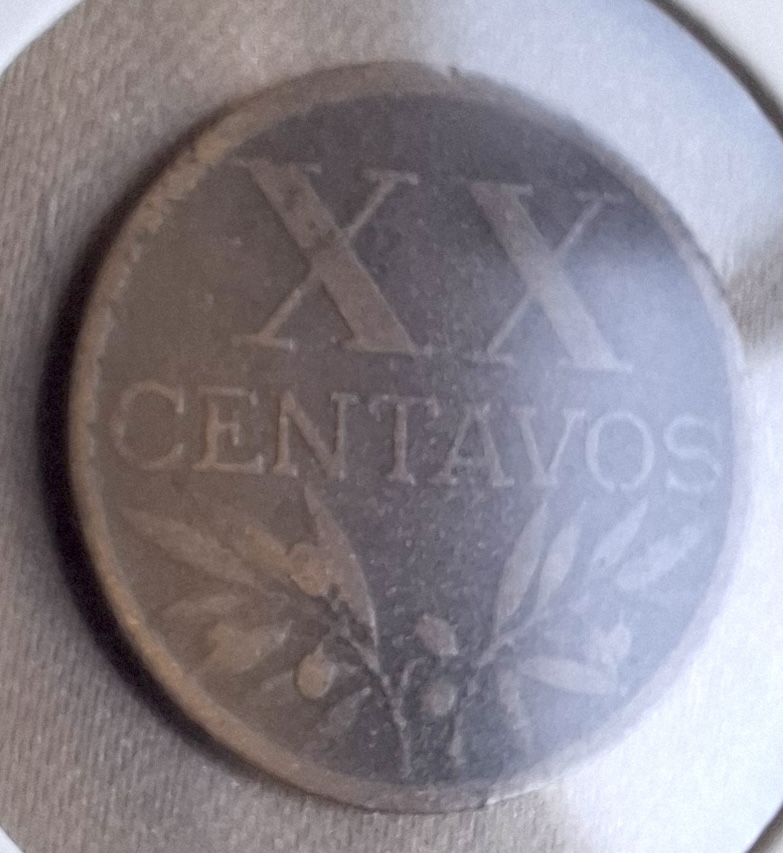
The reverse displays the face value using Roman numerals, with the inscription “XX CENTAVOS”. Olive branches appear in the lower part of the design, while the engraver's identification is positioned near the edge.
The use of Roman numerals to represent the denomination is a distinctive feature of this series. The combination of the denomination, olive branches and engraver's initials makes the reverse particularly recognizable.
How Many XX Centavos Coins Were Minted in 1944?
The 1944 issue had a mintage of 7,290,000 coins.
Although almost 7.3 million examples represent a significant production figure, the number of coins that have survived in excellent condition is naturally much smaller. This is why well-preserved examples can be more valuable and attractive to collectors than heavily circulated specimens.
How Much Is the 1944 XX Centavos Coin Worth?
The numismatic value of the 1944 XX Centavos coin is not fixed. A heavily circulated example may have only a modest market value, while a specimen in excellent condition can be considerably more interesting to collectors.
Indicative values can go from 5€ up to dozens of euros. The condition of the individual coin is one of the most important factors in determining its commercial value.
Condition and Numismatic Value
Condition is probably the most important factor when determining how much a 1944 XX Centavos coin is worth. A coin that spent many years in circulation will normally show scratches, worn details, loss of relief and changes to the bronze surface.
A heavily worn example may have limited value, whereas a coin retaining most of its original details can be considerably more desirable. Coins classified in grades such as Very Fine, Extremely Fine or Uncirculated are particularly interesting to collectors who want to build high-quality collections.
When evaluating the coin, carefully examine the Portuguese coat of arms, the inscription “REPVBLICA PORTVGVESA,” the date, the “XX CENTAVOS” denomination and the olive branches. The sharper and better preserved these elements are, the greater the potential collector interest.
Are There Varieties or Errors on the 1944 XX Centavos?
In addition to the standard issue, references exist to coins showing die deterioration varieties, including examples described as having a “split die”. Such characteristics can attract additional interest among collectors specializing in varieties and minting errors.
However, it is important to distinguish a genuine variety or minting error from damage that occurred after the coin left the mint. Scratches, impacts, corrosion or deformation caused by circulation should not automatically be considered numismatic errors.
How to Identify an Original 1944 XX Centavos Coin
To correctly identify this coin, first confirm the 1944 date, the XX CENTAVOS denomination, the bronze composition, the approximate dimensions and the catalogue reference KM#584.
Physical characteristics are particularly useful when there is uncertainty about authenticity or a possible variety.
It is also advisable to compare the coin with photographs and references from recognized numismatic catalogues. Changes in color or surface appearance do not necessarily indicate a counterfeit, as bronze can develop different patinas over many decades.
Should You Clean a 1944 XX Centavos Coin?
If you have found a 1944 XX Centavos coin, it is generally advisable not to clean it aggressively before determining its potential value. Chemical products, abrasives, polishing compounds or brushes can cause scratches and permanent changes to the surface.
An old coin with natural patina may be more attractive to collectors than a coin that has been recently polished. Before carrying out any treatment, it is preferable to photograph the coin and seek a numismatic assessment.
Is the 1944 XX Centavos Coin Rare?
The coin should not be considered extremely rare simply because of its age. With a mintage of 7,290,000 pieces, the 1944 issue had a relatively large production.
However, there is an important difference between absolute rarity and availability in excellent condition. A heavily worn example may be relatively easy to find, whereas a 1944 coin with excellent preservation, attractive natural patina and minimal signs of circulation can be much more desirable.
For collectors, the combination of date, condition, striking quality and possible varieties is therefore more important than simply the age of the coin.
Conclusion: How Much Is the 1944 XX Centavos Coin from Portugal Worth?
The 1944 XX Centavos coin from Portugal, KM#584, is a representative piece of Portuguese numismatics from the 1940s. Struck in bronze at the Lisbon Mint, with a mintage of 7,290,000 pieces, it features the Portuguese coat of arms on the obverse and the “XX CENTAVOS” denomination with olive branches on the reverse.
Its numismatic value depends primarily on its condition. Available catalogue references indicate modest values for circulated examples, with higher values for coins in better condition. Some catalogues list examples in the highest grades at several US dollars, while market references indicate approximately €1.58 as an indicative value.
If you own a 1944 XX Centavos coin, do not assume that its historical face value corresponds to its current market price. For a more accurate valuation, examine its condition, patina, marks, relief details and any possible varieties. Clear photographs of both sides of the coin can be a useful first step toward identifying the exact specimen.