Introduction
The 5 centavos coin of 1921 from Portugal is a relatively accessible piece but of interest to collectors of Portuguese numismatics, issued during the First Portuguese Republic (1910–1926).
In this article, we will discuss its technical specifications, the historical context of the issue, and its numismatic value — along with the key considerations every collector should keep in mind.
Technical Specifications
- Face value: 5 centavos (0.05 escudos)
- Year of issue: 1921
- Catalogue reference: KM #569 (Krause–Mishler)
- Metal: Bronze
- Weight: approx. 8.00 g
- Diameter: approx. 25.00 mm
- Edge: plain (smooth)
- Obverse design: Typical of the Portuguese Republic style, with the inscription “REPUBLICA PORTUGUESA” in an arc, denomination “5 CENTAVOS”, and date “· 1921 ·”
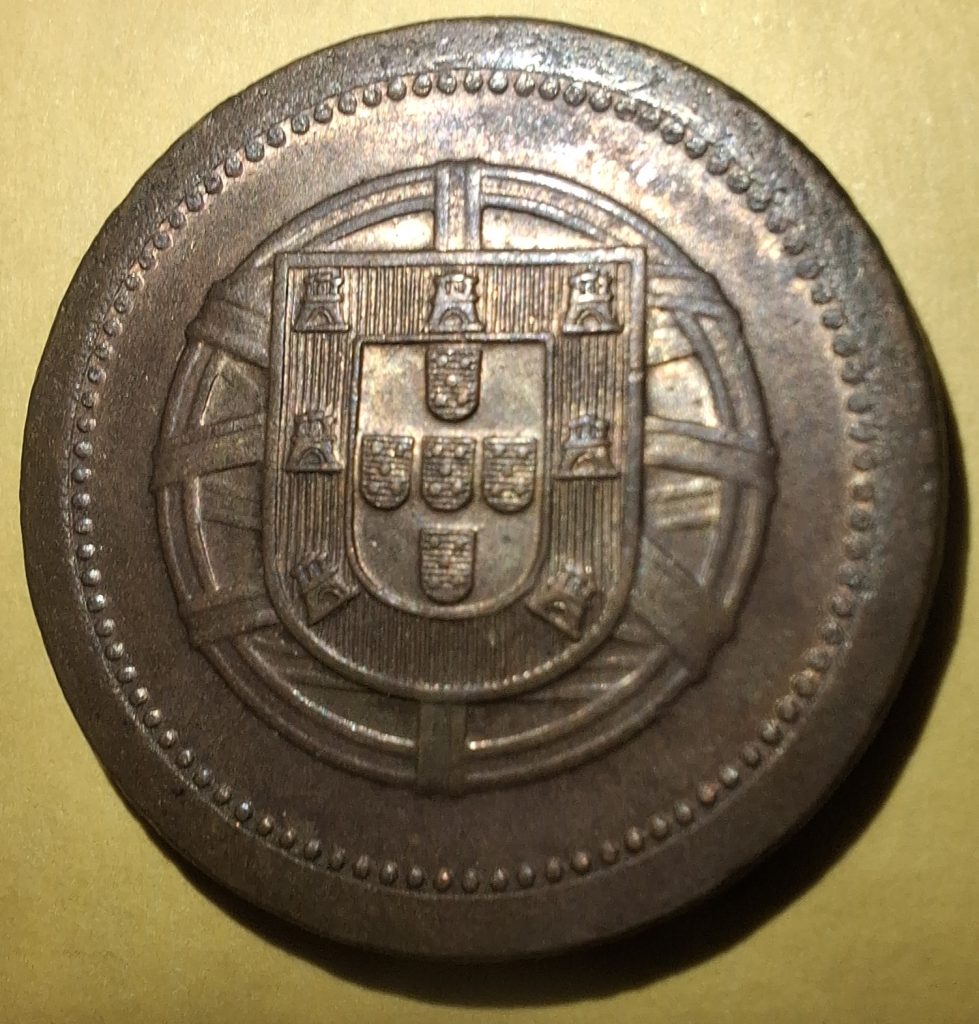
- Reverse design: Portuguese coat of arms over an armillary sphere or decorative motifs (according to catalogues)
- Mintage: 5,916,000 pieces minted for the year 1921
- Rarity note: Despite this relatively high mintage, the rarity of this coin is classified as very low for this type.
Historical Context
- After the proclamation of the Republic in 1910, Portugal adopted the escudo as its new monetary unit (1 escudo = 100 centavos).
- The 5 centavos bronze series (1920–1922) belongs to this Republican phase of monetary normalization.
- The 1921 issue came during a period of economic hardship marked by inflation, political instability, and post-war recovery costs.
Although small-value coins like this had limited economic significance, they played a vital role in the everyday circulation of the time. - While not a coin of great intrinsic or metallic value, it is an authentic representation of early Republican Portuguese coinage — and of particular interest to collectors focusing on centavos of the First Republic.
Numismatic Value and Condition
- According to international catalogues, the approximate market value of this coin (1921 issue) is €2–€3 in Very Fine (VF) condition.
- Portuguese catalogues and online listings show similarly modest prices — for example, in Fine to Very Fine (F/VF) grades, typically around €5–€10.
- In higher grades (EF or AU), prices can be slightly higher but not exceptional — for instance, “Portugal 5 centavos 1921 MBC” is often listed at about €5.
Factors influencing value:
- Condition / preservation (presence of scratches, wear, original lustre, and patina).
- Circulation level: coins that were withdrawn early or saw little use are worth more.
- Minting errors or varieties: uncommon for this issue but can raise interest.
- Collector demand: small-denomination coins with large mintages usually maintain low values, except for uncirculated or rare variants.
Summary:
This coin is not a high-value piece in the numismatic landscape but makes an excellent addition to thematic or complete collections of the Portuguese Republic.
Collector Tips
- Check condition carefully: the less wear, the better its potential appreciation.
- Consult reference catalogues (such as KM #569) and compare with recent sales for realistic pricing.
- Verify authenticity: no widespread counterfeits are known for this coin, but always check for signs of alteration or cleaning.
- Preservation: store in a dry, neutral environment to prevent corrosion; maintain original patina.
- Assess your purpose: if buying simply because it’s inexpensive, be aware of its low resale value; if collecting full series or historical types, it holds cultural and historical merit.
Conclusion
The 1921 5 centavos coin from Portugal is a representative example of First Republic coinage — bronze composition, a mintage of about 6 million, and modest collectible value.
For those collecting centavo denominations or Portuguese monetary history, it’s an appealing and historically rich coin.
For those seeking high-value items, expectations should remain moderate, but its historical charm is undeniable.