Introduction
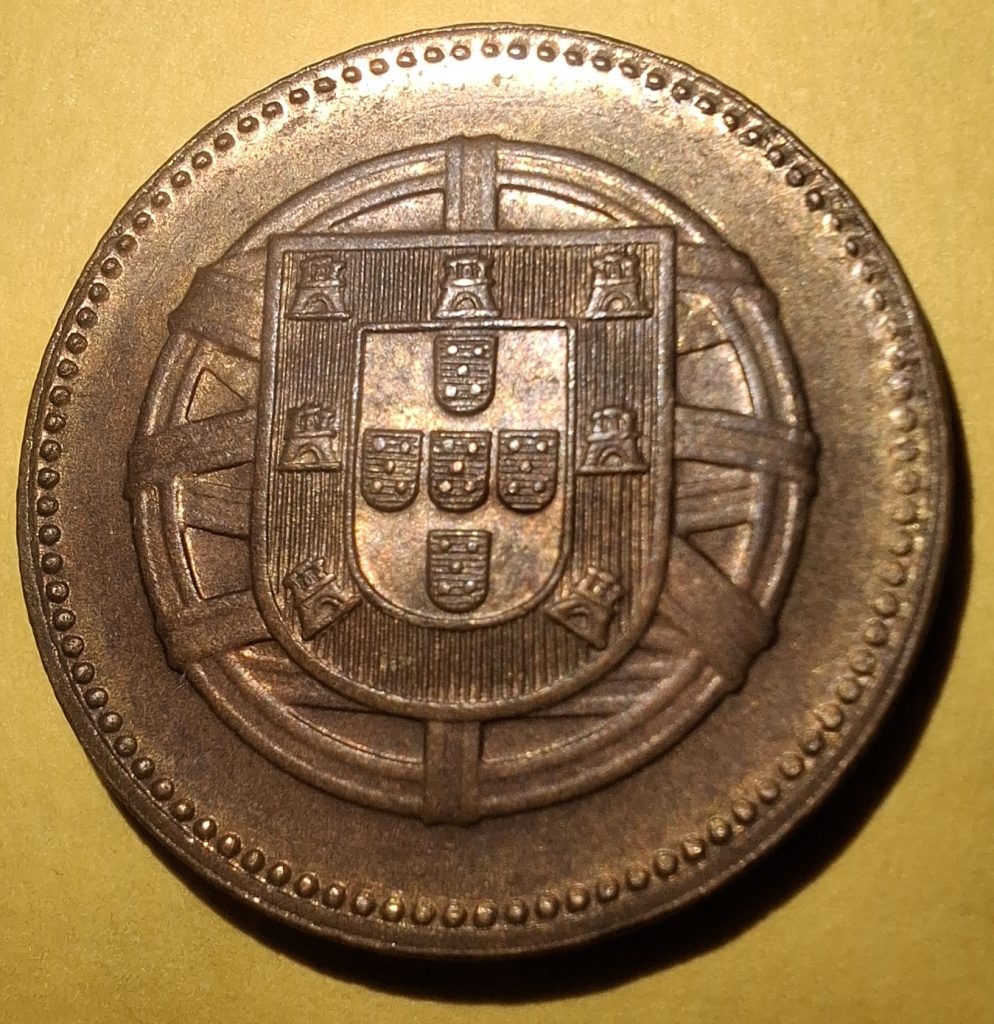
The 2 centavos coin issued in 1918 belongs to the period of the First Portuguese Republic (1910–1926) and is part of the early issues of the Portuguese escudo.
It is a small but interesting piece for collectors — mainly because it exists in two different metal compositions (bronze and iron), and some variants and well-preserved examples are particularly sought after.
Physical Description and Varieties
- Face value: 2 centavos (0.02 escudo)
- Diameter: approx. 23 mm
- Weight (standard bronze type): about 5 g
- Metal: two types exist — bronze (catalogued as KM#568) and iron (catalogued as KM#567).
The iron version is much less common and therefore more valuable when original and in good condition. - Obverse: Portuguese coat of arms (shield over sphere/heraldic elements)
- Reverse: central value “2 / CENTAVOS” surrounded by the legend “REPUBLICA PORTUGUESA” and the date.
- These specifications and catalogue references (KM#567 / KM#568) are listed in major numismatic catalogues and databases.
Mintage and Production
This coin type was struck between 1918 and 1921.
Numismatic sources and catalogues record total mintages ranging from hundreds of thousands to several million pieces across those years.
For 1918, documented mintages vary depending on the metal and catalogue consulted. For example, approximately 4,295,000 coins are reported as the total for that year’s issue (across all types), with much smaller quantities for the iron variant.
These figures confirm that the bronze version is relatively common, while the iron version is considerably scarcer and often described as “rare” by dealers and collectors.
Identification of Varieties, Errors, and Counterfeits
- Distinguishing bronze from iron: a simple magnet test works (iron is magnetic; bronze is not).
Differences in weight and tone also help. Some coins described as “iron” can be misleading (altered alloys or plated), so professional authentication is advised for valuable pieces. - Errors and variants: minor variations exist due to die wear, letterform differences, or minting errors (lamination cracks, double strikes, etc.). Some of these appear in listings and can influence price.
- Counterfeits: modern fakes exist, especially for the rarer iron type.
Look for differences in date numerals, legend thickness, and design proportions. Reliable images and catalogue comparisons are essential for verification.
Numismatic Value – How Much Is a 1918 2 Centavos Worth?
Value depends heavily on three factors: metal (bronze vs iron), condition (grade), and rarity/variety.
Below is a general price guide based on online sales and specialized shops (values in euros; actual market prices fluctuate).
Bronze Variant (KM#568) — the Common Type
- Heavily circulated (G, VG): €3 – €15
- Very Fine to Extremely Fine (VF–XF): €15 – €40
- High grade / Uncirculated (AU–UNC): €40 – €100+ (certified MS examples can reach higher prices)
Typical online listings fall within these ranges.
Iron Variant (KM#567) — Rare and Sought-After
- Circulated examples: already command significantly higher prices than bronze types — from tens to a few hundred euros, depending on condition.
- Very Fine or better: prices can reach several hundred euros — listings include sales around €180, and some specialized dealers or auction houses quote between €200 and €550 for high-quality pieces.
Market Observations
Listings on eBay and numismatic stores show offers ranging from a few euros (common bronze types) to tens or even hundreds of euros for rare variants, high-grade examples, or error coins.
The real sale price depends on collector demand, authenticity, and presentation — coins certified by NGC or PCGS typically achieve higher prices and greater buyer confidence.
Practical Recommendations for Buyers and Sellers
- Check metal and weight (magnet test + scale) to distinguish bronze from iron.
- Compare images with certified examples and consult reference catalogues (KM, Gomes, Numista).
- For rare or valuable pieces, seek professional certification (NGC/PCGS) or expert opinion from a Portuguese numismatist before paying high prices.
- Be cautious with unusually low prices for supposedly rare variants — they may be fakes or altered coins.
Always buy from trusted sellers with good reputations.
Conclusion
The 1918 2 centavos coin is a representative piece of Portuguese numismatics from the First Republic era.
Its main interest lies in the existence of two metal variants (bronze and iron), their different mintages, and variable market values — ranging from just a few euros (common bronze types) to hundreds of euros (rare iron or exceptionally preserved pieces).
For collectors of Portuguese coins, it is a notable and historically meaningful piece — provided one pays close attention to authenticity and preservation quality