Introduction
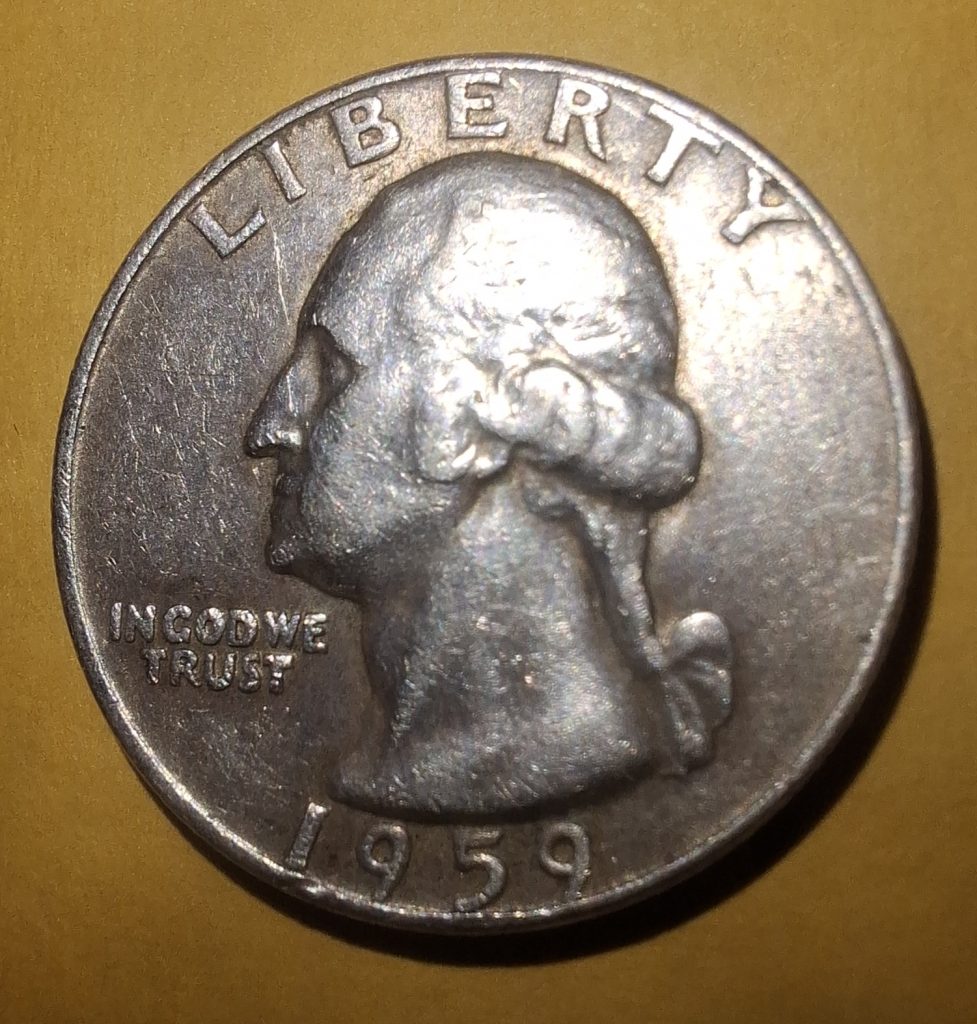
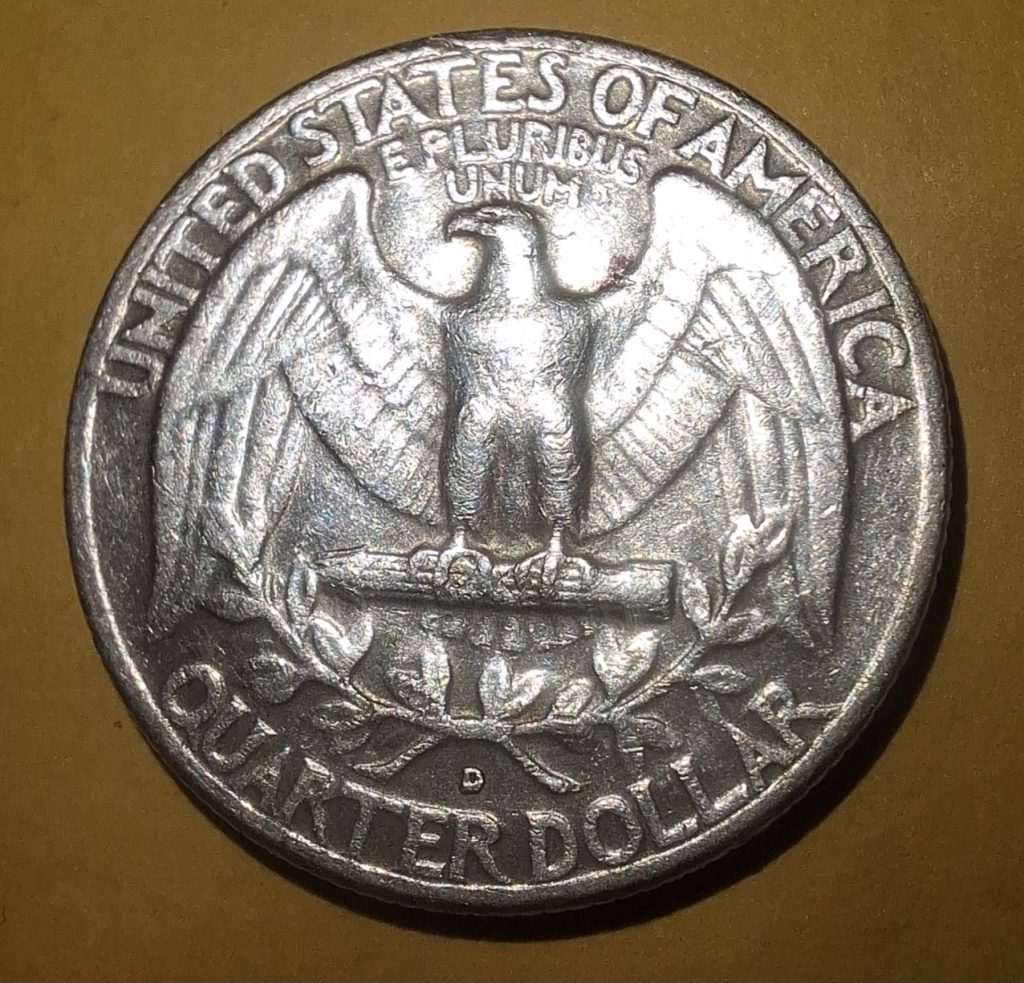
The 1959 Quarter Dollar (Washington Quarter) — struck at Denver (mint mark “D”) — is a representative piece of the pre-1965 U.S. period: a circulating coin made of 90% silver until the switch to clad metal in 1965. It is not an extremely rare issue by mintage, but it attracts collectors as a common silver coin available in good grades, and it also presents some sought-after varieties and minting errors.
Technical Data and Specifications
- Year / Type: 1959 — Washington Quarter (original series 1932–1964).
- Mint: Denver — mint mark D.
- Composition: 90% silver / 10% copper.
- Weight: ~6.25 grams (standard silver quarter weight).
- Diameter: 24.3 mm.
- Silver content (ASW): ≈ 0.18084 troy oz of silver per coin.
Production and Mintage
In 1959 the Denver Mint struck 62,054,232 Washington Quarters — a high mintage that makes the issue common in the 1959 series, especially in circulated grades. This large mintage is one reason circulated examples tend to trade closer to their silver-metal value than to the prices of very rare coins.
Notable Varieties and Errors
Although the 1959-D is not famous for a single extremely rare variant, collectors seek:
- Repunched Mintmark (D/D), cataloged as FS-501 — a variety where the D mintmark was repunched, leaving a slight secondary impression; these typically sell for modest premiums above common examples.
- Reverse differences (Type B / FS-901) and possible DDOs (doubled die obverse) or proof-like high-contrast examples are also observed and sought after — when present they increase interest and market value.
Numismatic Value — General Ranges (Summary)
Important: catalog/guide and market prices fluctuate; the ranges below are indicative. For precise valuations consult an up-to-date price source or a specialist (PCGS/NGC/Heritage/Greysheet).
- Circulated common (VG–XF): typically worth slightly above the silver melt value (many listings show prices around US$10–$20 for circulated examples depending on condition).
- Uncirculated (MS60–MS63): values rise into the low-to-mid range (tens to a few hundred dollars) depending on grade.
- Gem Uncirculated / High grade (MS65+): can reach substantial prices; guides show ranges from about US$13 up to over US$1,000 depending on grade, rarity of the specific variety, toning, and strike quality.
- Auction records / exceptional pieces: a 1959-D graded MS67 sold for US$14,950 (Heritage, April 2012) — pieces in that tier are extremely rare and typically appear only in top collections.
For specific varieties (e.g., repunched mintmark FS-501), documented sales at auction houses like GreatCollections have shown prices from about US$50–$190 over recent decades depending on grade — so varieties increase value but do not usually reach five-figure sums except in exceptional circumstances.
How to Identify and Evaluate Your Coin
- Check the D mintmark (on pre-1968 Washington Quarters the mintmark appears on the obverse to the right of the date) — confirm position and style.
- Examine wear vs. luster: wear on high points (Washington’s hair, the bust, the eagle’s wings) indicates circulation — VF/XF grades are common. Coins with original luster and minimal contact may be uncirculated (MS).
- Look for errors/varieties: use a loupe or stereoscope to check for repunched mintmarks, doubled dies, unusual die lines, or strike marks — comparative photos and FS variety catalogs are helpful.
- Professional certification: for coins you believe to be valuable (MS-65+ or notable varieties), grading by PCGS or NGC increases liquidity and buyer confidence; historically, high grades command significant premiums.
Tips for Selling and Preservation
- Preservation: store in rigid capsules (coin slabs) or Mylar flips; avoid PVC and direct handling.
- Assessment: if you suspect a coin is valuable, send clear, high-resolution photos to a trusted dealer or consider professional grading.
- Sale: use reputable auction houses (Heritage, GreatCollections) or certified dealers; be prepared for auction fees and buyer premiums on high-grade pieces.
Conclusion
The 1959-D Washington Quarter is a classic silver coin — relatively common in mintage (62 million) — with its base value influenced both by its silver content and by condition. For most circulated examples the value follows the price of silver plus a small collector premium; uncirculated specimens and well-preserved varieties can command significant premiums, reaching thousands of dollars in exceptional cases. If you own one or more of these coins, examine them carefully, compare them with reference photos and variety lists, and consult professional grading or a reputable dealer when you suspect an item may be valuable.