Introduction to the Coin
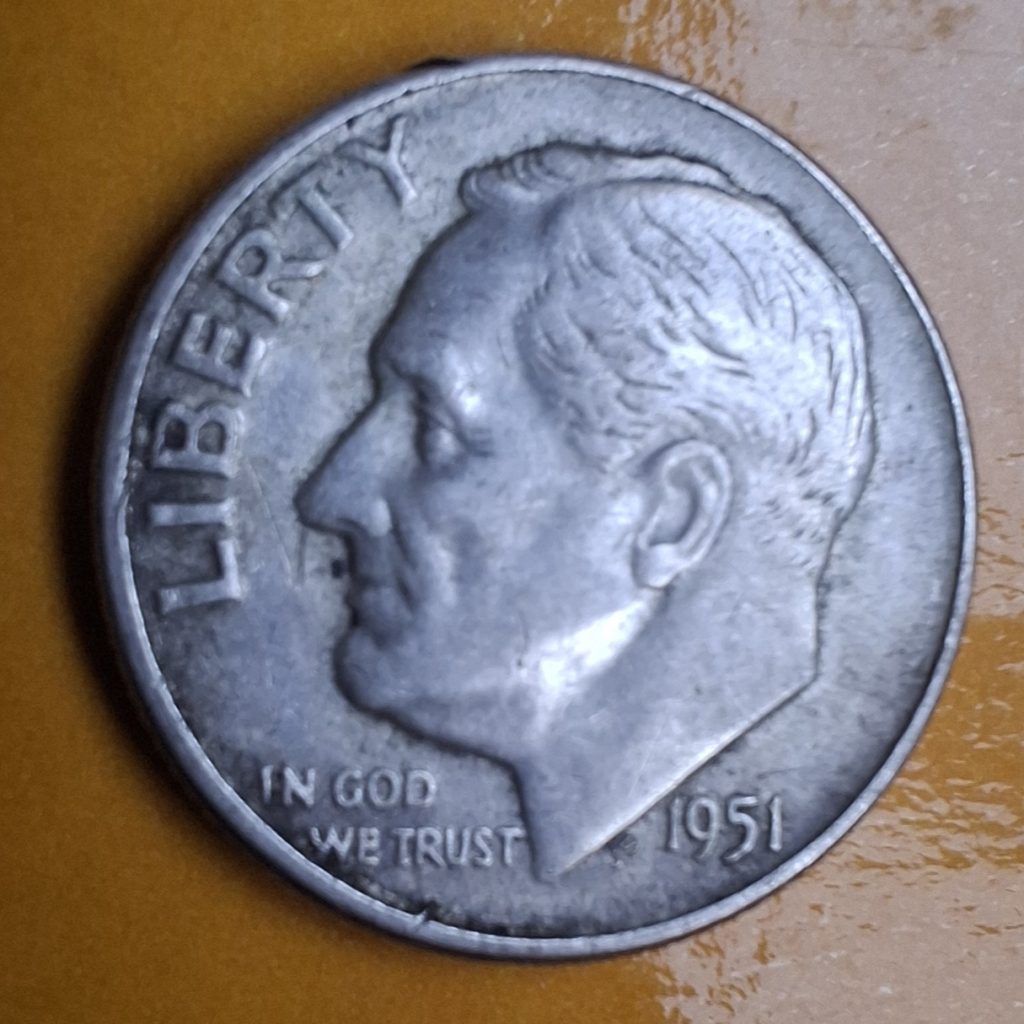
The 1951 United States 10-cent coin, the Roosevelt Dime, is part of the regular U.S. Mint series and holds multiple points of interest for collectors: precious metal content, mint mark variety, condition, and possible minting errors or variants.
Description and Technical Details
- Year: 1951
- Face Value: US $0.10
- Type: Roosevelt Dime (honoring Franklin D. Roosevelt)
- Composition: 90% silver, 10% copper
- Weight: Approximately 2.50 g
- Diameter: 17.9 mm
- Edge: Reeded
- Designer/Engraver: John R. Sinnock (“JS” initials under the bust)
- Design:
- Obverse: Bust of Franklin D. Roosevelt facing left, with “LIBERTY,” “IN GOD WE TRUST,” and the date “1951”
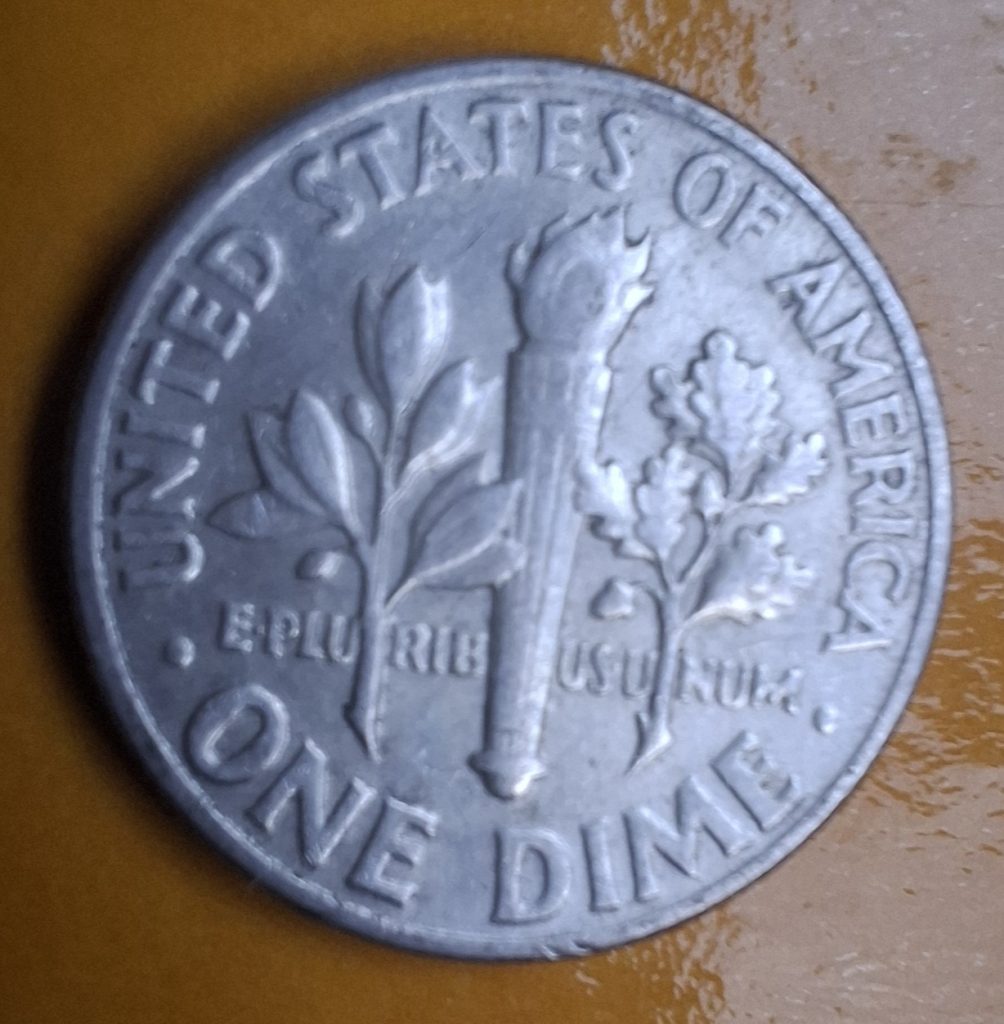
- Reverse: Central torch (symbolizing liberty), olive branch on the left (peace), oak branch on the right (strength), with inscriptions “UNITED STATES OF AMERICA,” “E PLURIBUS UNUM,” and “ONE DIME”
- Mint Mark Varieties:
- No mint mark = Philadelphia
- “D” = Denver
- “S” = San Francisco
- Approximate Mintage:
- Philadelphia: ~103,880,102
- Denver: ~56,529,000
- San Francisco: ~31,630,000
- Silver Melt Value: Approximately US $3.48
Historical Importance and Context
The Roosevelt Dime was introduced in 1946, one year after Roosevelt’s death, to honor his legacy, including his fight against polio and the establishment of the March of Dimes campaign. It replaced the Mercury Dime series (1916–1945).
Silver production of Roosevelt Dimes continued until 1964; post‑1964 dimes are copper-nickel, making pre‑1965 silver coins more appealing to collectors.
The 1951 coin was minted in standard circulation quantities, but as a pre-1965 silver coin, it carries extra value compared to modern clad coins.
Numismatic Value (Collector’s Value)
The collector value depends on: condition (grade), mint mark, special features (like “Full Bands”), and whether it’s a proof or regular strike.
- Philadelphia (no mint mark): Circulated condition ~US $2–3; uncirculated (MS) ~US $10–50 or more depending on grade.
- Denver (“D”): Similar to Philadelphia in average grades; high-grade certified examples can reach ~US $2,000+.
- San Francisco (“S”): Less common, especially in high grades; an MS68 coin has sold for over US $4,800.
- “Full Bands” Feature: Fully defined horizontal lines on the torch reverse increase value.
Even circulated coins have a minimum value roughly equal to their silver content.
Factors Affecting Value
- Condition: Better detail, minimal wear, and good surfaces increase value.
- Mint Mark: “S” tends to be more valuable due to lower mintage.
- Special Varieties/Errors: Double strikes, repunched mint marks, or Full Bands add value.
- Certification: Coins graded by PCGS or NGC often command higher prices.
- Silver Price: Being 90% silver, melt value affects minimum price.
- Collector Market: Demand and rarity perception influence pricing.
Considerations for Collectors or Investors
- Identify the mint mark: none (Philadelphia), “D” (Denver), or “S” (San Francisco).
- Examine the coin’s condition: sharper details increase value.
- Look for “Full Bands” on the torch reverse.
- Even worn coins retain value due to silver content.
- High-grade coins may benefit from professional grading for higher resale value.
- 1951 coins are common for the series; rarity comes mainly from condition or special features.
- Consider market trends, shipping, and local demand if buying outside the U.S.
Summary
The 1951 U.S. Roosevelt Dime is an interesting numismatic piece: 90% silver, with three mint mark varieties, and potential for value depending on condition or special characteristics. Circulated coins generally have a value slightly above their silver content; high-grade, “S” mint mark, or Full Bands examples can reach significantly higher values. For collectors seeking accessible silver coins with historical significance, the 1951 Roosevelt Dime is a solid choice.