Brief Introduction
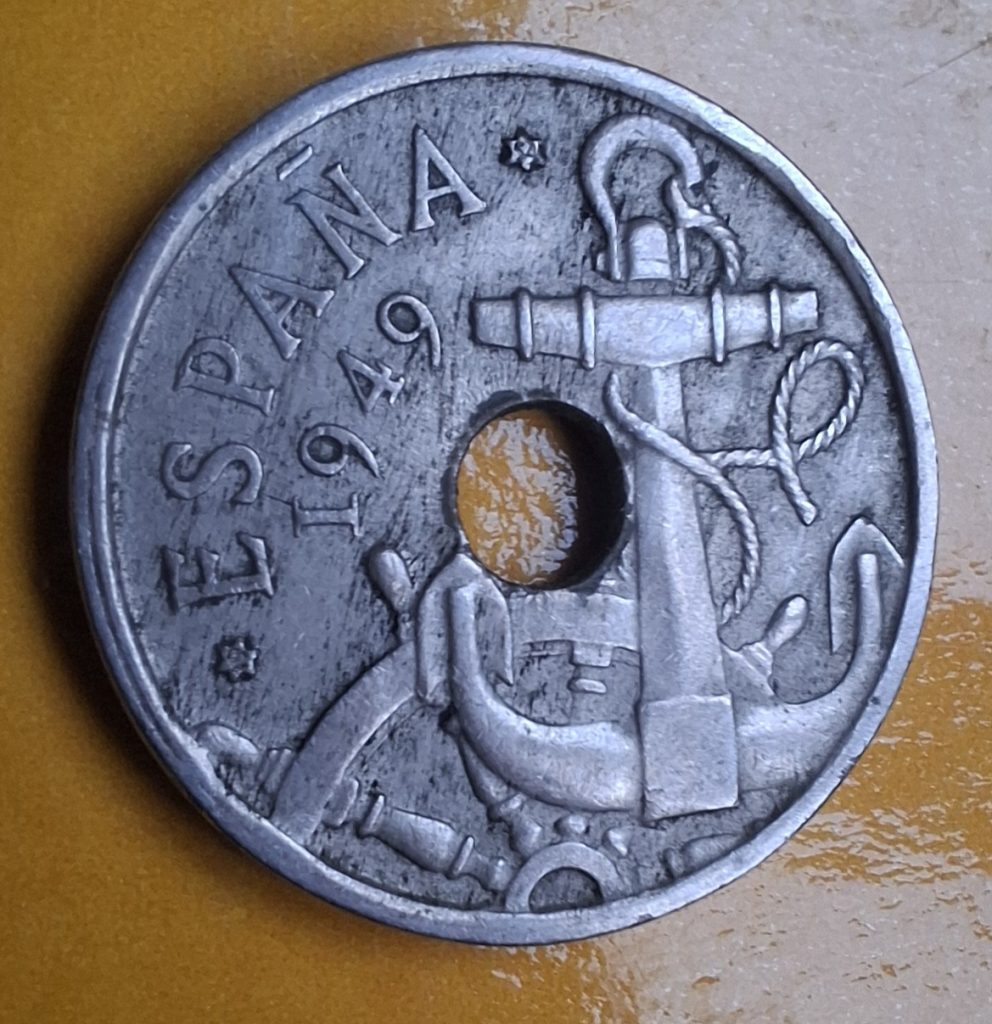
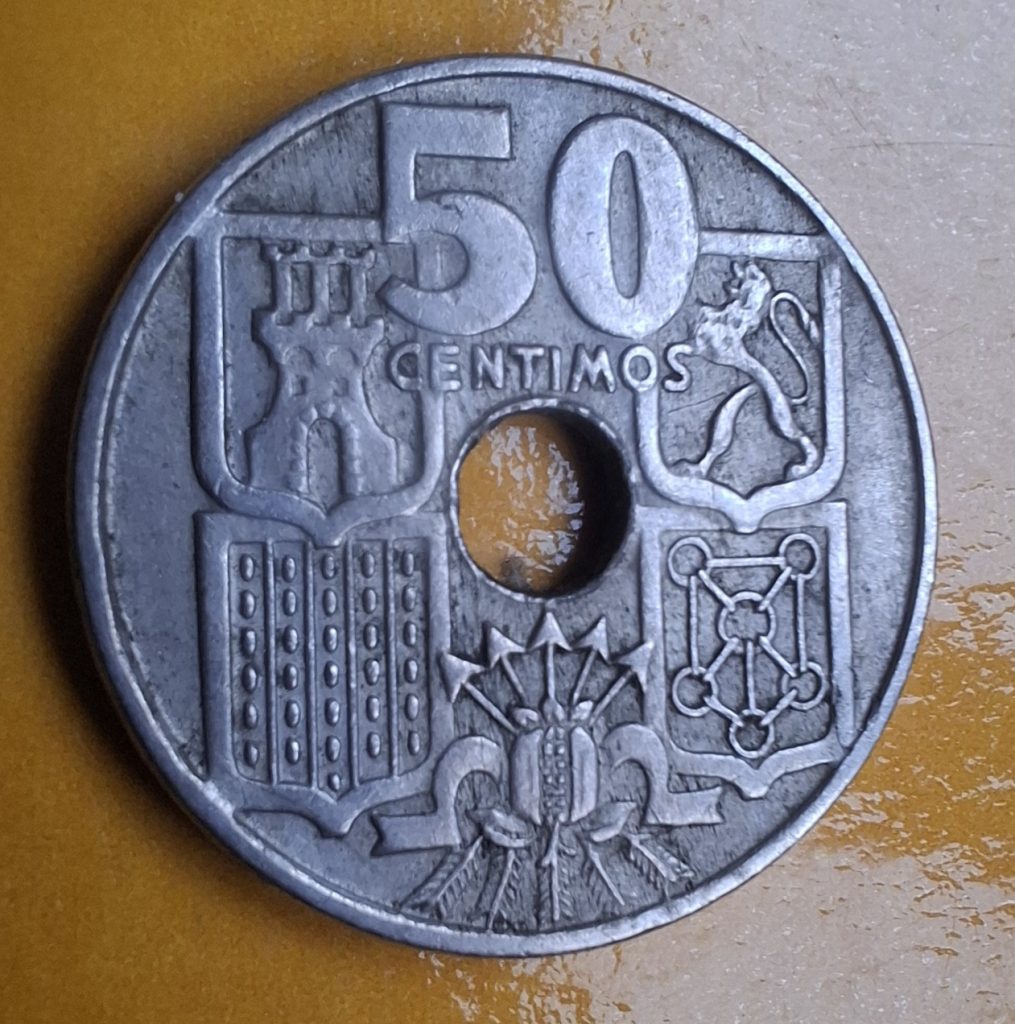
The 50 céntimos coin dated 1949 belongs to the series issued during the Franco regime. It is easily recognized by its central hole, the anchor design on the obverse, and the coats of arms on the reverse. Although the coin is common, several varieties and minting anomalies exist, especially those related to the stars indicating the actual year of minting, which can strongly influence collector value.
Technical Specifications
- Issuing country: Spain (Franco era)
- Visible date on the coin: 1949
- Material: Cupronickel (approx. 75 percent copper / 25 percent nickel)
- Weight: Around 4.0–4.1 g
- Diameter: Approximately 20–21 mm, with a central hole
- Obverse: Anchor and nautical motifs with the word “ESPAÑA” and the date “1949”
- Reverse: Face value “50 CÉNTIMOS” with the national emblems
The “Stars” and the Real Minting Year
Spanish coins from this era display a large date on the main design, but the actual year of minting is shown by small digits inside one or two stars. This is why pieces marked “1949” may have stars reading 51, 52, 53, 54, 56, 62, and others. These tiny numbers are essential for identifying the exact variety and relative rarity.
Main Varieties and Mintages
Numismatic catalogues such as NGC, Numista and specialized Spanish guides list several mintages tied to each star variation. Many varieties were minted in the millions, while a few had smaller outputs. The star number is the key factor in rarity.
Errors and Collectible Varieties
Some pieces show rare star markings, distorted digits, or minting errors including misaligned dies or unusual symbol variations. These can significantly boost value, and certain documented examples have sold for much higher prices than standard pieces.
Market Value (Indicative)
Note: Values fluctuate depending on condition, rarity and selling venue.
- Common circulation-grade coin: €1 to €10
- Better preserved pieces (Fine to XF): €5 to €30 depending on star variety
- Uncirculated or near-uncirculated pieces: €20 to €100+
- Rare varieties or verified mint errors: €50 to several hundred euros, sometimes more in auctions
Authentication Tips
- Check the star(s): Use magnification to identify the digits inside the star.
- Verify weight and diameter: Significant deviations can indicate a counterfeit.
- Avoid cleaned coins: Cleaning marks reduce collector value.
- For rare varieties, consult a professional numismatist or have the coin certified by NGC/PCGS.
Storage and Selling Advice
Keep the coin in Mylar flips or capsules, away from humidity. For rare varieties, auction houses or specialized dealers usually achieve higher prices than quick online listings.
Conclusion
The Spanish 50 céntimos 1949 is a widely collected coin, easy to find in common grades but highly interesting due to its many star varieties and occasional minting anomalies. Identifying the star number and evaluating the condition are the first steps in determining its true market value.