1. Historical Context
- The 10 Heller coin belonged to the Austro-Hungarian Empire, during a turbulent period: it was minted during World War I.
- The emperor at the time was Franz Joseph I, who reigned until 1916.
- The coin was part of the old “Krone / Corona” currency system, where 1 Krone = 100 Heller.
- After the dissolution of the Austro-Hungarian Empire (after the war), these coins ceased to circulate.
2. Physical Characteristics
- Denomination: 10 Heller
- Material: Copper, nickel, and zinc alloy (Cu 500, Zn 400, Ni 100)
- Weight: approximately 3.00 g (some sources: ~3.06 g)
- Diameter: 19 mm
- Thickness: about 1.5 mm
- Edge: reeded (grooved)
- Orientation: medal alignment (both sides oriented the same way)
3. Design – Obverse and Reverse
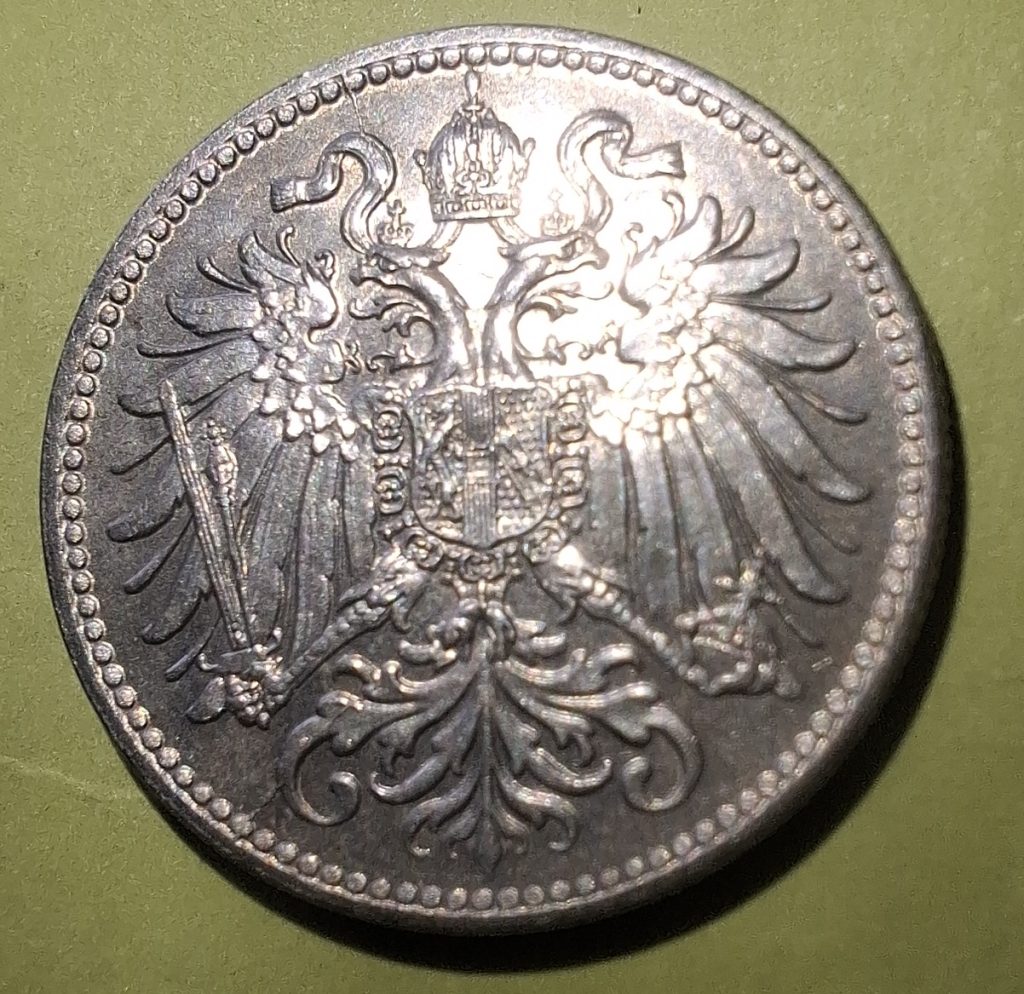
- Obverse (front): features the Habsburg coat of arms (Austrian shield) over the crowned double-headed eagle.
- Engravers: Anton Scharf and Rudolf Neuberger.
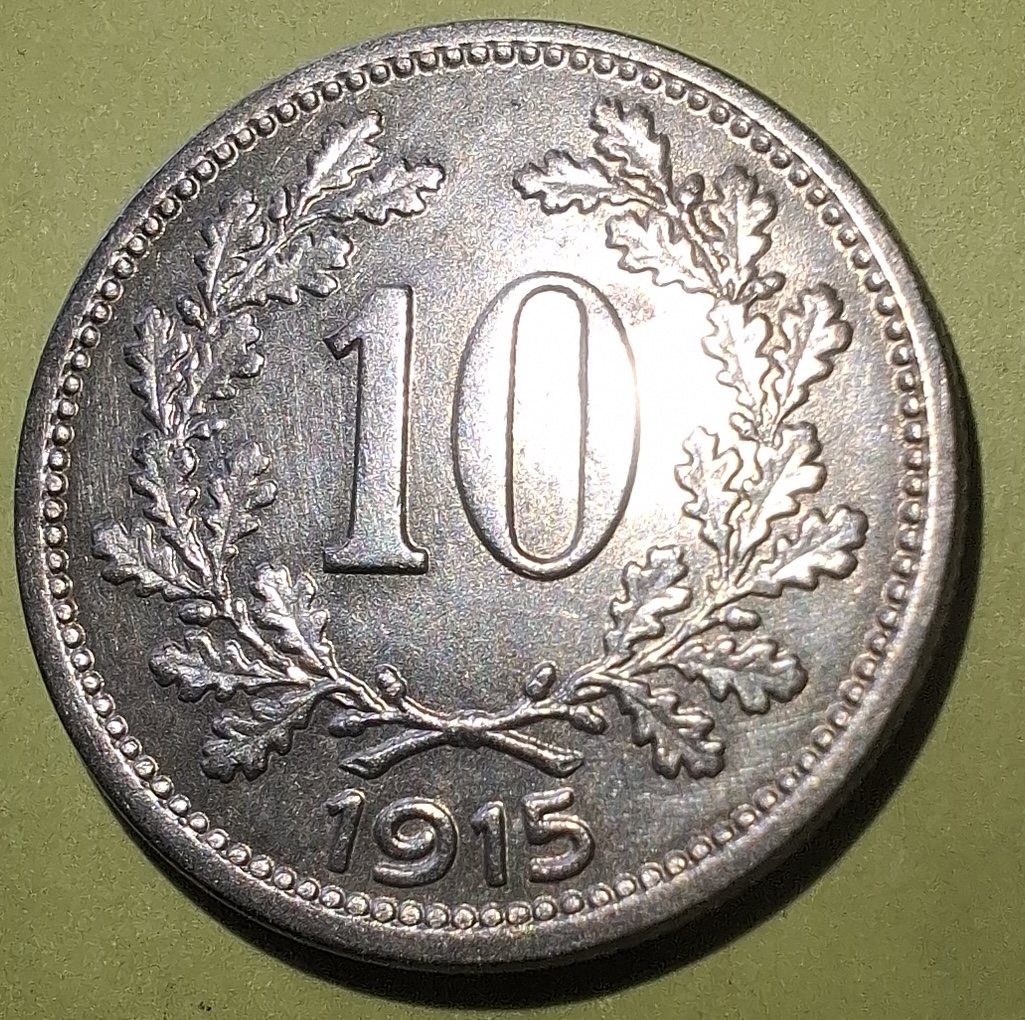
- Reverse (back): shows the denomination “10” surrounded by a wreath, with the year “1915” below.
- Engraver: Stefan Schwartz.
4. Mintage
- In 1915, 18,366,000 coins were minted.
- There are also 1916 coins of similar design, with even higher mintage (~27,487,000).
- The relatively high mintage makes it a common circulation coin of the time.
5. Monetary Status
- The coin is demonetized (no longer legal tender).
- It is considered a common collector’s coin from the Austro-Hungarian Empire period.
6. Numismatic Value
- Value depends heavily on condition (grade).
- Estimates for 1915 coins: approximately US$0.34 (very worn) to US$6.04 (uncirculated).
- In euros: roughly €0.29 to €5.22 depending on preservation.
- Some coins on numismatic marketplaces sell for around €5.00.
- Private listings often show lower prices, reflecting that it is not extremely rare.
7. Rarity and Collector Appeal
- Despite high mintage, not all coins survived in good condition, which gives some appeal to collectors seeking well-preserved specimens.
- Popular among collectors of Austro-Hungarian coins, but not considered a premium or highly rare piece.
- Its simple design and status as a circulation coin make it a good entry-level coin for collectors of historic Austrian coins or World War I-era coins.
8. Collecting Considerations
- Verify authenticity: Always confirm authenticity when buying old coins, especially from auctions or private sellers.
- Condition matters: Request detailed photos of obverse, reverse, and edge or check if the coin has been certified (“slabbed”) to potentially increase its value.
- Provenance: Knowing the origin of the coin (collection, auction, inheritance) helps assess its collector value.
- Secondary market: Check numismatic marketplaces and collector communities, as actual prices vary depending on grade and demand.
Conclusion
The 10 Heller coin (1915) from Austria is historically interesting, representing a challenging period (World War I) under the Austro-Hungarian Empire. Numismatically, it is not extremely rare, but well-preserved examples can have value for collectors. Its current monetary value is relatively low for circulated examples, making it accessible for those beginning a collection of historical Austrian coins.