Historical Context
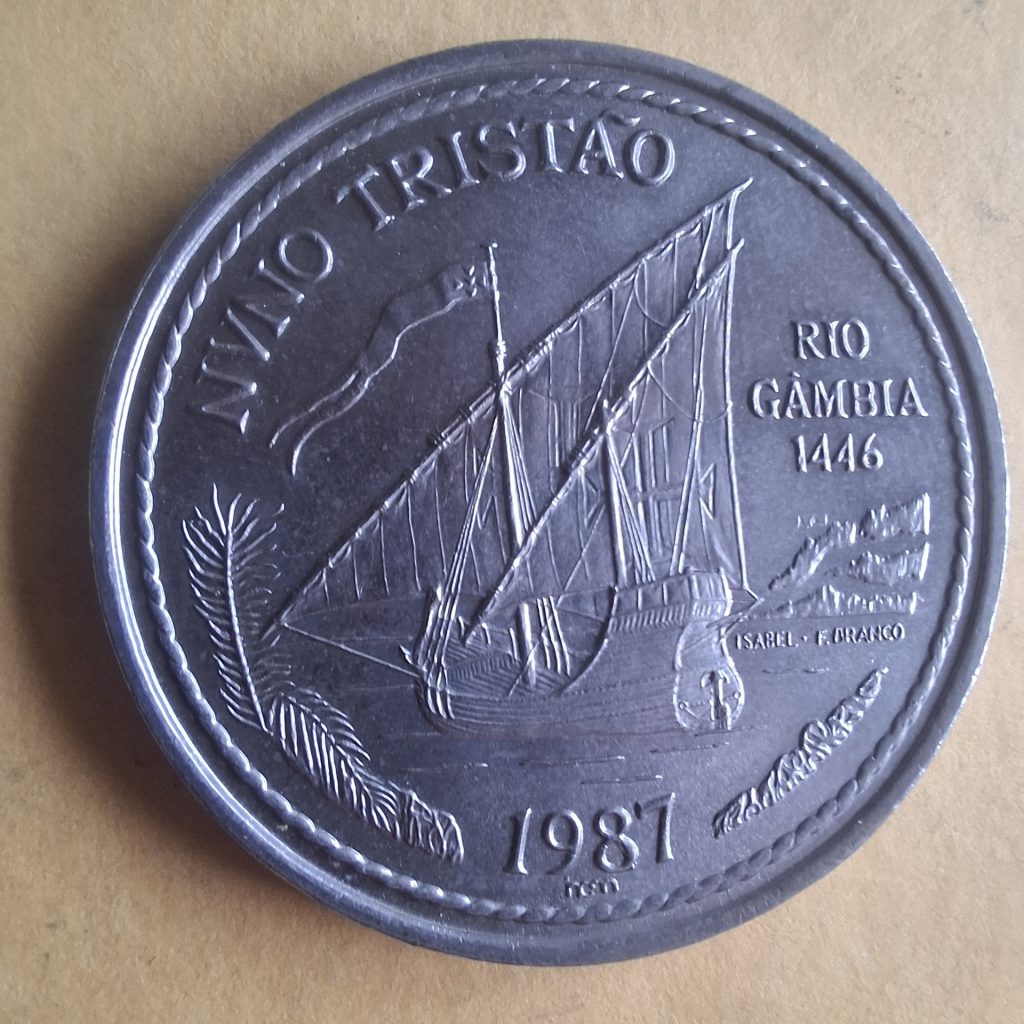
The 100 escudos coin featuring Nuno Tristão is part of the First Series of the Portuguese Discoveries, minted in the late 1980s to celebrate navigators and achievements of the Age of Exploration. The reverse shows a traditional vessel associated with maritime expeditions, along with an inscription referring to the navigator’s historical link (for example: RIO GAMBIA 1446).
Description and Specifications (Main Versions)
Several versions of this coin were issued: a common cupronickel version for broad circulation/commemoration, as well as collector versions in silver, gold, and even palladium, each with different finishes and mintages.
Common Cupronickel Version
- Metal: cupronickel (75% copper / 25% nickel)
- Diameter: approx. 34 mm
- Weight: approx. 16.5 g
- Edge: reeded
- Mintage: around 1,000,000 pieces
Special Collector Versions
- Silver (.925) — BU / Proof finish; approx. 16.5 g; 34 mm diameter; significantly lower mintages (tens of thousands or limited sets depending on the issue).
- Gold (e.g., 916.6/1000) — a commemorative gold version with very limited mintage and a much higher intrinsic value.
- Palladium — listed in some catalogues as a rare variant of collector interest.
Design and Inscriptions
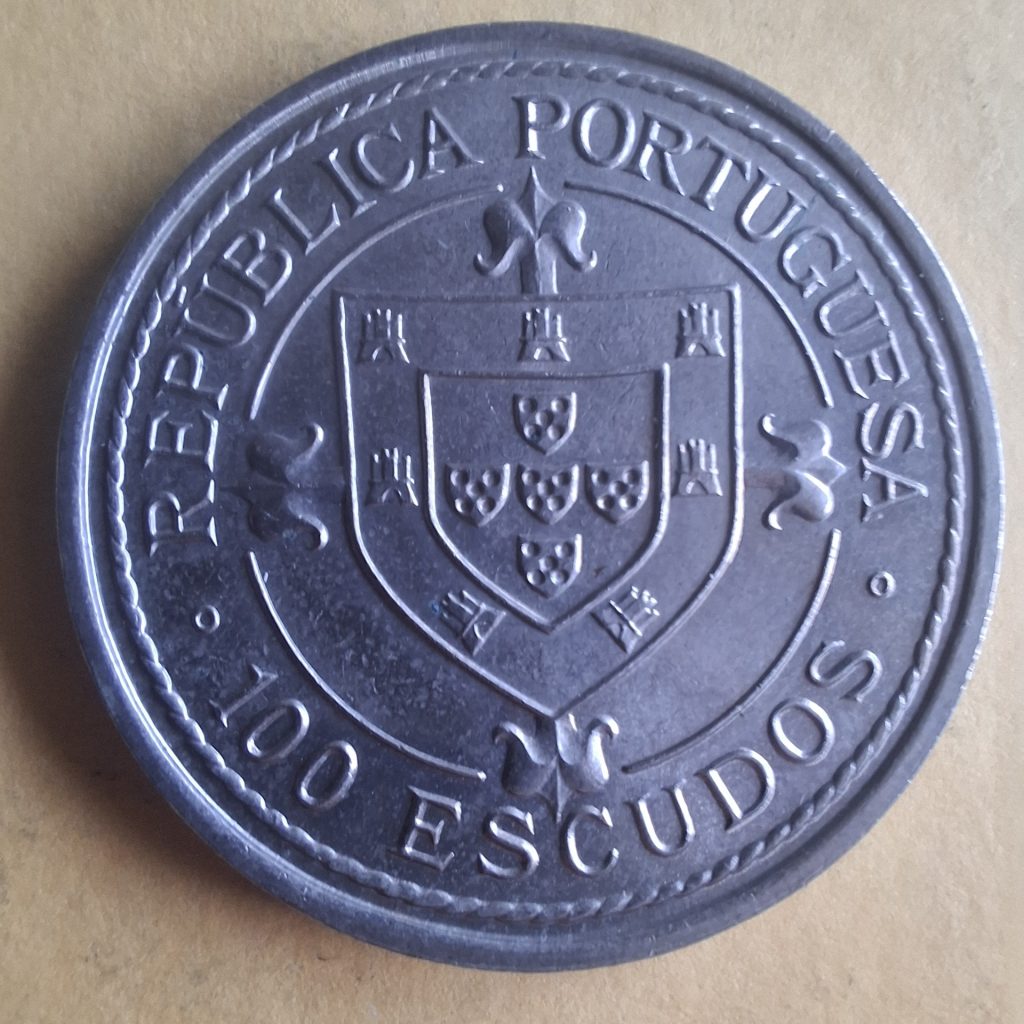
- Obverse: The national coat of arms of Portugal, the legend REPÚBLICA PORTUGUESA, and the face value 100 ESCUDOS.
- Reverse: A depiction of a ship linked to Nuno Tristão, the legend NUNO TRISTÃO, a historical/geographical reference (RIO GAMBIA 1446), and the minting year (1987). Artistic details vary slightly between standard cupronickel pieces and proof versions.
Numismatic Value — Price Ranges (General Guidance)
The market value depends on the version, state of preservation, packaging/certification, and collector demand. Below are indicative ranges based on sales, auctions, and specialist shops:
- Cupronickel (common) circulated pieces: usually inexpensive — around €2 to €10. In better uncirculated condition (UNC), values may reach €10–€25.
- Silver (.925) BU / Proof: generally ranges from €30 to €120+, depending on finish, condition, and whether sold individually or as part of a set.
- Gold version: the most valuable — often priced in the hundreds to several thousand euros, depending on weight, finish, and rarity. Some commercial listings exceed €1,600.
Note: These are approximate market ranges. Actual values vary by country, timing, platform, and auction fees.
Factors That Influence Price
- Condition — Uncirculated or Proof pieces command significantly higher value than worn coins.
- Metal/Version — Silver, gold, and palladium versions carry a premium over the common cupronickel issue.
- Mintage and Rarity — Limited mintages, especially in precious metals, increase value.
- Certification — Graded coins (NGC/PCGS) or those with original packaging generally sell for higher prices.
- Collector Demand — Complete sets from the Discoveries Series can attract additional interest.
Practical Tips for Buying/Selling
- Compare listings in auctions (e.g., eBay, Catawiki) and specialist shops; be cautious of unusually low prices.
- Proof/silver/gold pieces should ideally come with certificate and original box.
- For high-value items, consider grading to improve trust and marketability.
- Avoid coins that show harsh cleaning or damage, as these can reduce value.
- Consult catalogues (e.g., Krause, Numista) for reference details and comparisons.
Summary
The 100 escudos (1987) — Nuno Tristão coin is a representative example of Portugal’s late 20th-century commemorative issues. The cupronickel version is relatively common and inexpensive, while the silver, gold, and palladium editions are the true highlights for collectors due to their lower mintages and higher market value.