Historical context
The 1 escudo coin of 1963 was issued during the period when Angola was an overseas province of Portugal (until 1975). This type of coin was part of the colonial monetary system based on the Portuguese escudo and was used in everyday economic transactions.
The 1960s were marked by political tensions and the beginning of the Colonial War (1961), which gives these coins additional historical value, as they circulated during a time of major transformation in Angola.
Technical characteristics
The coin features typical characteristics of Portuguese colonial issues:
- Face value: 1 Escudo
- Year: 1963
- Material: Bronze (approx. 95% copper, with small amounts of zinc and tin)
- Weight: about 7.9 to 8 grams
- Diameter: approximately 26 mm
- Shape: Round
- Edge: Plain
- Mint: Lisbon
Obverse
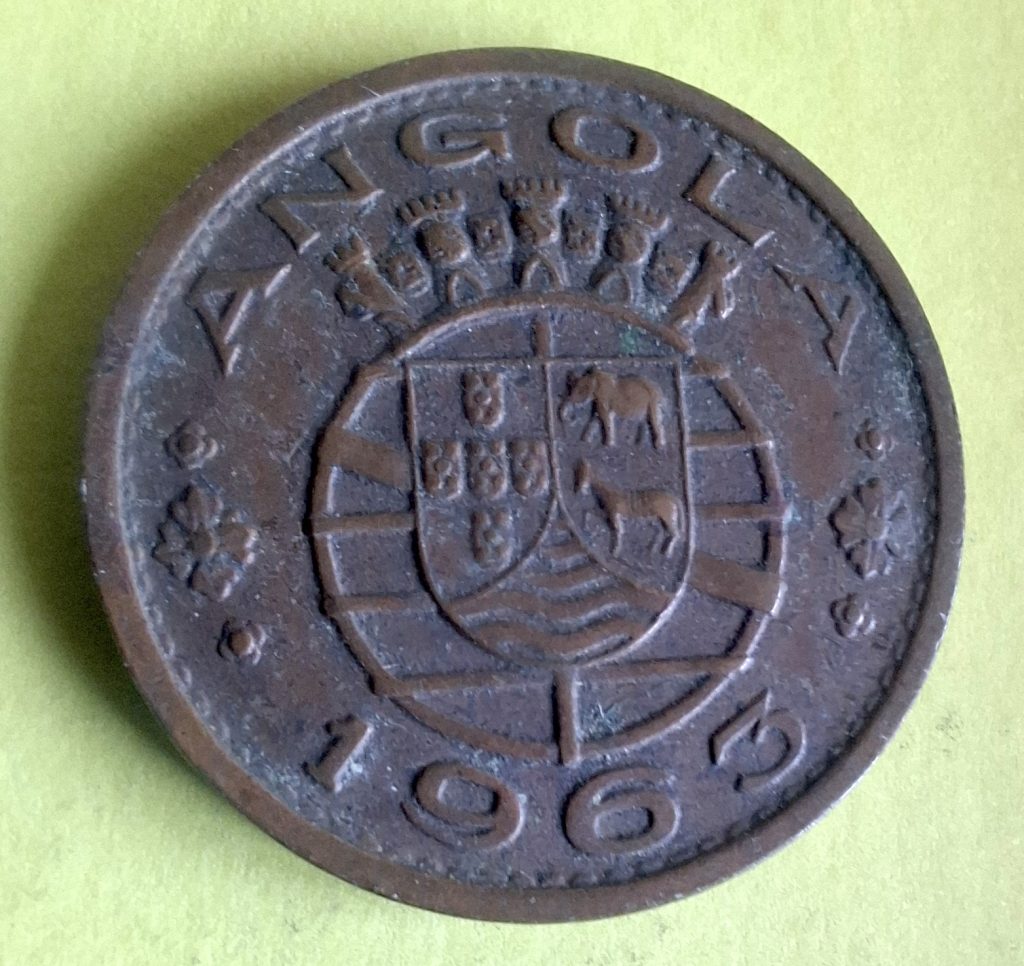
Displays the Portuguese coat of arms, symbolizing colonial sovereignty, with the date “1963”.
Reverse
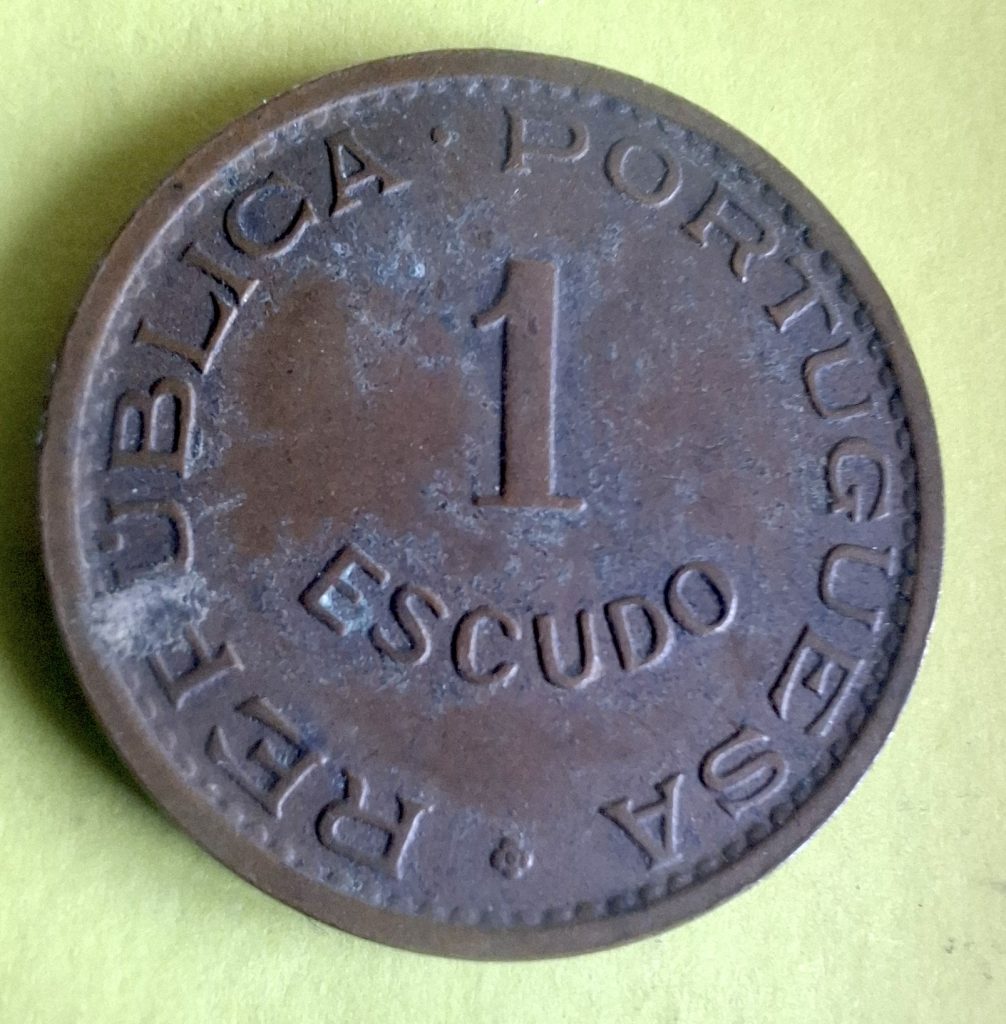
Shows the face value “1 ESCUDO” at the center, surrounded by the inscription “REPÚBLICA PORTUGUESA”.
Mintage and rarity
The 1963 issue had a relatively high mintage, around 5 million pieces, making it a common coin within the series.
However, some catalogs classify it as “slightly scarce” or moderately rare depending on its state of preservation.
Condition and importance
The numismatic value of this coin depends mainly on its condition:
- G (Good): heavily worn, details mostly gone
- F / VF (Circulated): visible wear
- XF (Extremely Fine): light signs of use
- UNC (Uncirculated): no wear, mint condition
The better the condition, the higher the value.
Numismatic value
Prices vary significantly depending on preservation:
- Low grade: about €0.60 to €1
- Average condition: €1 to €3
- Good condition (XF): about €3 to €5
- Uncirculated (UNC): may reach around €10 to €11
In some cases, particularly well-preserved examples can appear on the market for up to €15, depending on demand.
Collector interest
This coin is mainly sought after by:
- Collectors of Portuguese colonial coins
- Specialists in African numismatics
- Thematic collections related to the Portuguese overseas period
Although not rare, it is valued as part of complete Angola coin sets (1953–1974).
Conclusion
The 1963 Angola 1 Escudo coin is not particularly rare, but it has relevant historical value and moderate collector interest. Its market value is generally low, making it accessible to beginner collectors. However, well-preserved specimens can reach higher prices and are more desirable.
In summary, it is an important piece for understanding the monetary history of the Portuguese colonial period in Africa, valued more for its historical context than for its rarity.