Historical Context
- D. Pedro II reigned in Portugal from 1683 to 1706.
- During his reign, the currency used was the real (réis), which remained Portugal's monetary unit until 1835.
- The 1 ½ réis coin (“One and a Half Real”) was minted in copper between 1699 and 1703, according to numismatic catalogs.
- It is cataloged as KM 165 in the D. Pedro II coin series.
Physical Characteristics and Design
| Property | Details |
|---|---|
| Denomination | 1 ½ Réis |
| Composition | Copper |
| Weight | ~2.3 g |
| Diameter | ~22 mm |
| Thickness | ~0.8 mm |
| Minting Technique | Struck mechanically |
| Orientation | Coin alignment (↑↓) |
Design (Obverse and Reverse):
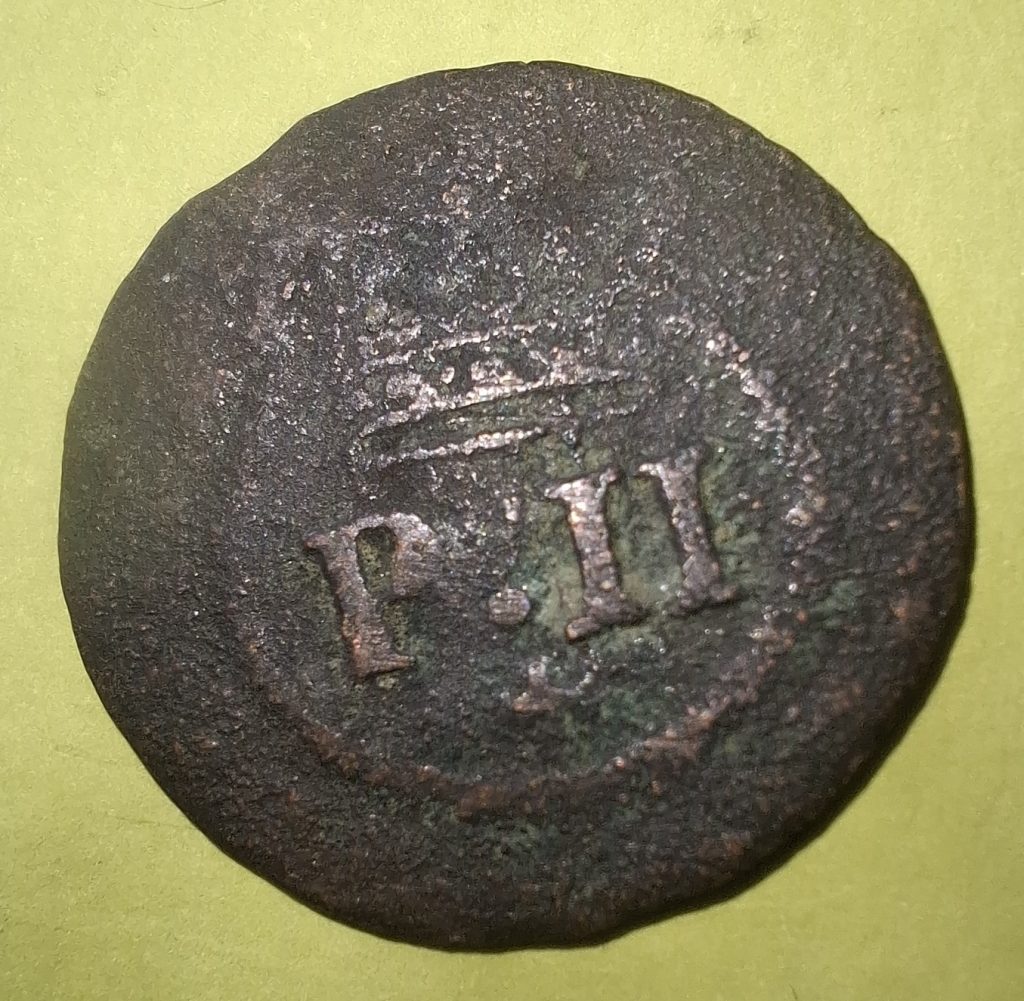
- Obverse: Features the inscription “D·G·POR·ET·ALG·REX” (By the Grace of God, King of Portugal and the Algarves) and “P:II” (Pedro II).
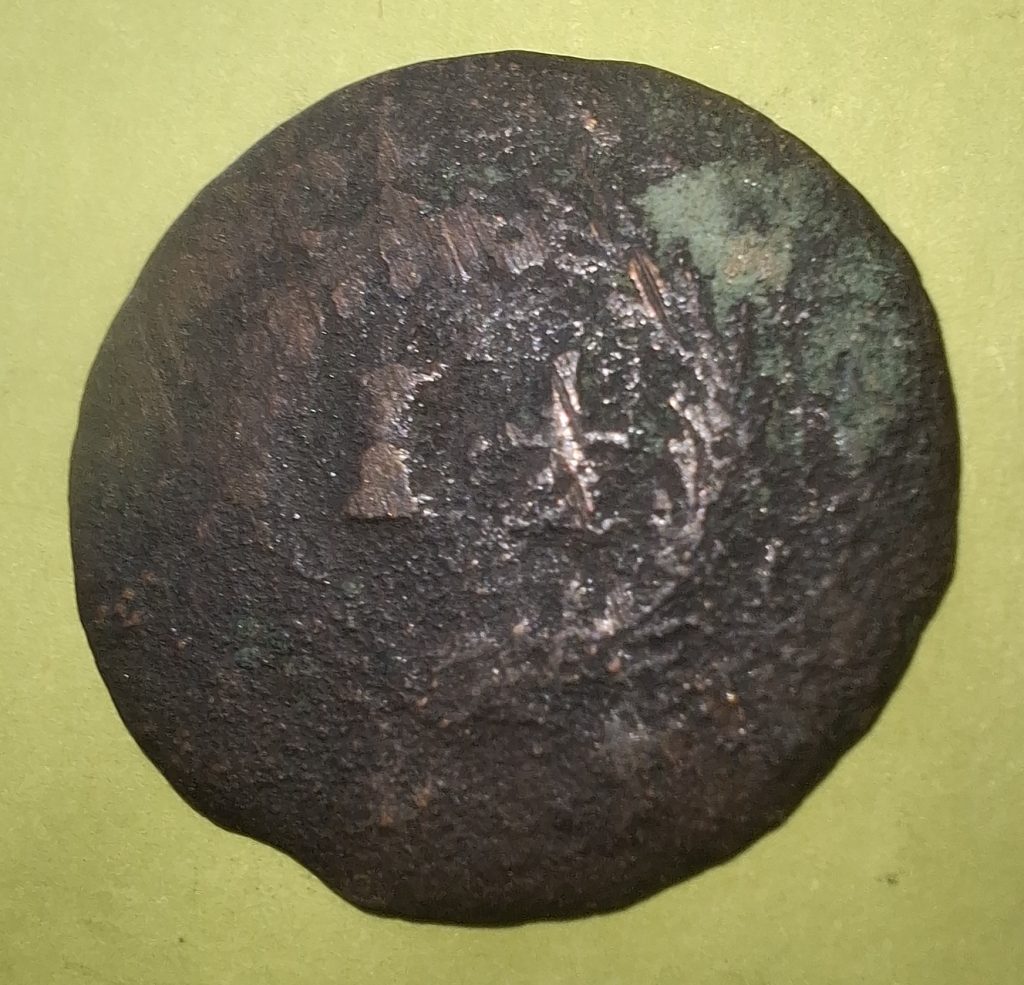
- Reverse: Displays the value “1‑½” inside a wreath or circle, with the year above.
- Some variants have a 180° rotated axis (“center turned 180 degrees”).
Historical and Numismatic Significance
- These coins were issued during a transitional period when the Portuguese mint began using mechanical striking.
- They were low-value coins intended for everyday transactions, making them more common than larger silver or gold coins of the same reign.
- Despite their small face value, their copper composition and age give them historical value for collectors.
Numismatic Value
The value of a 1 ½ Réis coin from D. Pedro II depends on condition and specific variant:
- NGC World Coin Price Guide (KM 165, 1699–1703):
- Good (G): ~US$25
- Very Fine (VF): ~US$135
- Portuguese auction references: Copper coins from 1699 in very good condition have sold for around €15.
- Online marketplaces: Some examples are listed around £207, depending heavily on condition and authenticity.
The coin is relatively affordable compared to rarer silver or gold coins, yet valued for its historical appeal.
Rarity and Collectibility
- Not extremely rare but less common than later small-denomination coins.
- Variants with rotated axes can be more sought after by collectors.
- Condition heavily influences value—well-preserved pieces can fetch significantly higher prices.
Conclusion
The 1 ½ Réis coin of D. Pedro II is interesting for several reasons:
- Represents a small-denomination coin used in everyday transactions in the 17th–18th century.
- Made of copper with a simple yet symbolic design featuring the royal crown and clear denomination.
- Historically significant, minted during a stable reign and the early adoption of mechanical striking in Portugal.
- Collectible: accessible for many collectors, with opportunities for rare variants and high-grade coins.
For collectors:
- Consult catalogs (e.g., Alberto Gomes) to identify variants.
- Request detailed photos (obverse, reverse, edge) to assess condition.
- Compare prices in auction results and guides like NGC for fair market value.