Historical Context
The 5 centavos coin of 1921 was issued during the Portuguese First Republic, a period marked by political instability and economic difficulties, especially in the aftermath of World War I. After the establishment of the Republic in 1910, Portugal adopted the escudo as its new monetary unit, divided into 100 centavos. Low-denomination coins, such as the 5 centavos, played an essential role in daily life, facilitating everyday transactions in an economy facing inflation and a shortage of higher-value metallic currency.
This issue is part of the bronze series produced between 1920 and 1922, representing an effort by the republican regime to standardize the monetary system.
Technical Characteristics
The coin features standardized specifications for the time:
- Face value: 5 centavos (0.05 escudos)
- Year: 1921
- Material: bronze
- Weight: approximately 8 grams
- Diameter: about 25 mm
- Edge: smooth
- Mint: Lisbon
- Catalog reference: KM#569
Design
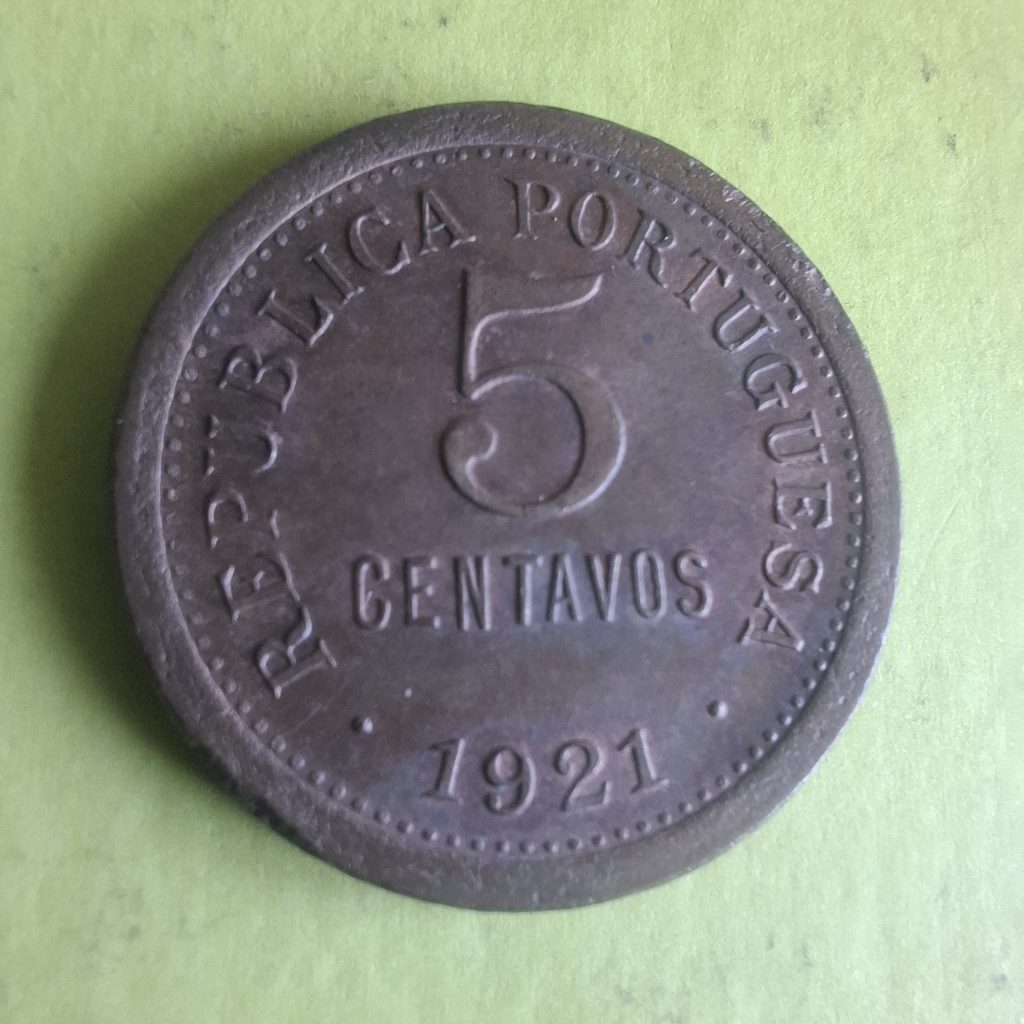
Obverse:
- Inscription “REPUBLICA PORTUGUESA”
- Face value “5 CENTAVOS”
- Date “1921”
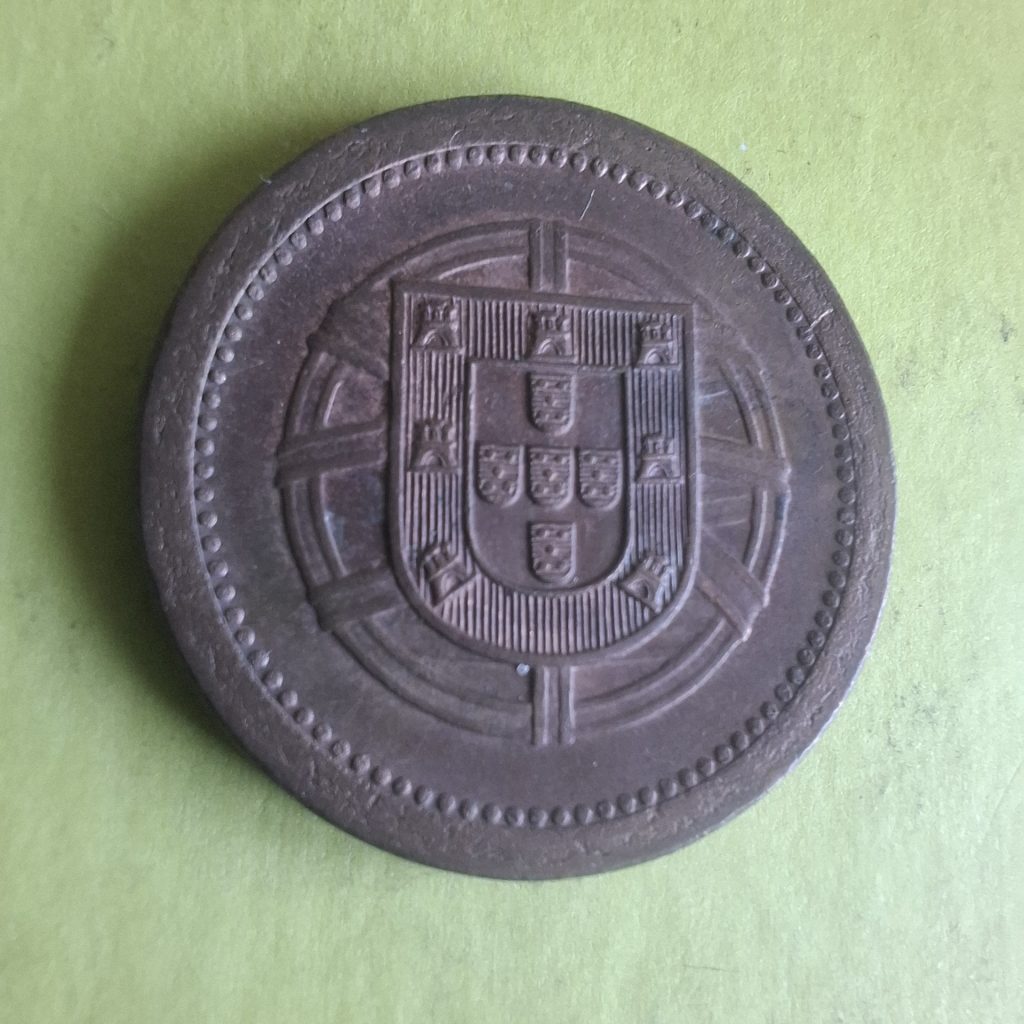
Reverse:
- Armillary sphere with the Portuguese national shield, a symbol of national identity and maritime tradition
The design follows the typical aesthetic of Portuguese republican coinage, with strong patriotic symbolism.
Mintage and Rarity
The mintage of this coin was relatively high:
- Approximately 5.9 million pieces minted
Due to this large quantity, the coin is considered common in the numismatic market, with:
- Rarity level: very low
This means it is easily found at fairs, numismatic shops, and private collections.
Condition and Variants
The state of preservation is the main factor influencing value:
- G (Good): heavily worn
- F (Fine): significant wear
- VF (Very Fine): details still visible
- XF/EF (Extremely Fine): slight wear
- UNC (Uncirculated): no circulation
Additionally, there may be minor variants or imperfections:
- Worn or cracked dies
- Incomplete lettering
- Small minting errors
These variants, although rare, may increase collector interest.
Numismatic Value
The 1921 5 centavos coin does not have a high commercial value and is considered an affordable piece:
- Common condition (F to VF): about €2 to €5
- Fine Condition (VF to EF): about €5 to €10
- Very well-preserved examples (EF to UNC): slightly higher values, but generally modest
Market examples show sales between €3 and €5, depending on condition.
Factors Influencing Value
The main elements determining the value of this coin are:
- State of preservation – the most important factor
- Presence of original patina (not cleaned)
- Rarity of variants or errors
- Demand among collectors of Republican coins
Cleaned or damaged coins tend to lose value significantly.
Numismatic Importance
Despite its low monetary value, this coin holds historical and collector significance:
- Represents the beginning of the republican monetary system
- Part of thematic collections of the First Republic
- Helps complete Portuguese centavo series
It is often considered an entry-level piece for new collectors.
Conclusion
The 1921 Portuguese 5 centavos coin is a common specimen with low market value but high historical interest. Its abundance makes it accessible, while its historical context makes it meaningful within Portuguese numismatics.
For collectors, its value lies more in the overall set and preservation than in individual rarity, making it a key piece for understanding the monetary evolution of Portugal in the 20th century.