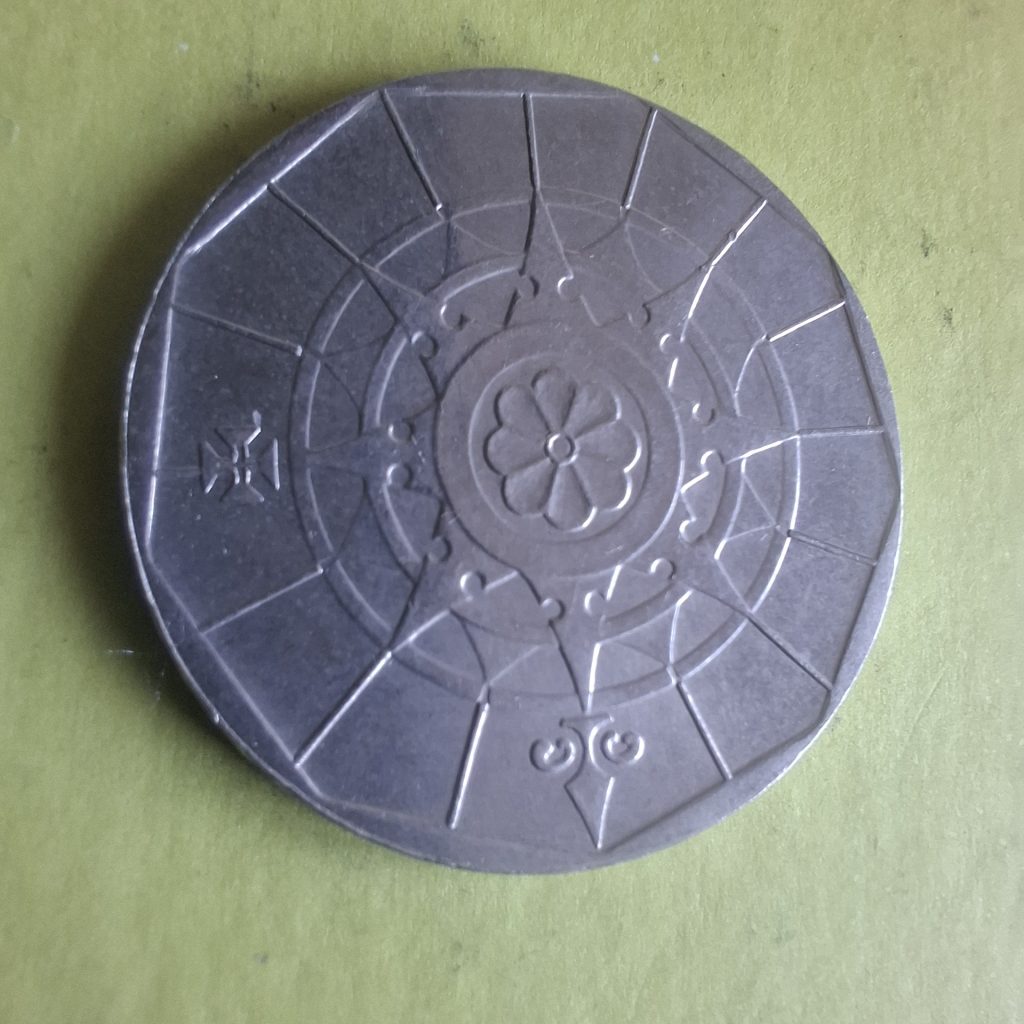
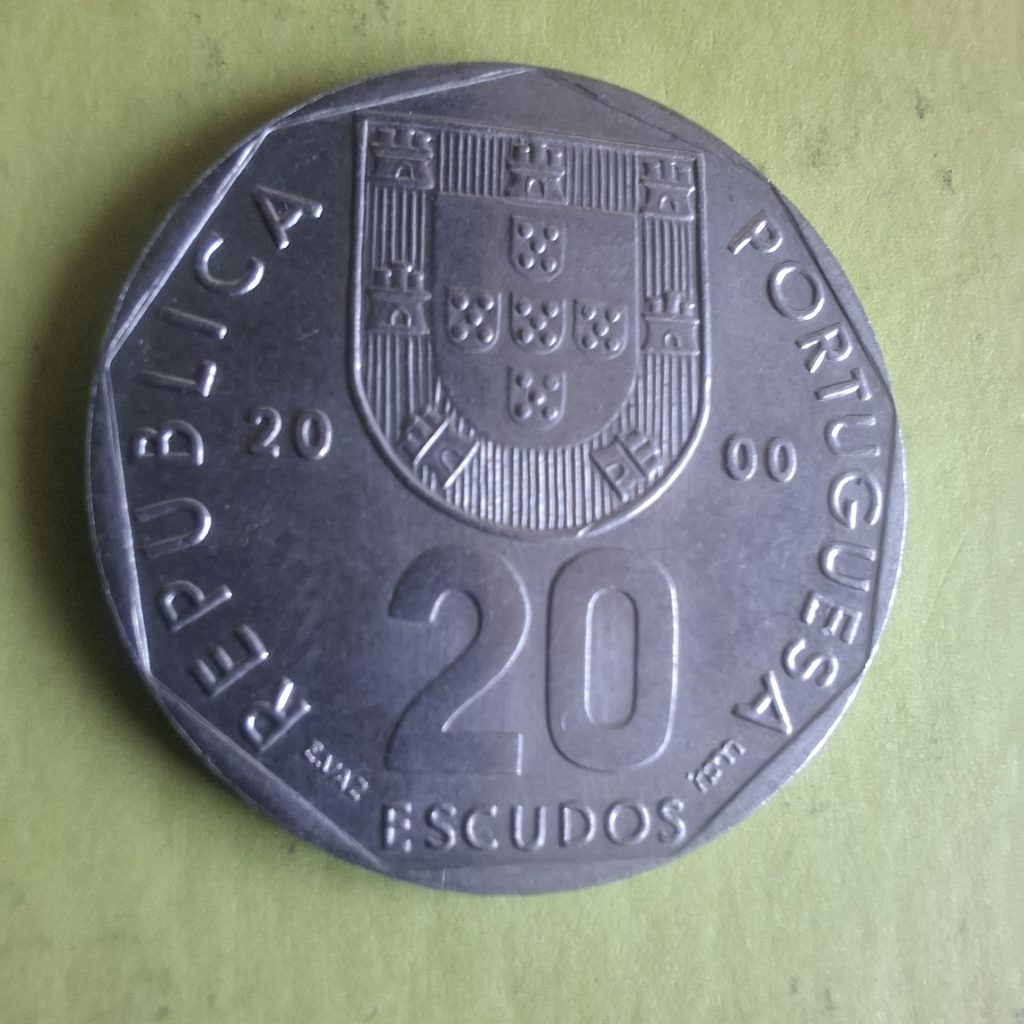
1. Overview
The 20 Escudos coin issued in 2000 belongs to the family of circulating coins from the period of the Portuguese Third Republic and was one of the last issues before the adoption of the euro. It is a common piece in collecting catalogues and is mainly sought after by collectors of modern circulation coins or those completing contemporary series.
2. Technical Specifications
- Denomination: 20 Escudos (20$00)
- Year: 2000
- Metal / Alloy: Copper-nickel (Cu 75% / Ni 25%)
- Weight: 6.9 g
- Diameter: 26.5 mm
- Thickness: approx. 1.64 mm
- Shape: round, reeded/serrated edge (depending on the batch)
- Mint: Portuguese Mint and Official Printing Office (INCM)
These are the technical characteristics typically listed in numismatic databases.
3. Design / Motifs and Engraver
- Obverse: Portuguese coat of arms with the inscription “REPUBLICA PORTUGUESA”, the denomination “20 ESCUDOS”, and the year. The engraver’s signature appears on the piece (for this series, sources point to Euclides Vaz).
- Reverse: generally features heraldic/symbolic motifs and mint marks, following the graphic style used in late 1990s–2000s issues.
4. Mintage and Circulation
For the year 2000, the coin has a relatively high mintage — around 6,000,000 pieces struck for circulation. This makes it a common coin within the final escudo series, and therefore easy to find in circulated condition.
5. Circulation Status and Demonetization
The escudo ceased to be legal currency when the euro was adopted. Portuguese escudo coins were officially demonetized on 28 February 2002. Today, most 20 Escudos 2000 coins found on the market are circulated and show varying degrees of wear.
6. Numismatic Value — What to Expect on the Market
Quick summary: because it is a circulation coin with a large mintage, values are low for worn examples and only slightly higher for uncirculated or proof-set pieces.
- Circulated examples: usually priced around €0.50 to €2, depending on condition and seller.
- Uncirculated (UNC) / “superb” examples: generally range from €1 to €5, depending on demand and appearance.
- Proof sets / special editions: when the coin is part of an official INCM proof or commemorative set (in box with certificate), the overall set value is significantly higher — but the copper-nickel circulation coin on its own is not considered a high-value item.
Note: market prices vary depending on auctions, shops, and local demand. Coins with confirmed minting errors can be worth more, but such cases are uncommon.
7. Variants and Rarities to Look For
- State of preservation: lustre, absence of scratches, stains, or cleaning marks are critical for value.
- Minting errors: double strikes, clipped planchets, or unusual marks can increase value if rare and well documented.
- Proof or boxed INCM editions: proof pieces with official packaging and certificates are always more valuable.
8. How to Evaluate a Coin (Quick Checklist)
- Condition (grade): check wear, scratches, stains, original lustre.
- Authenticity: verify mint marks, inscriptions, weight, and diameter.
- Provenance: boxed pieces with certificates (if proof) increase value.
- Errors and variants: photograph and compare to references; consult a specialist if you suspect rarity.
- Check recent market activity: compare asking prices with actual sale prices.
9. Conclusion
The 20 Escudos (2000) coin is representative of the final years of the Portuguese escudo: technically typical of its era, widely produced, and therefore of modest numismatic value in circulated condition. Collectors seeking high-grade or proof pieces will find the best added value in uncirculated examples or certified sets.