Introduction
The 1953 20 Escudos coin was minted in Portugal to commemorate the 25th anniversary of the “Financial Renewal”, an economic reform introduced in the late 1920s. Because it was struck in silver and features a symbolic design, the coin is highly appreciated by Portuguese collectors and represents an important piece from the Second Republic period (1926–1974).
Technical Specifications
Major numismatic references list the following characteristics. (Note: some sources list silver fineness as 0.800, others as 0.835 — explained below.)
- Face value: 20 Escudos
- Year: 1953
- Metal: Silver (most commonly listed as 0.800, some catalogs indicate 0.835)
- Weight: approx. 21 g (20.83–21.06 g depending on source)
- Diameter: 34 mm
- Thickness: approx. 2.2–2.7 mm
- Edge: reeded
- Catalog reference: KM#585
Note on silver fineness:
Auction houses, dealers, and international catalogs largely list the coin as 80% silver (0.800), while some collector databases quote 0.835. For precise valuation, it is best to check the specification provided by the seller or catalog during purchase.
Design and Iconography
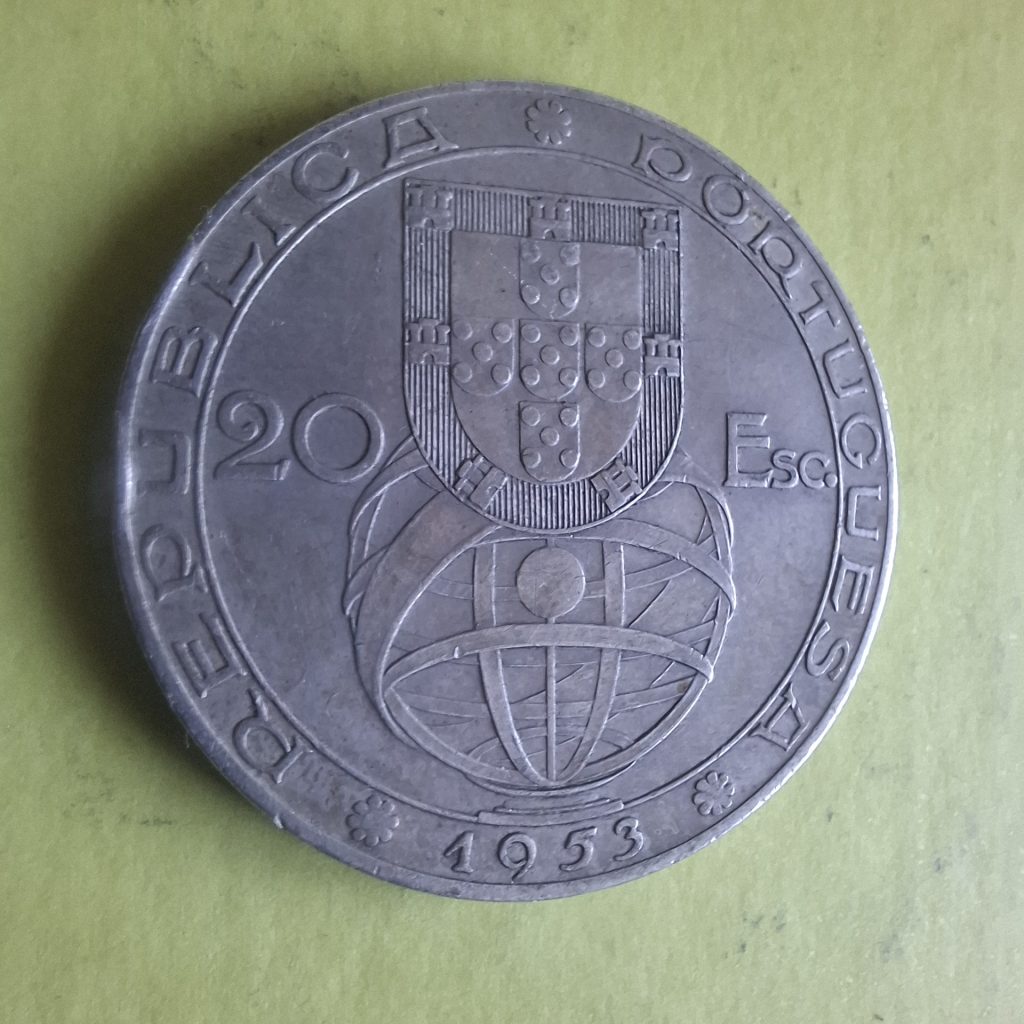
- Obverse: features the Portuguese coat of arms over a globe, the value “20 Esc.”, the legend REPUBLICA PORTUGUESA, and the year 1953.
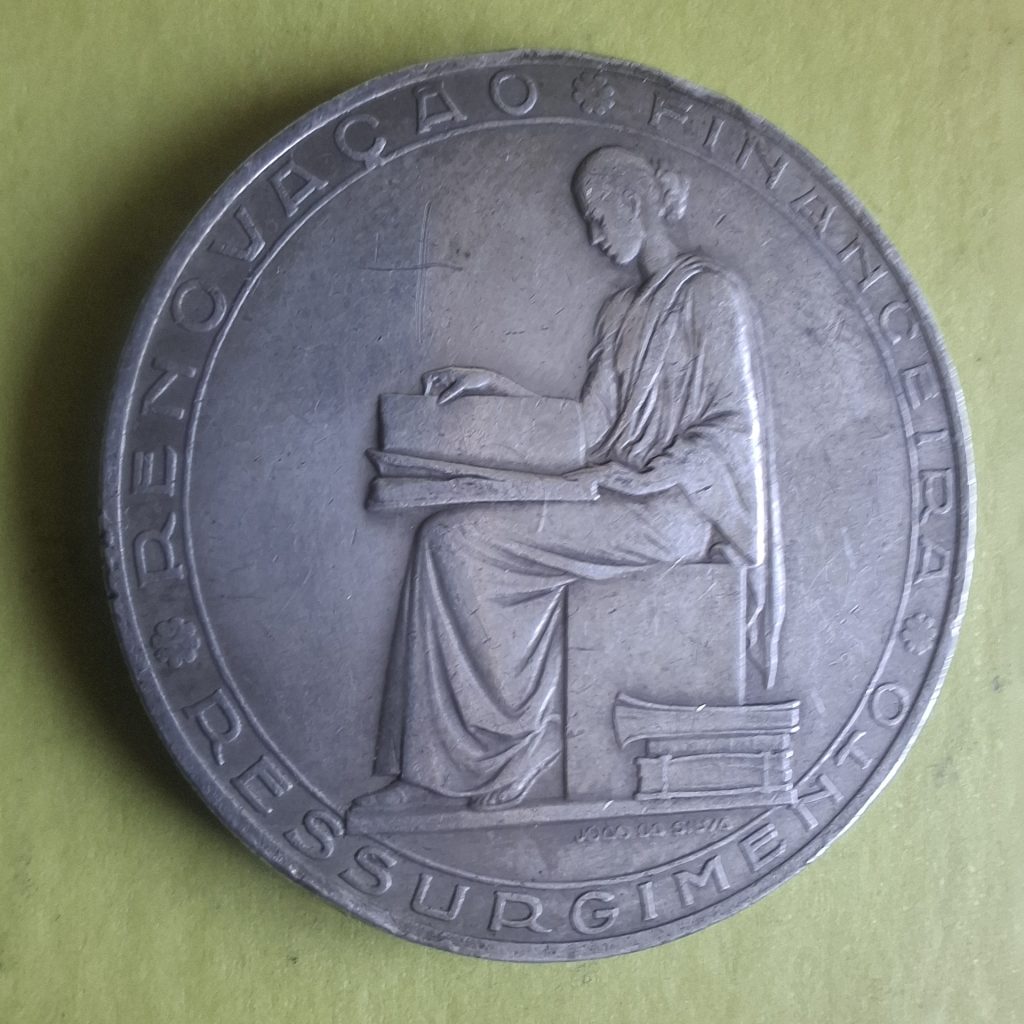
- Reverse: shows an allegorical female figure seated and writing/reading, symbolizing knowledge, progress, and economic recovery tied to the Financial Renewal. The inscription reads RENOVAÇÃO FINANCEIRA RESSURGIMENTO.
- The design is commonly attributed to João da Silva, a known Portuguese sculptor and engraver.
Mintage and Circulation
Most sources report a mintage of around 1,000,000 pieces for the regular 1953 issue. The coin circulated until it was demonetized with the introduction of the euro (2001).
Grades and Collectability
As with all collectible coins, value depends heavily on the state of preservation:
- F / Fine to Very Fine: clear signs of use, reduced detail.
- VF–AU (Very Fine to Almost Uncirculated): minimal wear; higher collector interest.
- UNC / BU (Uncirculated / Brilliant Uncirculated): original luster and full detail; the most valuable examples.
When evaluating a specimen, check for:
- wear on high-relief areas (figure’s clothing, shield),
- scratches, cleaning marks,
- even, natural patina vs. spots,
- avoidance of polished or aggressively cleaned coins.
Numismatic Value (Price Ranges)
Market prices can vary depending on condition, rarity of the specific specimen, and venue (auction, dealer, private sale). Typical ranges observed in recent market activity:
- F to VF: €5–€20
- VF to AU: €15–€40
- UNC / BU: €20–€60+, sometimes higher for exceptional pieces with strong strike and attractive patina.
Because the coin is relatively common, prices are generally accessible, though top-grade examples command higher premiums.
Varieties and Rarities
There are no major rare varieties known for the regular 1953 issue. It is considered a common commemorative coin. However, high-grade uncirculated specimens, especially with natural patina and no defects, are considerably more desirable and valuable.
Tips for Collectors
- Condition matters greatly — prefer coins with natural patina and no signs of harsh cleaning.
- Document your purchase through reputable dealers or auction houses.
- Compare prices using catalogs (e.g., KM/Standard Catalog of World Coins, Numista), dealers, and auctions.
- Verify silver fineness (0.800 vs 0.835) if buying for metal value.
Conclusion
The 1953 20 Escudos “Financial Renewal” silver coin is a notable piece of modern Portuguese numismatics: affordable, historically symbolic, and attractive in design. While not rare, well-preserved examples, especially uncirculated ones, remain in steady demand. For collectors, it represents a solid and interesting addition to a 20th-century Portuguese coin collection.