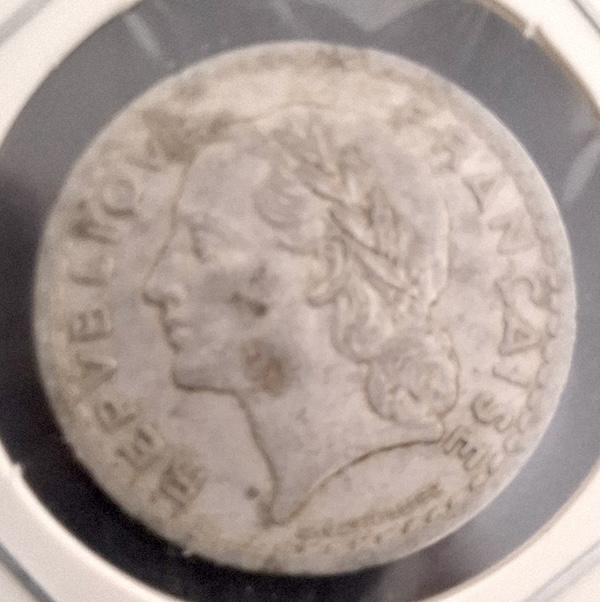
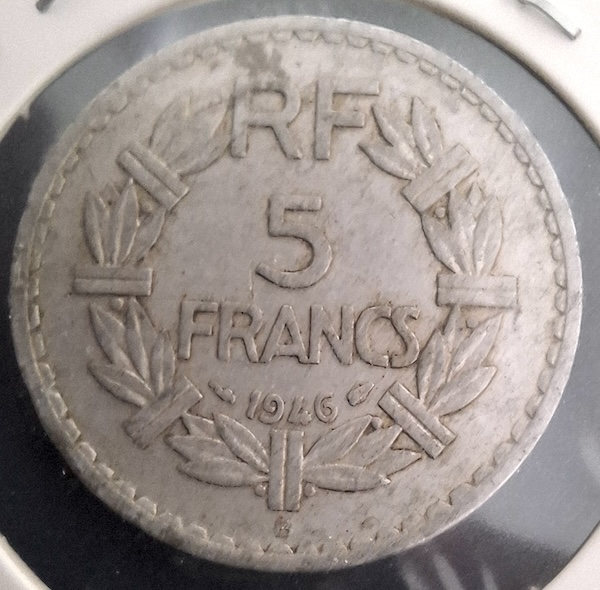
The 1946 5 Francs coin is one of the most emblematic pieces of post-World War II France. Known among collectors as the “5 Francs Lavrillier,” after its designer André-Henri Lavrillier, this coin represents France’s economic and political reconstruction following the country's liberation.
Historical Background
In 1946, France was under the Provisional Government of the French Republic, a transitional period between liberation from occupation and the establishment of the Fourth Republic. The need to restore monetary circulation led to the issuance of several low-cost coins, including the aluminum 5 Francs piece.
The choice of aluminum was driven by the shortage and high cost of traditional metals after the war, allowing large-scale production to meet the needs of the recovering economy.
Technical Specifications
| Characteristic | Specification |
|---|---|
| Country | France |
| Denomination | 5 Francs |
| Year | 1946 |
| Designer | André-Henri Lavrillier |
| Metal | Aluminum |
| Weight | 3.5 g |
| Diameter | 31–32 mm |
| Edge | Plain |
| Main Mint | Paris |
| Approximate Mintage | 61,332,000 pieces |
Design Description
Obverse
The obverse features an allegorical representation of the French Republic facing left and wearing a wreath of leaves. Surrounding the portrait is the inscription “REPVBLIQVE FRANÇAISE,” along with the signature “A. LAVRILLIER.”
Reverse
The reverse displays the letters “RF” (République Française) above the denomination “5 FRANCS,” with the date below. The entire design is surrounded by a laurel wreath, a traditional symbol of honor and victory.
Mintage and Rarity
The Paris mint produced approximately 61 million examples, making this coin relatively common among collectors. Variants struck at other French mint facilities also exist and can be identified by their mint marks, some of which are scarcer and more desirable.
Due to the large mintage and lightweight aluminum composition, many examples have survived, although they often show considerable wear or surface oxidation typical of aluminum coins.
Numismatic Value
The market value depends primarily on the coin’s condition:
| Grade | Approximate Value |
|---|---|
| Heavily Circulated (Good) | €1 – €3 |
| Fine (F) | €3 – €6 |
| Very Fine (VF) | €6 – €12 |
| Extremely Fine (XF) | €12 – €25 |
| Uncirculated (UNC) | €25 – €60 or more |
Coins retaining their original luster, free of scratches and with sharply defined details, can command higher prices, especially when certified by professional grading services. Scarcer mint-mark varieties may also achieve premium values.
Appeal to Collectors
The 1946 5 Francs coin is appreciated for several reasons:
- It represents France’s monetary rebirth after World War II.
- It features an elegant artistic design by André-Henri Lavrillier.
- It is affordable and accessible to beginning collectors.
- It is an important piece for collections focused on 20th-century French coinage and European monetary history.
Conclusion
The 1946 French 5 Francs coin is a historical piece that symbolizes France’s post-war recovery. Although relatively common due to its high mintage, it remains attractive to numismatists because of its historical significance, classic design, and the possibility of finding rare varieties or exceptionally preserved examples. For collectors of European coins, it remains an essential and highly affordable addition that offers a strong combination of historical importance and collecting appeal.