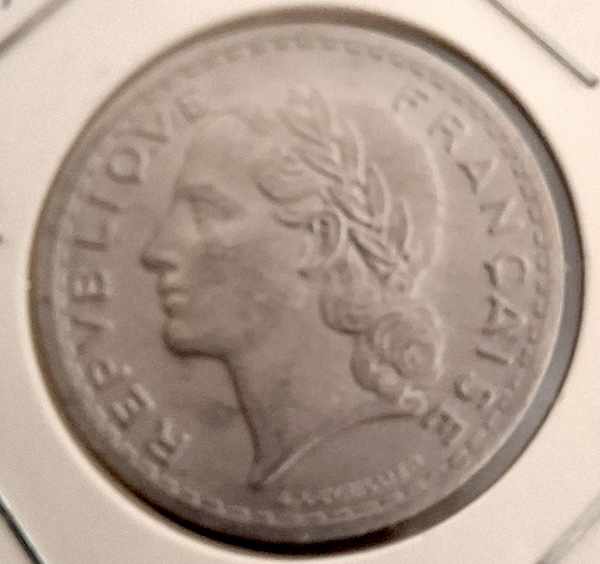
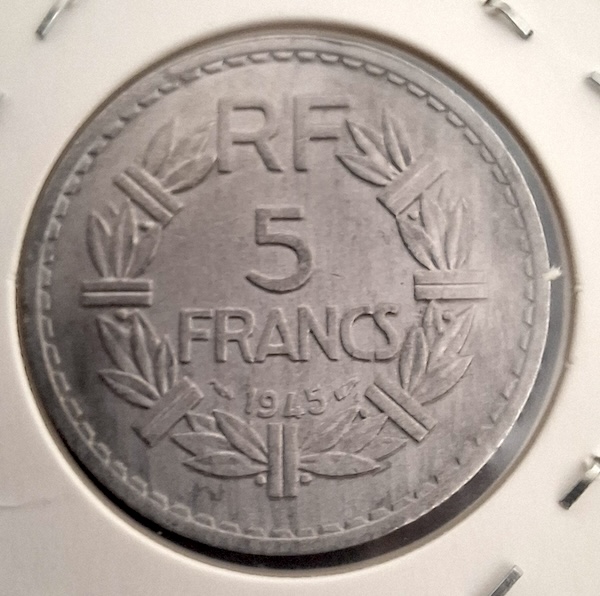
The 1945 5 Francs coin is one of the most emblematic pieces of France's post-World War II reconstruction period. Issued by the Provisional Government of the French Republic, this coin belongs to the famous “Lavrillier” type, designed by French engraver André-Henri Lavrillier. Today, it is a highly sought-after piece among collectors of 20th-century European coins due to its historical significance and minting varieties.
Historical Background
In 1945, France emerged from one of the most difficult periods in its history. The shortage of metals led to the use of aluminum in coin production, a lightweight and economical material. The 5 Francs coin was introduced to meet the needs of post-war monetary circulation and became a symbol of France’s economic recovery.
Technical Specifications
| Characteristic | Details |
|---|---|
| Country | France |
| Face Value | 5 Francs |
| Year | 1945 |
| Engraver | André-Henri Lavrillier |
| Composition | Aluminum |
| Weight | 3.5 g |
| Diameter | 31 mm |
| Thickness | 2.3 mm |
| Edge | Plain |
| Shape | Round |
The obverse features the laureate head of the French Republic facing left, surrounded by the inscription “REPUBLIQUE FRANÇAISE.” The reverse displays the denomination “5 FRANCS” within a laurel wreath, with the initials “RF” (République Française) above and the date below.
Mintage and Mint Marks
The main 1945 issue reached approximately 95.4 million pieces. There are also varieties identified by mint marks:
- No mint mark: approximately 95,398,800 pieces.
- Mint mark B (Beaumont-le-Roger): approximately 6,043,200 pieces.
- Mint mark C (Castelsarrasin): approximately 2,208,114 pieces.
Coins bearing the C mint mark are generally less common and can command higher prices when preserved in excellent condition.
Varieties and Pattern Coins
One of the rarest versions is the 1945 “ESSAI” (pattern) coin. Only about 1,100 examples were produced as trial strikes before regular circulation began. These pieces are distinguished by their rarity and strong numismatic appeal.
Numismatic Value
The market value depends primarily on the coin’s condition, mint mark, and rarity.
Common Examples
| Grade | Approximate Value |
|---|---|
| Heavily Circulated | €1 – €5 |
| Fine | €5 – €10 |
| Very Fine | €10 – €20 |
| Extremely Fine | €20 – €50 |
| Uncirculated | €50 – €150 or more |
Rare Varieties
- C mint mark in high grade: €30 – €100.
- 1945 “ESSAI” pattern coins: often between €200 and €600, with exceptional examples selling for even more at specialized auctions.
Factors Affecting Value
1. Condition
The state of preservation is the most important factor in determining value.
2. Original Mint Luster
Coins retaining their original mint shine are especially desirable to collectors.
3. Mint Mark
Some mint varieties are scarcer than others and therefore more valuable.
4. Minting Errors
Error coins can significantly increase in value depending on their rarity and visibility.
5. Professional Certification
Coins authenticated and graded by professional grading services often achieve higher market prices.
Conclusion
The French 5 Francs coin of 1945 is an important historical artifact from the nation’s post-war recovery period. While common circulated examples remain affordable, certain varieties—particularly the “ESSAI” patterns and specific mint-mark issues—can reach substantial values in the numismatic market. For collectors of French coins or post-war European currency, this piece remains a must-have thanks to its historical importance and the elegant design created by André-Henri Lavrillier.