Period: Reign of Alfonso XIII
Catalogue: KM 742 / Numista #2372
1. Historical context
The 25 céntimos of 1927 was issued during the reign of Alfonso XIII (1886–1931). It was a circulating coin forming part of the low-denomination cupronickel series used in the peseta system (0.25 peseta). This family of small coins saw heavy circulation until they were officially demonetised later in the 20th century.
2. Design and engraver
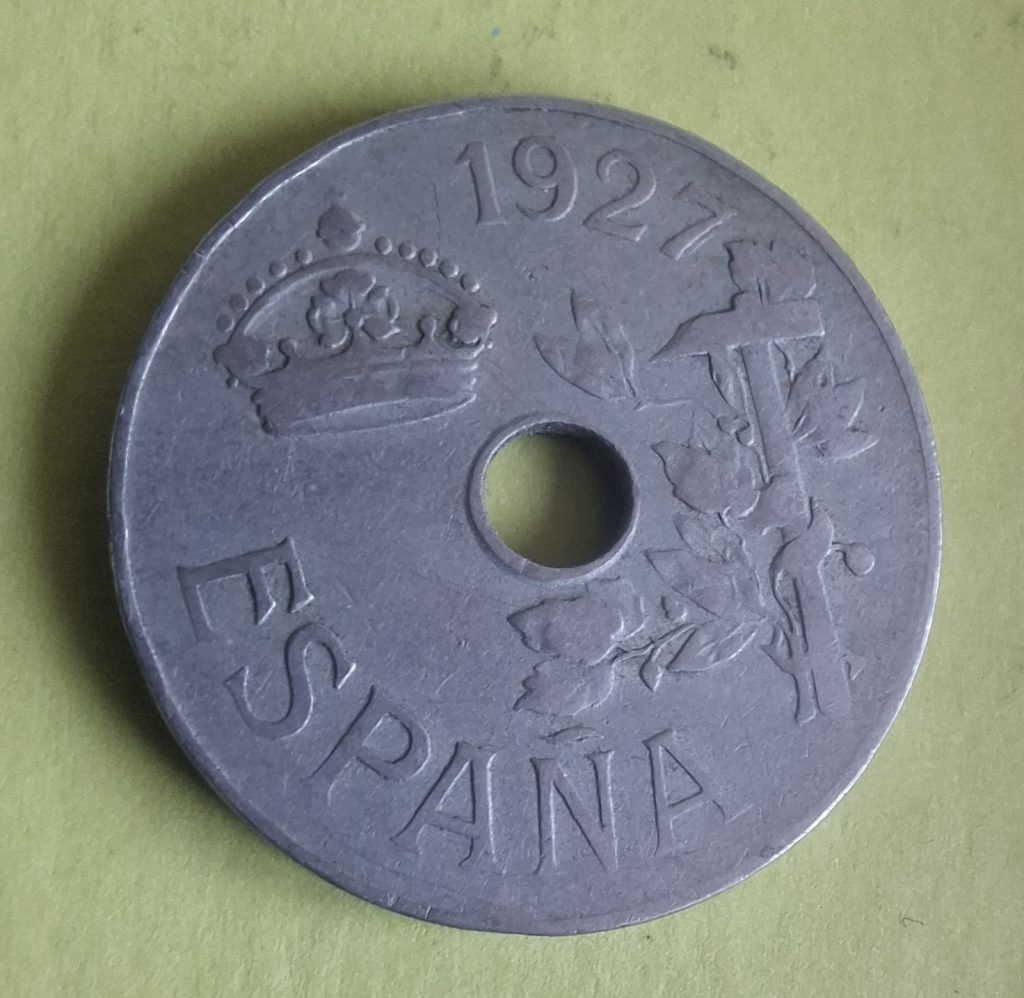
The obverse shows a symbolic composition: a vine intertwined over a cross, with a crown and the date (1927), along with a circular central hole.
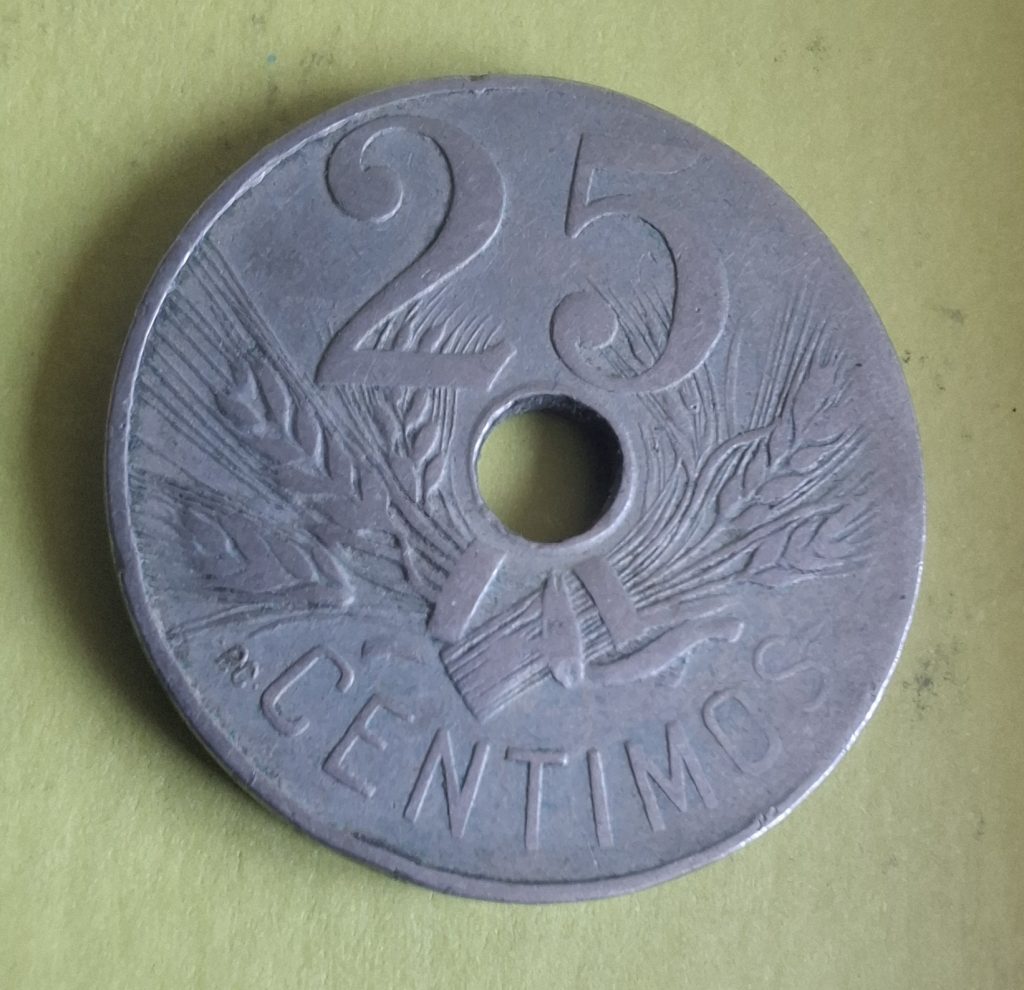
The reverse features the value (“25 · P · C · CÉNTIMOS · S ·”) surrounding two oat branches, again with the central hole.
The engraver recorded in catalogues is J. Espinós (José Eusebio Espinós Gisbert).
3. Technical characteristics
- Material: cupronickel (approx. 75% copper / 25% nickel)
- Weight: approx. 7.0 g (usually seen between 6.77–7.09 g due to wear)
- Diameter: 25.0–25.2 mm
- Thickness: roughly 1.6 mm
- Edge: plain
- Notable feature: central hole — a characteristic element of this issue.
4. Mintage and mintmark
The 1927 issue (mintmark PC·S, Madrid mint) had an official mintage of around 12,000,042 pieces.
This high mintage explains why specimens in low to medium grades remain common today.
5. Legal status / demonetisation
Cupronickel small-denomination coins from this series were withdrawn from circulation during the mid-20th century. Many references place their demonetisation around 1951, though exact dates vary by denomination.
6. Varieties and features to check
- Mintmark: commonly PC·S.
- Hole wear: the central hole often shows disproportionate wear or oxidation.
- Toning: cupronickel can display grey, olive or brownish tones depending on storage conditions.
7. Numismatic value (practical estimate)
Market value varies with the coin’s grade and whether it has been certified. Approximate ranges:
- Circulated grades (VF / MBC): €2 – €10
- Higher grades (EF–AU / EBC): €10 – €40 depending on lustre and surface quality
- Uncirculated or certified examples: generally €40–€50, occasionally higher only in exceptional condition
Because of its large mintage, this coin does not usually reach very high prices unless superbly preserved.
8. Collector tips and selling advice
- Authenticity: wear patterns around the hole and legends usually reveal genuine circulation. For safety, buy from reputable sellers.
- Grading: good photos of obverse, reverse and edge greatly help valuation.
- Storage: keep the coin in PVC-free holders; the central hole is prone to humidity damage.
- Selling: checking recent completed listings on major platforms (eBay, numismatic shops, auction houses) provides the most realistic pricing data.
9. Summary
The 1927 25 céntimos is a representative coin from the late reign of Alfonso XIII: cupronickel, central hole, and an elegant symbolic design by J. Espinós. Despite its historical charm, its high mintage makes it a relatively common and affordable collectible. It remains attractive to collectors of early-20th-century Spanish coinage and offers good value for beginners.