Introduction
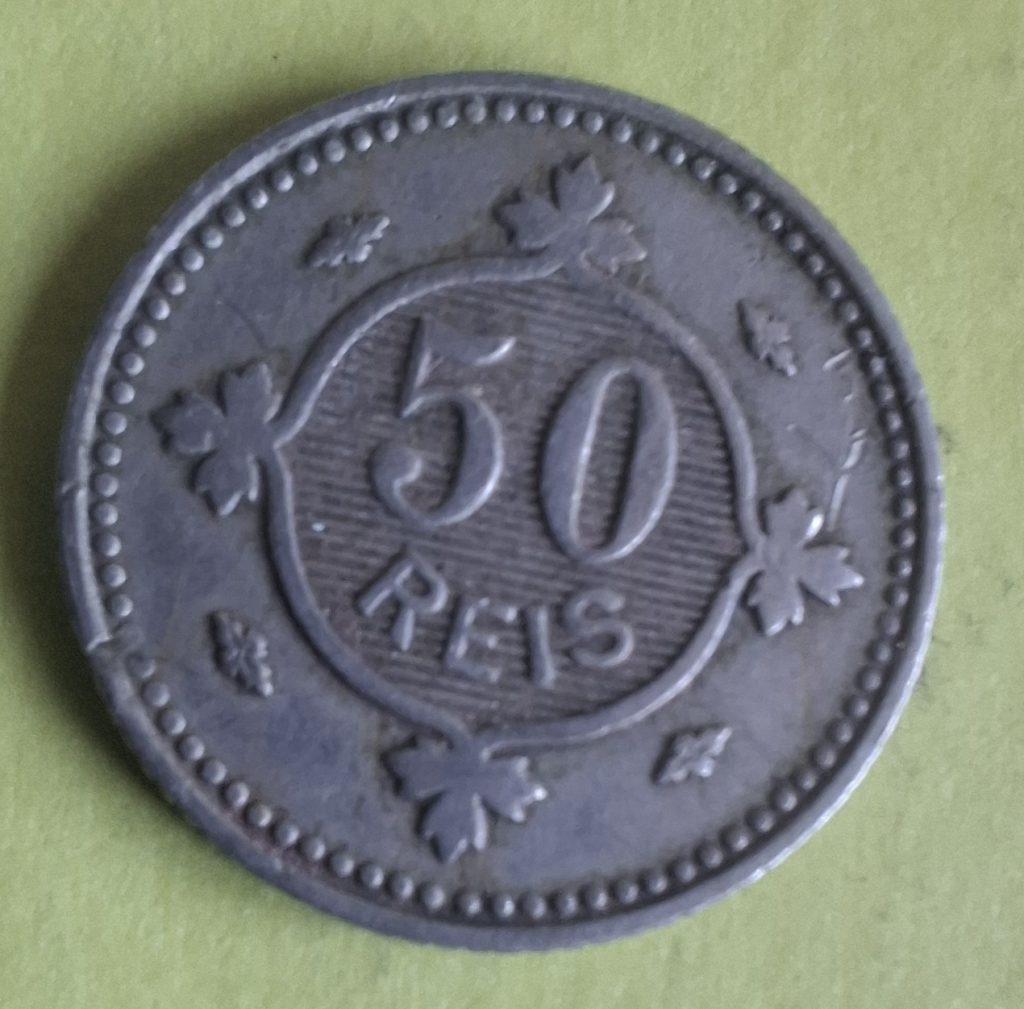
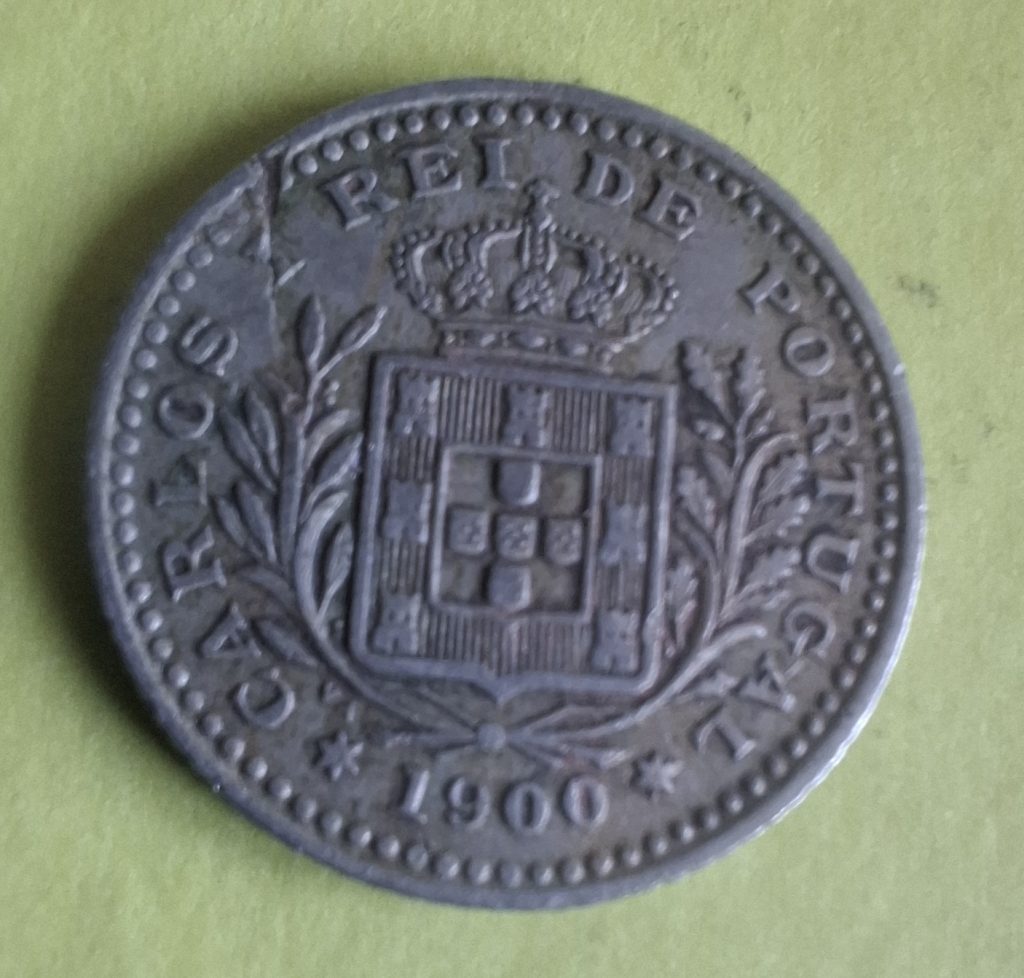
The 50 réis coin minted in 1900, during the reign of King Carlos I, is a representative example of small-denomination Portuguese coinage from the early 20th century. Although not extremely rare, it is of interest to collectors because it is the only cupronickel issue of this value from that year and presents small die varieties that make it attractive for study and identification.
Historical Context
King Carlos I reigned from 1889 to 1908; the coinage of this period reflects the technological transition in metal alloys (such as the introduction of cupronickel in several denominations) and the need for small-denomination circulating coins. The 1900 50 réis coin fits into this context as a commonly used everyday currency.
Technical Specifications (Physical Characteristics)
- Year: 1900
- Denomination: 50 Réis (½ tostão)
- Material / Alloy: Cupronickel
- Weight: ~2.5 g
- Diameter: 18 mm
- Thickness: ~1.3 mm
- Edge: Reeded
- Alignment: Coin alignment (180°)
- Catalogue reference: KM#545 (Krause/Mishler)
Design — Obverse and Reverse
- Obverse: Legend “CARLOS I REI DE PORTUGAL” and the date 1900, usually featuring the crowned Portuguese coat of arms surrounded by wreath elements depending on the die.
- Reverse: Denomination “50 RÉIS” framed within a decorative circular motif characteristic of the series.
The design is simple and functional, typical of Portuguese circulating coinage of the time.
Die Varieties and Collecting Notes
Some 1900 pieces show small varieties near the date, particularly the stars flanking the date, which sometimes contain incuse letters. Collectors and specialised sellers note at least two distinct varieties in the “date stars” (e.g., stars with incuse letters such as “A” or “V”). These minor differences help identify slightly different dies and can make certain variants scarcer or more desirable.
Mintage
Catalogues indicate a high mintage of around 8,000,000 coins, minted in Lisbon. This makes the 1900 50 réis a relatively common issue overall, explaining why examples in various grades are easy to find.
Grading and Condition
As with any collectible coin, condition determines value:
- Heavily worn (Good/VG): Strong wear, many details lost.
- Moderate wear (F–VF): Most elements still visible.
- Light wear (XF–AU / MBC): Clear relief, minimal wear; these become more desirable.
- Uncirculated (UNC / FDC): The most valuable, often scarce for a coin that circulated widely.
Numismatic Value — Market Price Guide
The price of a 1900 50 réis coin varies greatly depending on condition, rarity of the variety, and the sales venue. Approximate ranges (European/Portuguese market):
- Very worn or damaged pieces: Often €1–€10.
- Average circulated condition: Usually a few euros up to €20–€30.
- High grade / MBC to AU: Commonly €30–€80 depending on vendor.
- UNC/FDC or rare varieties: Higher values are possible, especially at auctions.
Note: These are reference ranges based on online listings, store prices and auction data; actual value can vary depending on demand and exact condition.
Where to Buy or Sell
- Numismatic shops and auction houses in Portugal.
- Online platforms (eBay, OLX, Ucoin, numismatic forums).
Care is always needed: verify photographs, authenticity, and seller reputation.
Tips for Evaluating a Coin Before Purchase
- Examine high-resolution photos of both sides and the edge.
- Compare with multiple listings of the same year and condition.
- Verify authenticity, especially for high-grade pieces.
- Check for date-star varieties, which may influence value.
Conclusion
The 1900 50 réis is a relatively common circulating coin, but its cupronickel composition and small die varieties make it interesting to collectors of the Carlos I series. Its value varies widely depending on condition and variety—well-worn examples are inexpensive, while high-grade pieces or rare variants can command notably higher prices in the numismatic market.