1. Overview and historical context
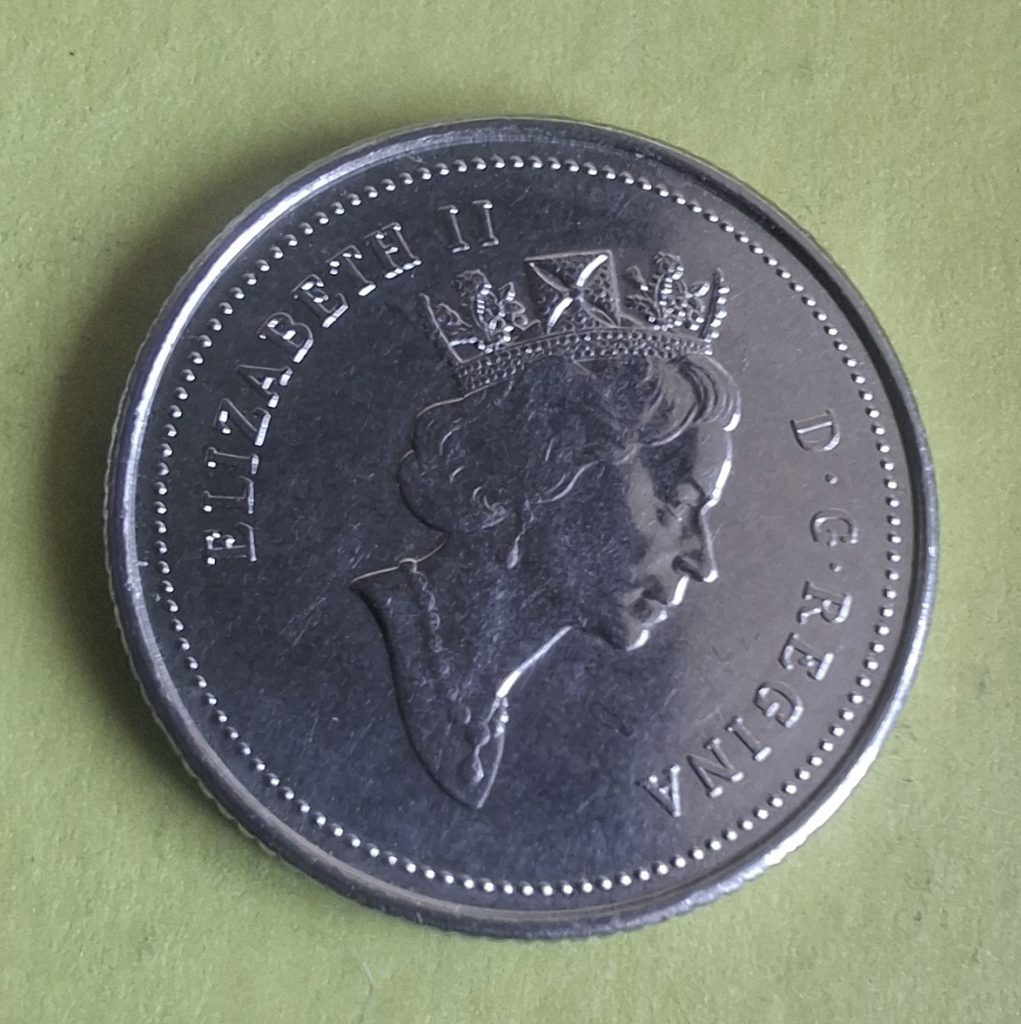
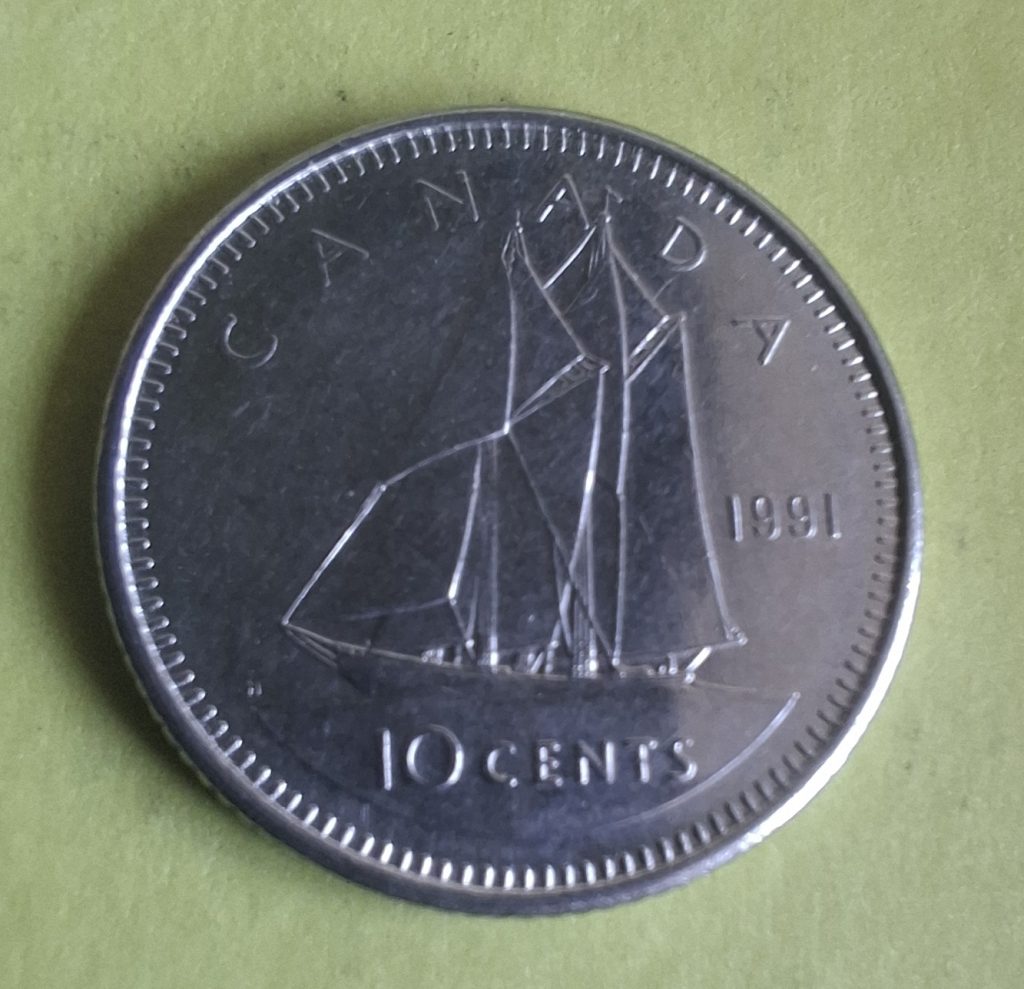
The Canadian 10-cent coin—commonly known as the dime—features on its reverse the famous sailing ship Bluenose, designed by sculptor Emanuel Hahn. This design has been used since 1937 and is one of the most recognizable symbols of Canada’s maritime heritage. In 1991, the coin was issued as a regular circulation piece (non-commemorative), retaining the traditional Bluenose reverse and the portrait of Queen Elizabeth II on the obverse.
2. Technical specifications
- Country: Canada
- Year: 1991
- Face value: 0.10 CAD (ten cents)
- Diameter: 18.03 mm
- Weight: approx. 2.07 g
- Composition: Nickel (99.9%, standard for the period)
- Edge: Reeded
- Krause catalog number: KM#183
- Type: Circulation coin (business strike)
3. Mintage
The reported mintage for 1991 is approximately 50,397,000 coins. This relatively high production makes the coin common in circulation, which explains why its value in worn condition is usually close to face value.
4. Condition and grading — impact on value
As with most modern, high-mintage coins, condition (grade) is the main factor affecting price:
- Circulated examples: generally worth only slightly more than face value, except in higher circulated grades.
- Brilliant Uncirculated / Mint State (MS): value increases steadily with grade. Coins graded MS65–MS69 can command notable premiums.
- Proofs and certified coins (PR / slabbed by NGC, PCGS, etc.): these can reach significantly higher prices. In some auctions, top-graded 1991 dimes have sold for tens or even hundreds of Canadian dollars.
Price guides usually list common circulated examples between ~CAD $0.10 and $0.80, while certified high-grade pieces can sell for much more depending on demand.
5. Varieties, errors, and collector interest
- Varieties / errors: The 1991 dime is not particularly famous for major varieties such as dramatic doubled dies. However, collectors have reported minor doubling, die cracks, and other modern minting errors. These can increase interest but usually add significant value only if well documented and professionally certified.
- What to look for: raised doubling (not flat machine doubling), unusual marks, off-center strikes, or striking on the wrong metal. Any suspicious piece should be photographed carefully and, if promising, submitted to a recognized grading service (NGC, PCGS, ICCS).
6. Indicative value ranges
Note: Collector values fluctuate with market demand, condition, and certification status.
- Common circulated (AG–VF): face value to about CAD $0.10–$0.50
- Uncirculated (MS60–MS65): typically a few dollars up to several tens of dollars, depending on quality
- High-grade certified coins (MS67–MS69) / proofs: may reach tens to a few hundred dollars in auction, especially for top-population or registry-quality examples
7. Practical tips for buying, selling, and storage
- Authentication and grading: certification is recommended for coins valued above a few tens of dollars.
- Storage: keep coins in rigid capsules, Mylar flips, or proper albums; avoid PVC and direct handling of the surfaces. Control humidity to prevent corrosion.
- Documentation: clear photos of obverse, reverse, and edge are essential for identification and resale.
- Market research: consult recent auction results and reputable price guides to understand real market prices.
8. Conclusion
The 1991 Canadian 10-cent coin is a common and affordable issue, ideal for collectors completing modern Canadian series. Its numismatic value rises significantly only in exceptional mint-state condition, as a proof, or when a genuine and certified error or variety is present. For general collecting, circulated examples are mainly of historical interest; for investment or higher value, focus on top-grade certified coins and well-documented varieties.