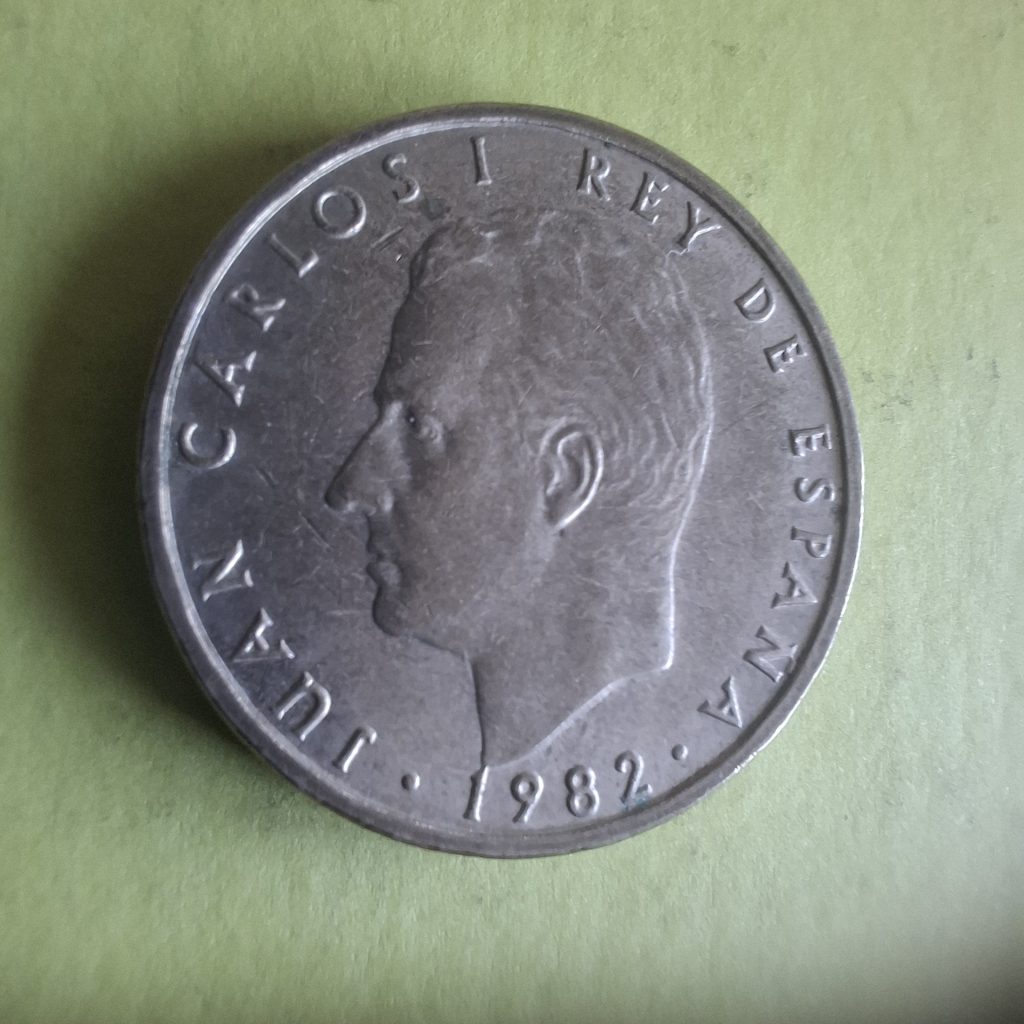
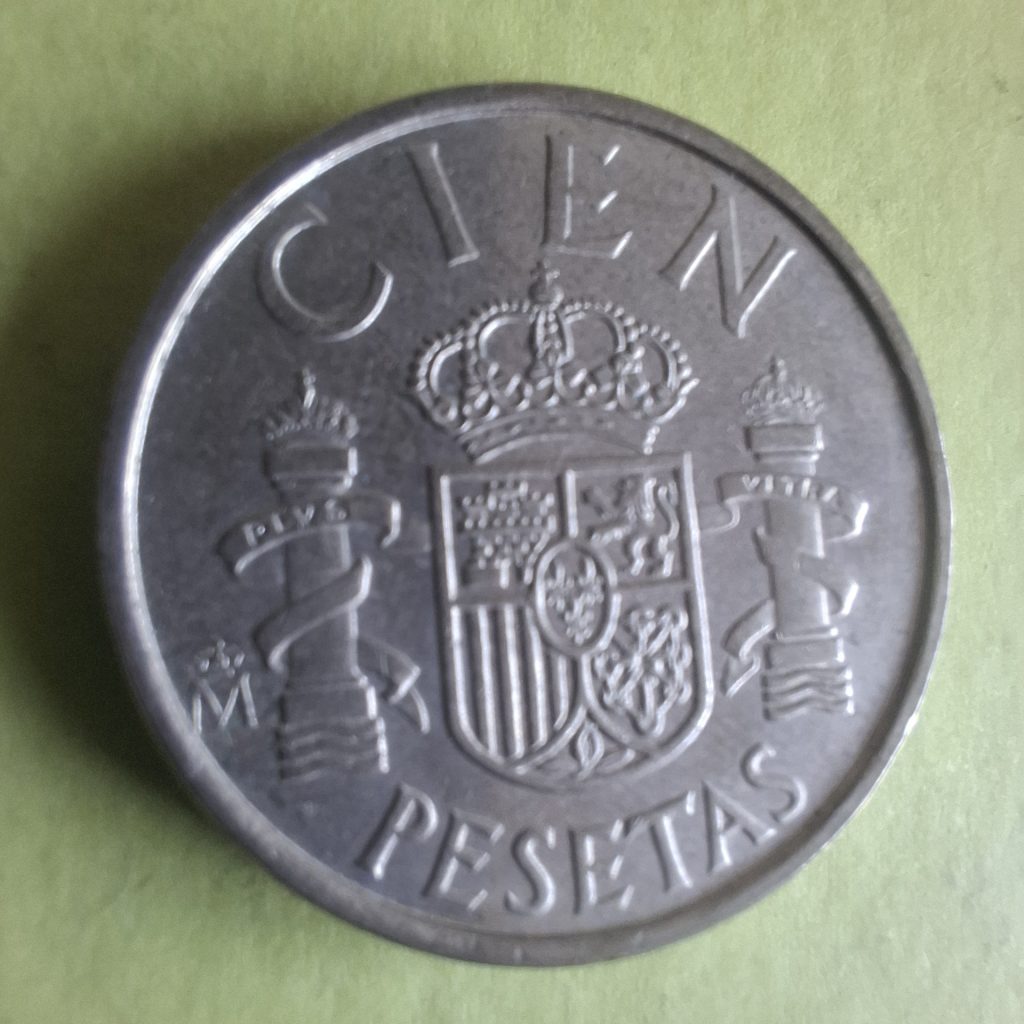
The 1982 Spanish 100 Pesetas coin is a common circulation issue released during the reign of King Juan Carlos I. Today, it attracts the interest of collectors and numismatists due to its historical context, physical characteristics, and market value.
General characteristics
This coin belongs to the standard circulation series introduced in 1982 as part of the modernization of the Spanish monetary system. It is struck in aluminium bronze, an alloy mainly composed of copper with additions of aluminium, nickel, iron, and manganese, giving it a golden tone and good resistance to wear.
In physical terms, the coin weighs approximately 9.25 grams, has a diameter of 24.5 mm, and a thickness of about 2.3 mm. The edge is milled, and the coin alignment is medal orientation (180°). It was produced by the Real Casa de la Moneda, the Spanish Mint located in Madrid.
Obverse
The obverse features a left-facing portrait of King Juan Carlos I, surrounded by the legend JUAN CARLOS I REY DE ESPAÑA, along with the reference year of circulation (which may vary depending on the specific coin). This inscription identifies both the monarch and the issuing country.
Reverse
The reverse displays the coat of arms of Spain, accompanied by the denomination written in letters: CIEN PLUS VLTRA M PESETAS, meaning One Hundred Pesetas, together with the mint mark (M beneath a crown). The use of lettering instead of numerals was characteristic of this initial series.
Mintage and circulation
The 1982 100 Pesetas coin was struck in very large quantities, with approximately 117,600,000 pieces minted in that year alone, making it a very common coin within Spanish circulation of the period. Coins of this denomination continued to be produced with minor design variations in subsequent years until 1990.
This coin remained in circulation until the peseta was replaced by the euro and was officially demonetized on 28 February 2002.
Numismatic value
From a numismatic perspective, the 1982 100 Pesetas coin is considered common due to its high mintage and widespread circulation. Most surviving examples show signs of use, which generally limits their collector value.
On the collectors’ market, value depends mainly on the state of preservation:
- Heavily circulated examples (grades G to F) usually have only minimal value.
- Coins in uncirculated condition (UNC / MS), showing no signs of wear, can achieve higher prices, though still modest when compared to rare or commemorative issues. In higher grades, values may reach several euros or, in exceptional cases, a few tens of euros.
Market observations indicate approximate values of around €4 to €7 for well-preserved 1982 examples, with variations depending on condition and current demand.
Conclusion
The 1982 100 Pesetas coin is an excellent example of late-circulation peseta coinage and an accessible piece for collectors who are starting or expanding a collection of 20th-century European coins. Although it is not rare, it holds historical significance as a symbol of the modernization of Spanish currency during the reign of Juan Carlos I, making it an interesting numismatic piece both for its design and its place in Spain’s monetary history.