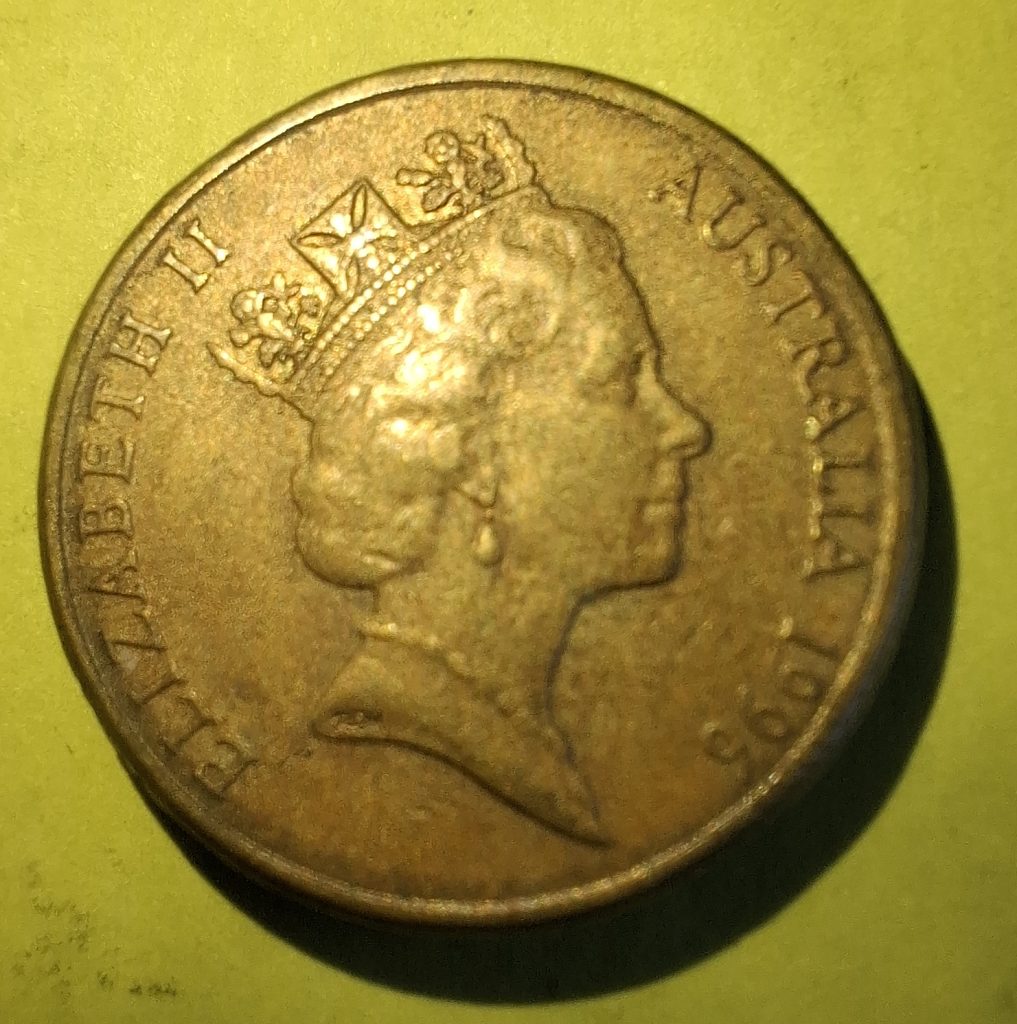
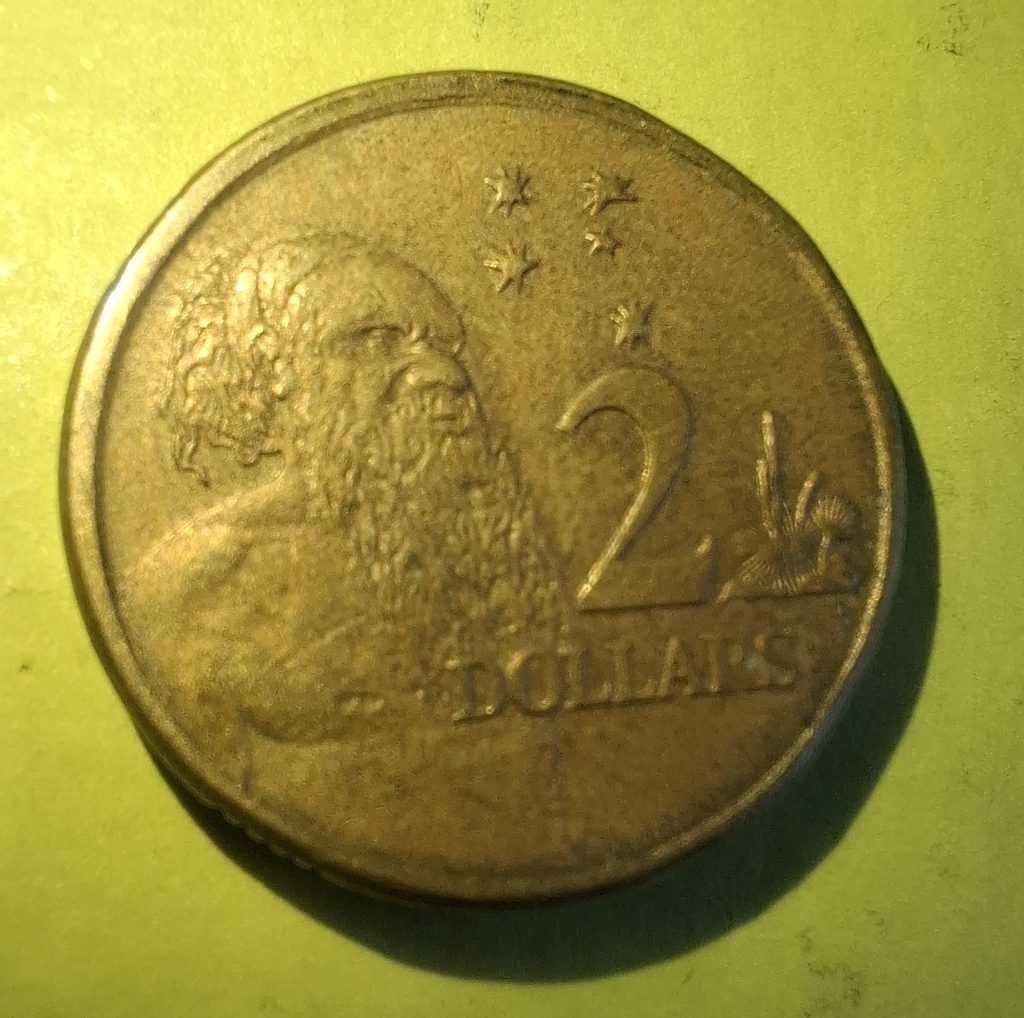
The Australian 2 dollars coin from 1996 is part of the country’s decimal currency system and is of interest to both beginner collectors and experienced numismatists. Although it is a common circulation coin, understanding its features and historical background helps explain why it is often kept and studied by collectors.
Origin and Historical Context
The 2 dollars denomination was introduced in Australia on 20 June 1988, replacing the 2-dollar banknote, which had a relatively short lifespan due to heavy wear in circulation.
The coin was designed to be practical for everyday use, taking into account durability, ease of identification for the visually impaired, and consistency with the rest of the Australian decimal coin series.
Design and Technical Specifications
The 1996 issue follows the standard design used for circulation coins, with the following characteristics:
- Obverse: Portrait of Queen Elizabeth II, facing right, designed by sculptor Raphael David Maklouf.
- Reverse: Depiction of an Aboriginal elder, with the Southern Cross constellation above and a native plant to the right. The design, by Horst Hahne, symbolizes Australia’s Indigenous culture and national identity.
- Composition: 92% copper, 6% aluminium and 2% nickel (aluminium-bronze alloy).
- Weight: Approximately 6.60 grams.
- Diameter: About 20.5 mm.
- Edge: Interrupted milled edge.
- Mint: Royal Australian Mint, Canberra.
- Mintage: Approximately 13,900,000 coins struck for circulation in 1996.
Market Situation and Numismatic Value
In general, the 1996 Australian 2 dollars coin is not considered rare, as it was a regular issue produced in large quantities, with many examples still found in circulation or in collections.
However, its numismatic value varies according to the coin’s condition:
- Circulated condition: Usually worth its face value or only slightly above it, depending on wear.
- Uncirculated (UNC) condition: Coins that show no signs of circulation may achieve a modest premium over face value, depending on demand and overall quality.
- Market guides and auction records indicate that well-preserved examples can sell for small amounts above face value, but prices remain relatively modest.
It is important to note that isolated online listings with very high asking prices do not necessarily reflect real market values. Actual selling prices tend to remain stable and moderate unless the coin is in exceptional condition.
Varieties and Related Special Issues
In addition to the standard circulation coin, there are non-circulating and commemorative 2 dollars issues, including silver versions with different designs, such as those from the Australian Kookaburra series. These are distinct from the regular circulation coin and have significantly higher values due to precious metal content and limited mintages.
Conclusion
The 1996 Australian Two Dollars coin is a representative piece of Australia’s modern decimal currency. While not particularly rare, it holds historical and cultural significance and remains of interest to collectors, especially when found in high-grade condition.