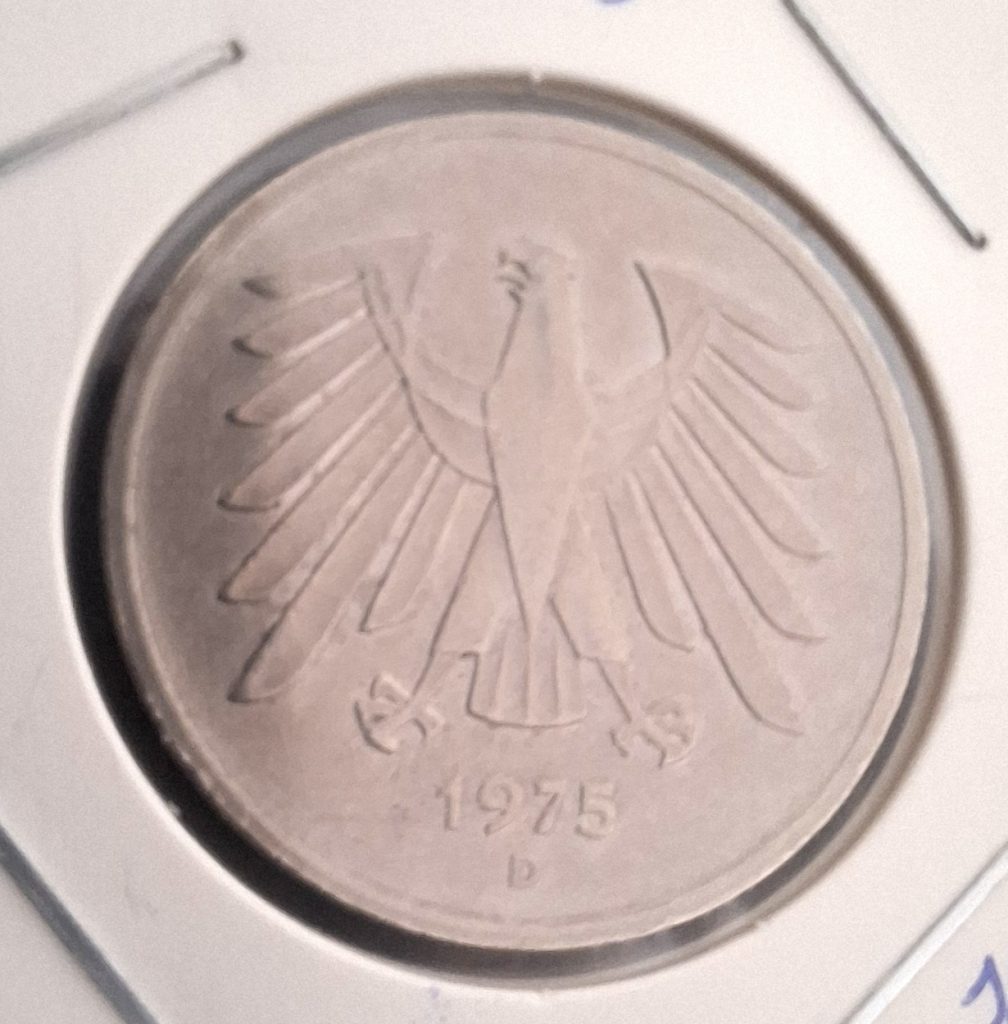
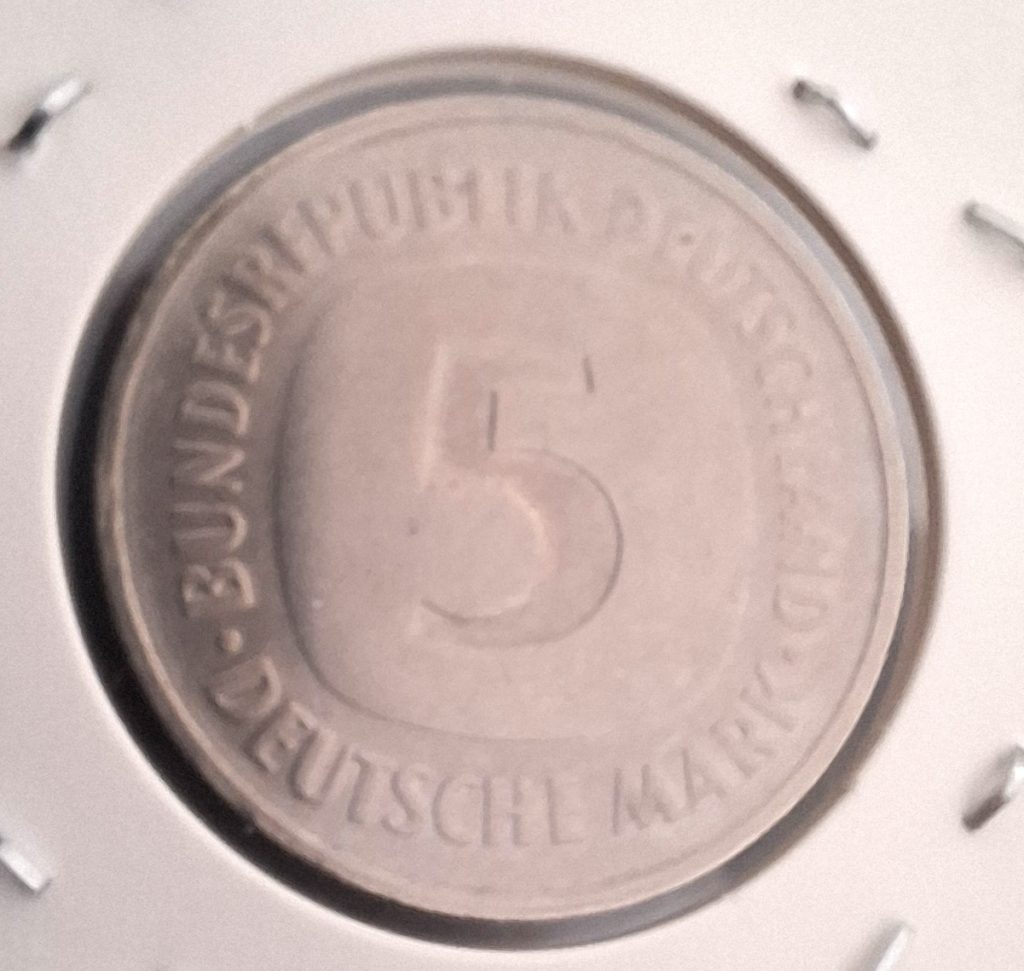
The 1975 German 5 Mark coin, known as the “5 Deutsche Mark,” is one of the most popular numismatic pieces from former West Germany. Issued by the Federal Republic of Germany before the introduction of the euro, this coin combines historical importance, monetary relevance, and collector interest.
Historical Background
In 1975, West Germany was experiencing a period of strong economic growth and political stability. The Deutsche Mark was considered one of the strongest currencies in Europe and became a symbol of Germany’s post-war recovery. During this period, 5 Mark coins circulated widely in everyday commerce and were commonly used by the population.
The 1975 issue belongs to the era of West Germany (“Bundesrepublik Deutschland”), before German reunification in 1990.
Technical Characteristics of the Coin
The standard circulation version of the 1975 5 Mark coin has the following specifications:
- Face value: 5 Deutsche Mark
- Country: West Germany
- Year: 1975
- Material: copper-nickel
- Weight: 10 grams
- Diameter: 29 mm
- Shape: round
- Edge inscription: “EINIGKEIT UND RECHT UND FREIHEIT” (“Unity, Justice and Freedom”)
- Designer: Wolfgang Theodor Doehm
The obverse displays the denomination “5 Deutsche Mark” and the inscription “Bundesrepublik Deutschland.” The reverse features the traditional German federal eagle, a national symbol of Germany.
Mint Marks
The coins were struck at different German mints, identified by letters:
- D — Munich
- F — Stuttgart
- G — Karlsruhe
- J — Hamburg
The mint mark appears on the coin and affects collector interest, since some mintages were lower than others.
Mintage and Rarity
Production numbers varied according to the mint:
- 1975 G (Karlsruhe): around 43 million pieces
- 1975 D (Munich): around 65 million
- 1975 F (Stuttgart): around 75 million
- 1975 J (Hamburg): around 67 million
Despite the large mintages, certain variants in excellent condition are more difficult to find.
Commemorative Silver Versions
In 1975, Germany also issued commemorative 5 Mark coins in .625 silver. These pieces honored important historical figures and cultural events, such as:
- Albert Schweitzer
- Friedrich Ebert
- European Architectural Heritage Year
The commemorative versions are generally more valuable to collectors because of their silver content and lower mintages.
Current Numismatic Value
The value of the coin mainly depends on:
- Condition
- Mint mark
- Type of issue
- Market demand
Approximate Values for the Common Copper-Nickel Version
| Coin Condition | Approximate Value |
|---|---|
| Heavily circulated | €1 to €3 |
| Good condition | €3 to €7 |
| Uncirculated (UNC) | €8 to €15 |
Some less common variants can exceed these values when professionally certified.
Values of the Silver Commemorative Versions
| Type | Approximate Value |
|---|---|
| Circulated | €5 to €20 |
| Uncirculated | €15 to €40 |
| Proof/FDC | €30 to €80 or more |
The market price of silver directly influences the value of these coins.
Interesting Facts
The 5 Mark coin was extremely popular in Germany and became informally known as the “Heiermann.” Many Germans consider it one of the most iconic coins of the 20th century.
Until 1974, 5 Mark coins were made of .625 silver. Beginning in 1975, the composition changed to copper-nickel due to rising silver prices on the international market.
Even after the introduction of the euro, old Deutsche Marks can still be officially exchanged at the German central bank.
Preservation and Collecting
To preserve numismatic value, collectors recommend:
- Storing the coin in capsules or PVC-free albums
- Avoiding harsh cleaning
- Keeping it away from humidity
- Certifying rare or perfect-condition examples
Experienced collectors place significant value on coins without scratches, stains, or excessive wear.
Conclusion
The 1975 German 5 Mark coin is an important historical piece from former West Germany. Although the standard version is not extremely rare, it remains highly appreciated by European collectors because of its classic design, historical significance, and connection to the Deutsche Mark era.
The commemorative silver versions hold higher value and may represent an excellent numismatic investment. For beginners, it is an accessible and historically meaningful coin to collect.