Introduction
The series of 1 Escudo coins issued during the First Portuguese Republic (approximately between 1924 and 1926) represents an interesting phase in Portuguese numismatics — marked by changes in metal composition, political context, and economic conditions that influenced both the design and rarity of the coin.
In this article, I will describe the history, technical characteristics, variants, rarity, and estimated market value of this coin.
Historical Context
- The Portuguese Republic was proclaimed in 1910, and the monetary system adopted the escudo as its new unit (replacing the real) shortly afterward.
- By the mid-1920s, Portugal was facing political and economic instability, which was reflected in its coin production.
- The 1 Escudo bronze–aluminium coin (a copper–aluminium alloy) appeared as part of the Republican issues intended for general circulation, though some variants later became sought after by collectors.
- According to specialized catalogs, this coin type is listed under the “System 1924–1927”, corresponding to issues dated between 1924 and 1927.
Technical Specifications
Below are the main specifications of the typical 1924–1926 version:
- Face value: 1 Escudo
- Metal: Bronze–aluminium (approximately Cu 950 + Al 50)
- Weight: ~8.0 g
- Diameter: ~26.8 mm
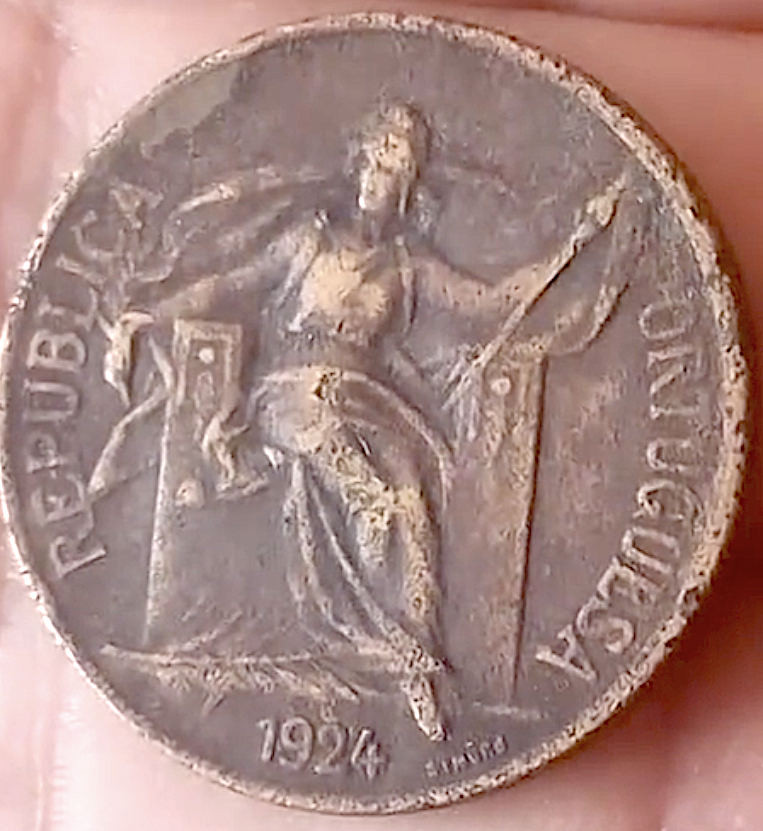
- Obverse: Depicts a seated figure holding a standard or symbol, with the inscription “REPUBLICA PORTUGUESA” and the year of issue.
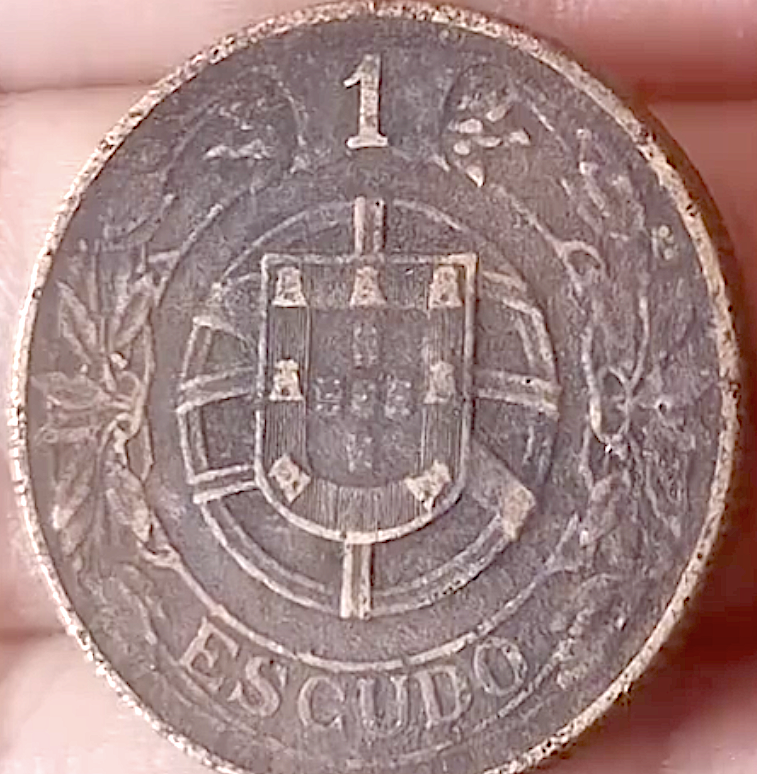
- Reverse: Displays the denomination (“1 ESCUDO”) and the Portuguese national coat of arms at the center, within a decorative circular border.
- Edge: Reeded (also called “fileted”).
- Mint: Imprensa Nacional – Casa da Moeda, Lisbon.
Variants, Mintage, and Rarity
- The 1924 issue had a relatively high mintage — approximately 7,716,000 coins.
- The 1926 issue is considerably rarer, with a reported mintage of around 2,346,000 coins.
- While not “extremely rare,” the 1926 coin appears less frequently among collectors (for example, about 20% frequency in catalog user data).
- Rarity increases with better preservation, as well as with specific error variants or minor module differences.
Market Value in Numismatics
As a general rule, a coin’s market value depends heavily on:
- its state of preservation,
- rarity,
- clarity of inscriptions, and
- absence of wear or damage.
For the 1926 issue, approximate values are as follows:
- Average circulated condition: €50 – €100
- Good condition (legible legends, moderate wear): €100 – €150
- Very fine to extremely fine: €200 – €250+
Coins in exceptional condition or with rare variants can reach several hundred euros.
It is important to note that “scarce” does not always mean “expensive” — demand and condition are decisive factors.
Points of Interest for Collectors
- Check the mint year carefully: 1924 and 1926 are the key dates for this coin.
- Condition is crucial: well-centered strikes with clear inscriptions and minimal wear are the most valuable.
- Original patina matters: avoid overly cleaned coins — harsh cleaning can reduce their value.
- Look for minting errors or unusual varieties: these can significantly increase collector interest.
- Proper storage: keep coins in numismatic albums or capsules, in a dry and clean environment, to preserve their condition.
Conclusion
The 1 Escudo coin of the Portuguese Republic, issued between 1924 and 1926, is a fascinating piece for collectors interested in 20th-century Portuguese numismatics. It represents a historical transition, features an appealing design, and offers good collecting opportunities — especially in well-preserved or rare variant forms.
If you own or plan to acquire one of these coins, be sure to carefully assess its physical condition, consult updated catalogs, and consider both mintage and year as key factors in evaluating its true value.