1. Historical Context
The small bronze denomination series (including the 1 centavo) was defined during the First Portuguese Republic for the new escudo system (introduced in 1911). The series was established by Law no. 679 (April 21, 1917), and coins began circulating in November 1917. Production continued into the early 1920s, with the series officially discontinued by later legislation during that decade.
2. Designer and Motif
The engraver and sculptor of this series was Domingos Alves do Rego.
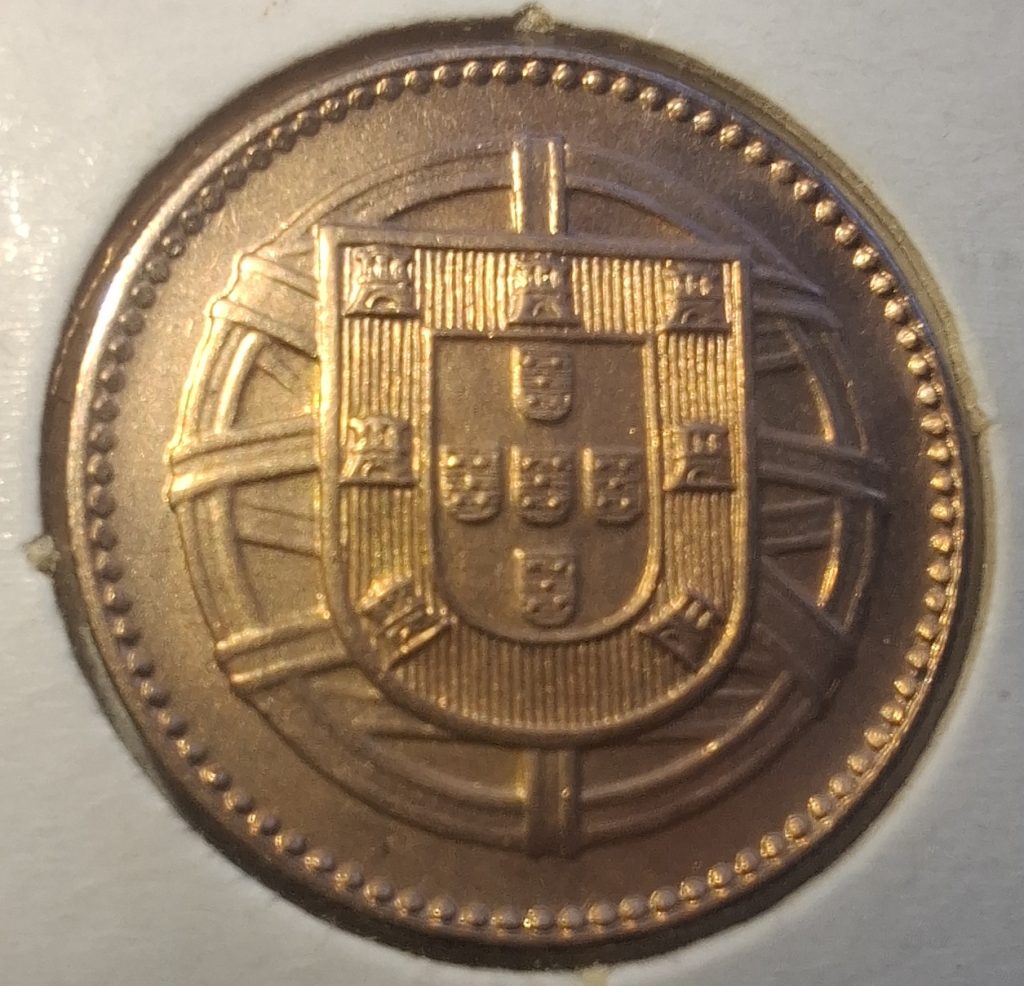
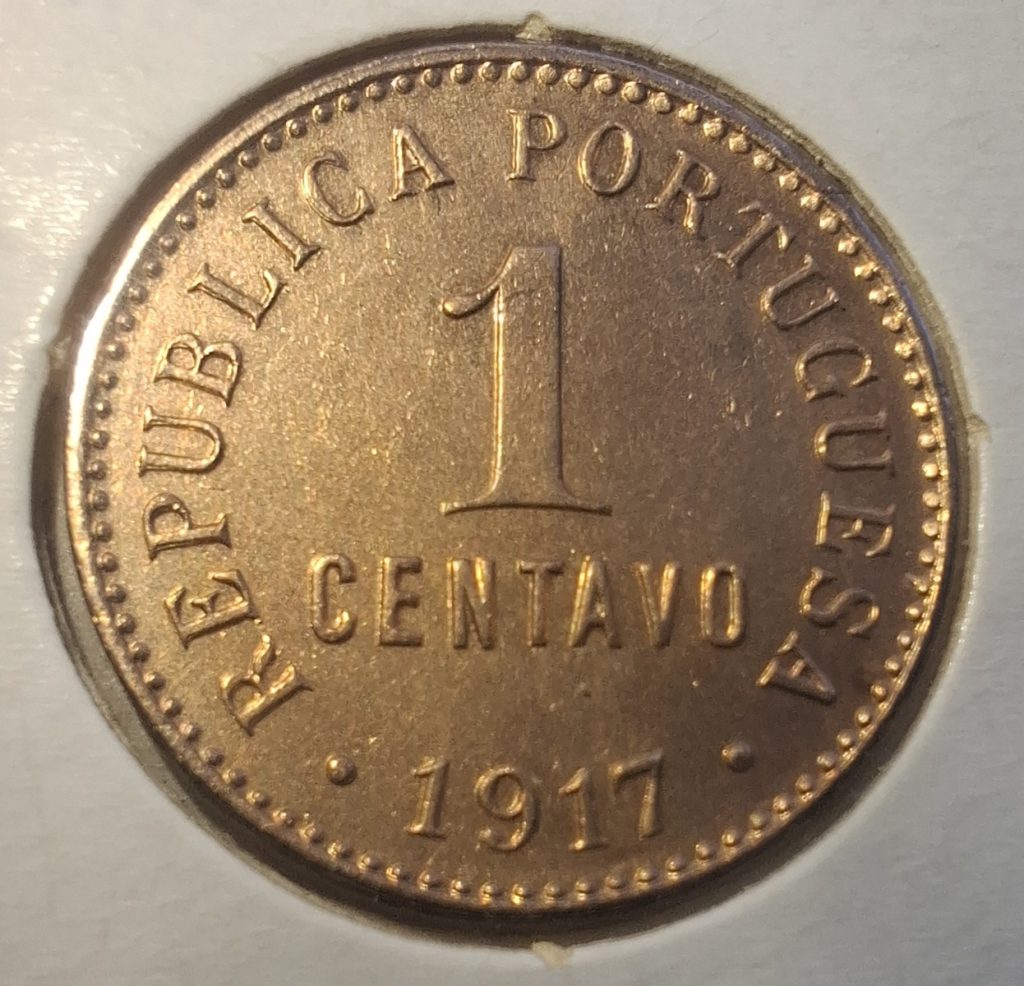
The obverse features the national coat of arms (shield with armillary sphere), while the reverse displays the denomination centered, surrounded by the inscription and the date below — a typical and austere design of the First Republic period.
3. Technical Specifications (Physical Characteristics)
- Year(s) of minting: 1917 (and similar issues until 1922)
- Metal / Alloy: Bronze (reported composition approx. Cu 960 – Sn 20 – Zn 20 for early issues)
- Weight: 3.0 g
- Diameter: 19.0 mm
- Thickness: ~1.6 mm
- Edge: Plain (smooth)
- Catalog references: KM#565; Numista #4931
4. Mintage and Circulation
According to numismatic catalogs and auction records, the 1917 mintage was approximately 2,250,000 coins.
The total for the series (1917–1921/22) reaches around 43 million pieces, explaining why the coin is relatively common in lower grades.
5. Varieties and Minting Issues
Some die-related varieties exist, such as:
- Partial or weak legends
- Die cracks and worn dies (“tired dies”)
While not rare, these are of interest to specialized collectors.
6. Rarity and Market Value (Numismatic Worth)
- Rarity: Generally not rare in circulated condition (Good to Very Fine). High mintages make it easily obtainable for First Republic collections.
- Indicative Market Prices:
- Heavily circulated / poor condition: often under €1–€3
- Average grades (Good / Very Fine): typically €2–€8
- High grades (Extremely Fine / UNC or certified): can reach tens of euros, especially for well-preserved examples or die-error variants
Note: Prices are based on recent market listings, online catalogs, and auctions. Actual values depend on market conditions, preservation, provenance, and certification. For an accurate valuation, a physical inspection or certification service (e.g., NGC, PCGS) is recommended.
7. How to Evaluate Your Coin
- Check the date and legends: look for die cracks or missing letters.
- Assess the grade: use standard grading terms (Good, Very Fine, Extremely Fine, Uncirculated). Coins with original luster and sharp reliefs (UNC/FDC) are considerably more valuable.
- Search for errors or variants: cracks, missing inscriptions, or unusual marks may increase collectibility.
- Consult references: Numista, the Standard Catalog of World Coins (KM), and online marketplaces (eBay, OLX, numismatic shops) for up-to-date pricing.
8. Buying and Selling Tips
- Selling: Take clear photos (obverse/reverse, edge), describe the condition accurately, and compare prices across marketplaces and specialized dealers. For coins worth more than a few dozen euros, consider third-party grading or authentication.
- Buying: Choose reputable sellers, request detailed photos, and ensure return policies for online purchases.
9. Conclusion
The 1 Centavo 1917 is a representative coin of Portugal’s First Republic — modest in design and not particularly rare due to large mintages. However, it holds historical value and collector appeal, especially in excellent condition, rare variants, or certified pieces.
It remains an accessible and educational coin for anyone building a complete early-escudo collection.