Introduction and Historical Context
The 5 groszy coin of 1816 belongs to the period of the Kingdom of Congress Poland, established after the Napoleonic Wars and formalized in 1815 under the sovereignty of Tsar Alexander I.
During this period, Poland’s monetary system was reorganized, and new denominations were struck according to a revised standard that combined Polish tradition with Russian imperial influence.
The 5 groszy series was minted in billon (a low-grade silver alloy) from 1816 through the mid-19th century.
Physical Description and Technical Specifications
- Year: 1816 (with variations spanning roughly 1816–1825)
- Issuer: Kingdom of Congress Poland (Alexander I)
- Denomination: 5 groszy (part of the zloty/grosz system)
- Composition: Billon — a base-metal alloy with a low silver content (around 0.192 fine in many catalogs)
- Weight: Approximately 1.45 g (minor variation may occur in circulated pieces)
- Diameter: About 17 mm
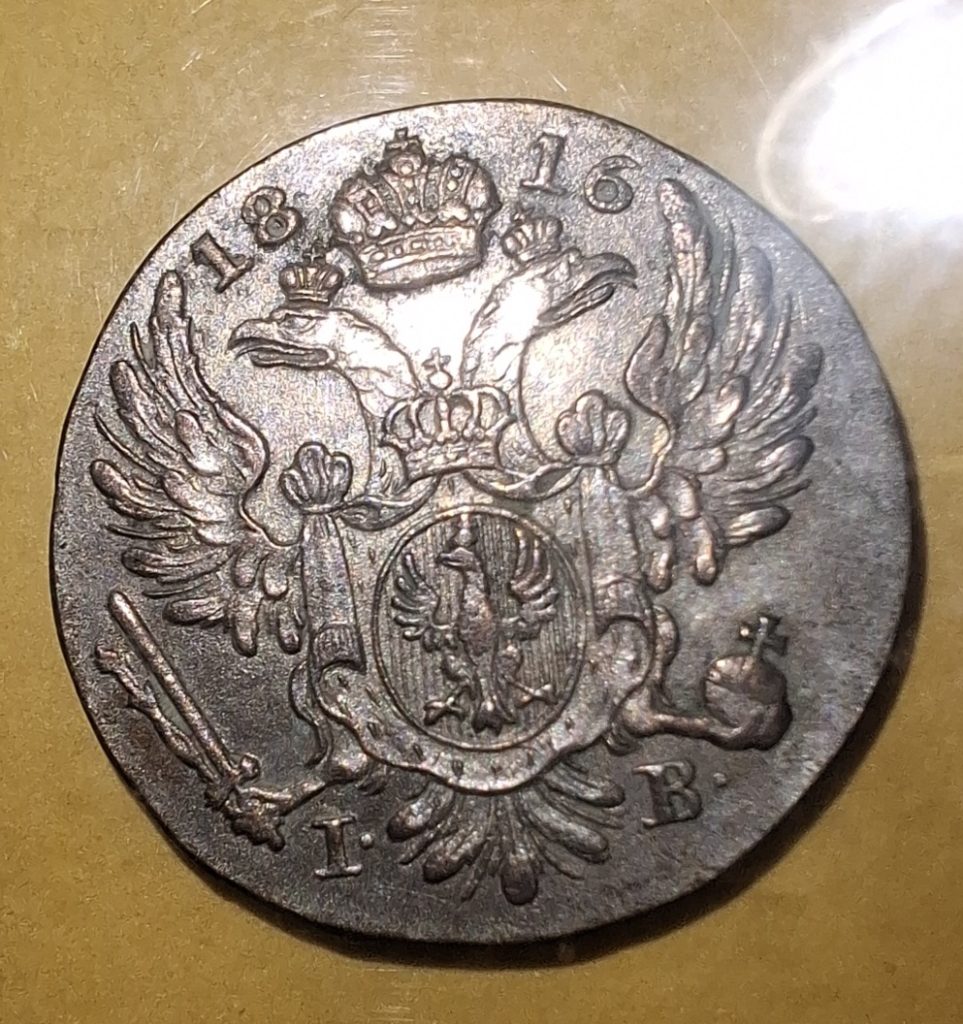
- Mint marks: Many 1816 examples display marks such as IB beneath the eagle/shield, identifying the mint and assayer — these determine the variant and sometimes the rarity.
Obverse and Reverse — Quick Identification
- Obverse: Typically shows the imperial eagle (double-headed eagle with central shield) and the year of issue above it, surrounded by heraldic details tied to the Kingdom of Congress.
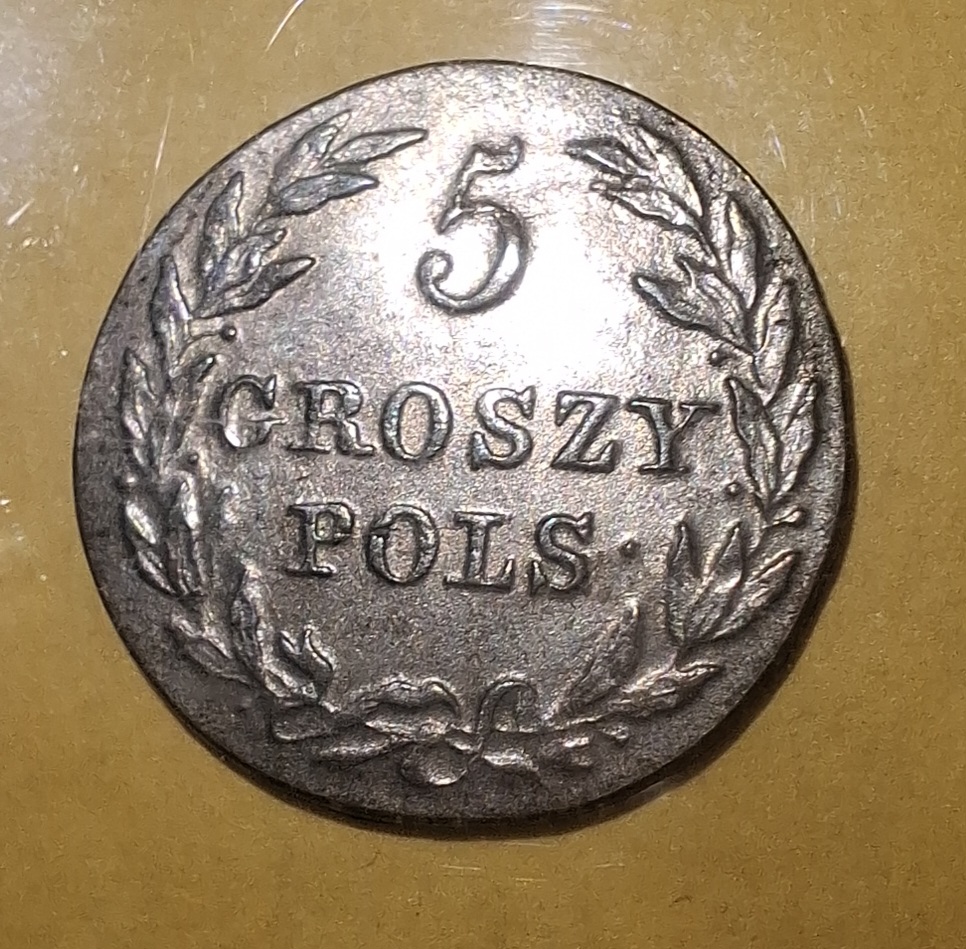
- Reverse: Large denomination numeral “5” above the inscription “GROSZY POLS.” or “GROSZY POLS”, encircled by a laurel or oak wreath — a classic design for this era.
The style of the lettering and wreath helps identify specific die varieties.
Varieties and Rarity
Minor differences exist in assayer marks, lettering, and die positioning.
Some combinations are quite common, while others (or coins in high grades) are much scarcer.
Specialized references — such as Numista, uCoin, or Polish catalogues (KM, Gumowski, Kopicki) — provide catalog numbers and rarity indicators used by collectors for classification.
Condition and Numismatic Evaluation
As with most early 19th-century coins, grade plays a major role in determining value:
- VF (Very Fine / MBC): Noticeably worn but with visible design details — typically modest in price, starting from a few dozen PLN/EUR; common in online listings.
- XF–AU (Extra Fine / About Uncirculated): Sharper features with less wear — moderately priced, found frequently in dealers’ inventories.
- MS/UNC (Mint State / Uncirculated): Exceptionally well-preserved pieces with full details are rare and command premium prices at auctions.
Observed Price Range (Based on Market Data)
Prices vary according to location, demand, and certification.
Approximate observed values (subject to market fluctuation):
- Heavily worn / common examples: ~€5–€10 on retail markets or small listings.
- VF–XF (good preservation): ~€15–€120, depending on variant and provenance — average retail range in specialized stores.
- Rare varieties / certified high-grade coins: can reach significantly higher values in auctions; certain records show notable sale peaks for exceptional specimens.
Note: Prices from marketplaces (Allegro, eBay) and auction platforms (uCoin, OneBid, Coinstrail) vary frequently — it’s best to check recent listings and auction results before buying or selling.
Authentication and Collector Tips
- Check weight and diameter against catalog data — significant deviations may indicate fakes or errors.
- Inspect mint marks and assayer letters (e.g., “IB”) — catalog references specify variants and die differences.
- Certification (NGC, PCGS, or reputable local services) is advisable for high-value pieces.
- Compare reference images from databases and auction archives to distinguish natural wear from damage or harsh cleaning.
Conclusion
The 1816 5 groszy coin is a representative piece from the Congress Kingdom period, appealing to collectors of 19th-century Polish numismatics.
Though it is a small-denomination coin, it offers interesting die varieties and historical context.
Common examples are affordable and accessible, while rare or exceptionally preserved pieces can achieve significantly higher market values, making this issue a rewarding addition to any Polish coin collection.