Introduction
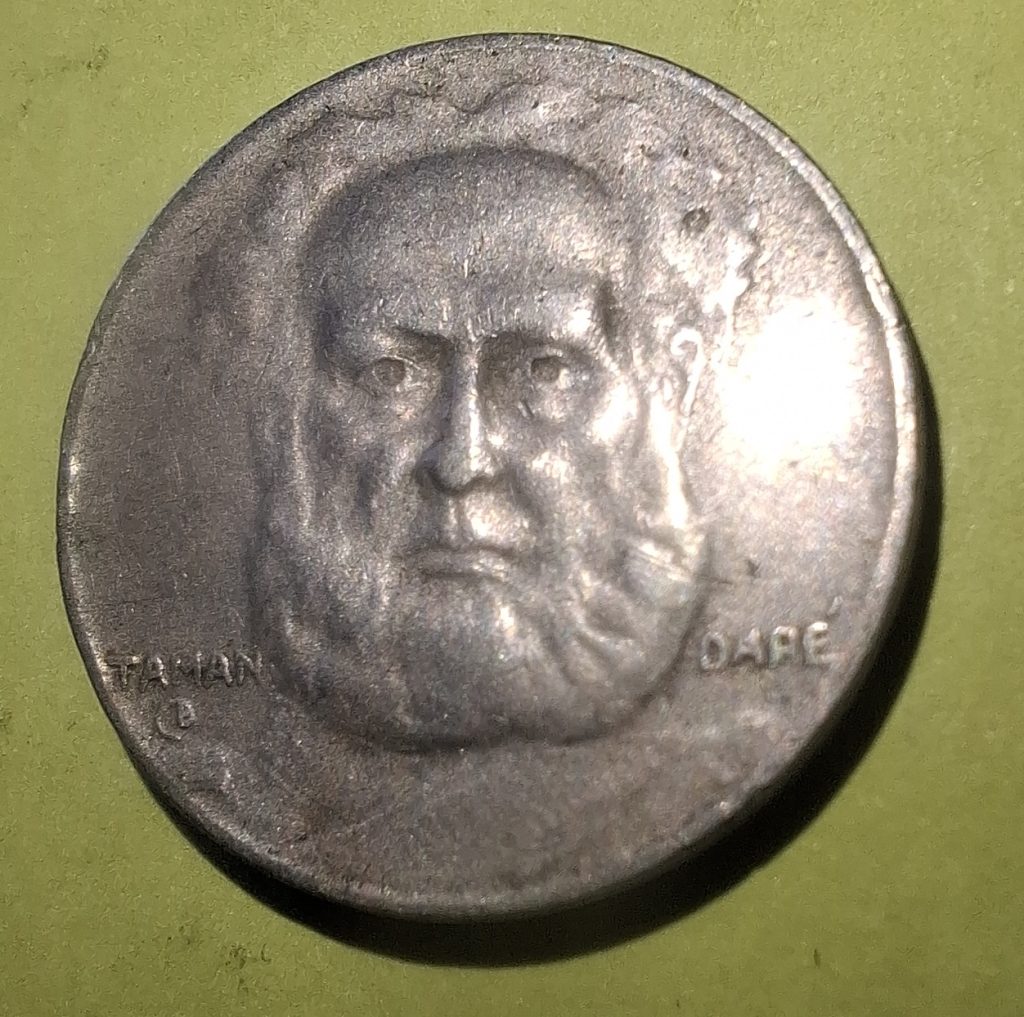
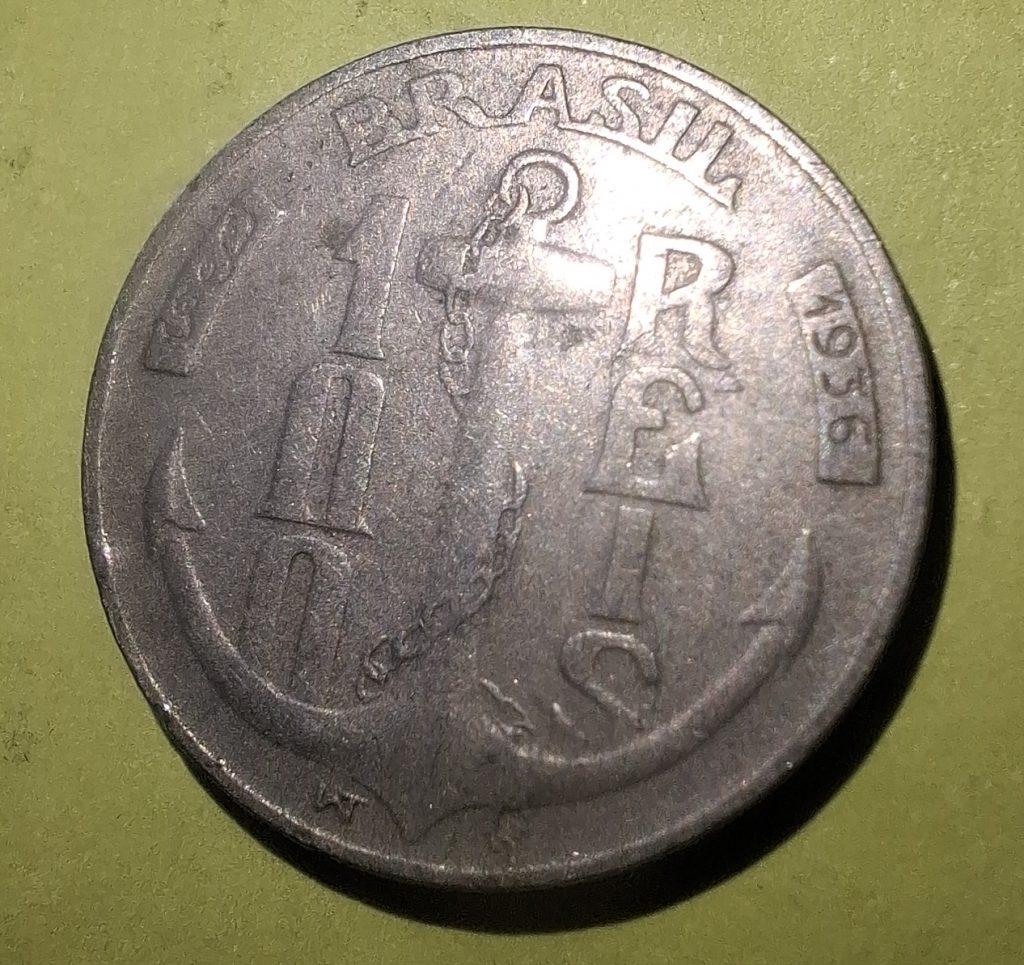
The 100 réis coin minted between 1936–1938 is part of the series known as Brasileiros Ilustres (“Illustrious Brazilians”), dedicated to important historical figures. The 1936 issue features on the reverse the portrait of Admiral Joaquim Marques Lisboa — the Marquis of Tamandaré — and, on the obverse, a stylized anchor dividing the denomination. It is a relatively common coin among Brazilian collectors, although certain variants (including minting errors) attract special interest.
Technical Specifications (Summary)
- Year: 1936 (series 1936–1938)
- Denomination: 100 réis
- Composition: Copper–nickel
- Weight: approx. 4.5 g (some references list 4.62 g)
- Diameter: ~19–20 mm
- Thickness: ~1.8 mm
- Edge: plain
- Alignment: medal
- Catalog reference: KM# 536 / Amato V-140 (depending on the catalog)
Note: Small discrepancies exist between catalogs, especially regarding diameter and weight. These usually arise from rounding or variation between minting batches.
Design and Authors
- Obverse: A stylized anchor and the coin’s denomination, emphasizing the maritime theme.
- Reverse: Bust of the Marquis of Tamandaré.
This coin is part of a tribute series to notable Brazilian historical figures. Some catalogs credit certain engravers for the artwork, depending on the year and reference consulted.
Mintage and Variants
- The series was minted over multiple years, and mintage figures vary by date. Some years reached large production numbers, while others had more limited runs.
- Variants and errors: Examples with rotated dies, double strikes, or other minting errors exist and are highly sought after, often commanding premium prices.
Numismatic Value (Indicative Ranges)
Important: Prices vary widely depending on condition (G, VF, EF, UNC), rarity, and specific variants. The ranges below are general estimates based on common market listings and catalog references.
- Circulated coins (G–VF): commonly found in the range of R$20–R$100.
- High-grade or uncirculated examples (EF–UNC): typically appear between R$50–R$200, depending on seller and demand.
- Rare pieces / errors / proofs: these can fetch significantly higher prices, depending on the rarity and appeal to collectors.
How to Evaluate Your Coin
- Condition: The most important factor. Wear on high points (the bust and anchor) or excessive cleaning lowers the value.
- Authenticity: Verify weight, diameter, metal composition, and edge.
- Variants or errors: Look for die rotation, double strikes, or striking defects.
- Compare multiple price sources: catalogs (KM, Amato, Bentes), auctions, collector forums, Numista, uCoin, and specialized dealers.
Where to Find More Information
- Online catalogs and communities such as Numista, uCoin, NGC Price Guide, and Brazilian numismatic forums.
These sources offer technical data, images, and sometimes price histories.
Conclusion
The 100 réis 1936 is an attractive piece for collectors of Brazilian numismatics. While most examples are affordable, variants, proofs, or minting errors can reach much higher values. For an accurate appraisal, it’s best to:
- Assess the coin’s condition,
- Compare against reputable catalogs,
- Check recent sale prices for the same year and grade.