1. Historical Context and Purpose of the Issue
In 1989, Portugal continued its series of commemorative coins dedicated to the Age of Discoveries. The 100 Escudos — “Madeira / Porto Santo” coin belongs to the second series celebrating the discoveries and the settlement of the Atlantic islands. It was issued mainly as a commemorative piece, available both for collectors and as a non-circulating legal tender coin.
2. Artistic Description (Obverse and Reverse)
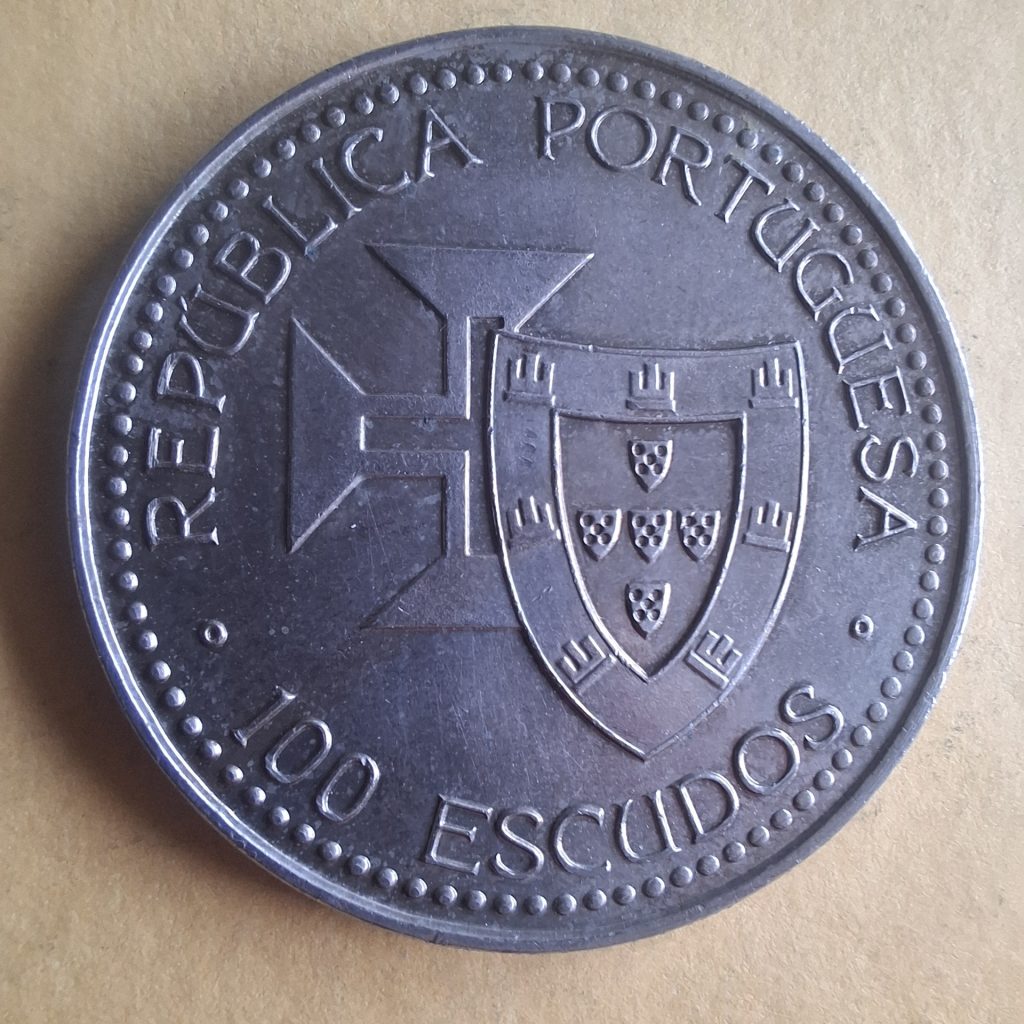
Obverse: Features the denomination “100 ESCUDOS” and the inscription “REPÚBLICA PORTUGUESA,” following the typical style of the commemorative issues of that period.
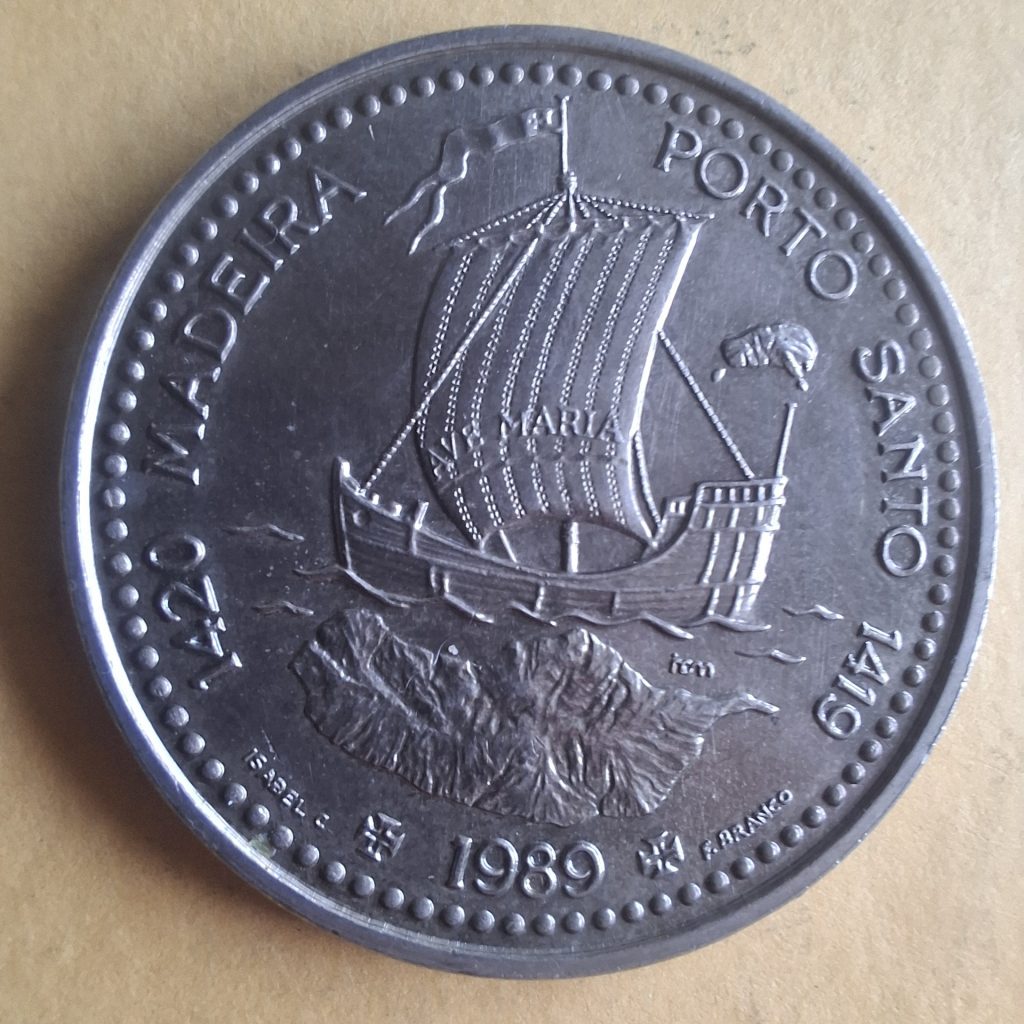
Reverse: Shows elements referring to the discovery and early settlement of Madeira and Porto Santo (years 1419/1420) along with inscriptions “MADEIRA / PORTO SANTO” and the engraver’s signature when present.
3. Technical Specifications (Standard Cupronickel Version)
Most catalogues list the standard cupronickel version with the following characteristics:
- Material: Cupronickel
- Diameter: ~34.0 mm
- Weight: ~16.5 g
- Edge: Reeded
- Catalogue Reference: KM #647 (Krause World Coins and Portuguese catalogues)
Note: Beyond this standard version, there are special editions in precious metals and proof versions (detailed below).
4. Varieties, Proofs, and Precious Metal Editions
- Standard Cupronickel Version: The most common type, intended for general collecting.
- Silver Versions (Proof/BNC Sets): Issued in limited quantities, typically in 0.925 silver and around 21 g. These are more sought after due to their lower mintage.
- Gold Editions: Some issues of this series exist in gold as high-value collector pieces, issued in very limited numbers and priced according to metal content and rarity.
5. Mintage and Rarity
The cupronickel version is generally abundant, which keeps its market value relatively low. The silver and gold editions, however, had much smaller mintages, making them significantly more valuable. Exact mintage figures vary depending on the catalogue consulted, and some special editions may require verification using official Casa da Moeda (Portuguese Mint) records.
6. Numismatic Value — Current Market Estimates
Based on listings, catalogues, and auction results (2024–2025):
- Cupronickel version (common): typically €1 to €5, depending on condition.
- Silver proof/BNC versions: usually €15 to €40+, depending on condition, packaging, and demand.
- Gold editions: vary widely, often hundreds to thousands of euros, depending on weight, rarity, and authentication.
Note: Real value always depends on condition, authentication, packaging (box/certificate), and the market at the time of sale.
7. How to Identify and Evaluate Your Coin
- Weight and Diameter:
- ~16.5 g = cupronickel
- ~21 g = typical silver proof
- Color and Sound: Silver and gold have different tones and acoustic properties than base metal.
- Markings: Look for purity marks (e.g., “Ag 0.925”) and sharper proof details.
- Packaging: Boxes and certificates greatly increase collectible value.
- Catalogue Comparison: References such as KM #647 or Portuguese catalogues help confirm the variety.
8. Tips for Buying and Selling
- Buying:
- For base-metal versions, focus on condition.
- For silver or gold, ensure certification, accurate weight, and clear photographs.
- Selling:
- High-quality photos, precise measurements, and original packaging boost value.
- For precious metal editions, consider reputable numismatic dealers or auction houses.
9. Conclusion
The 100 Escudos — Madeira and Porto Santo (1989) coin is a notable piece within Portugal’s Discoveries commemorative series. The cupronickel issue is common and inexpensive, perfect for casual collectors or those interested in Portuguese history. The silver and gold editions, however, offer genuine rarity and higher value.
To determine the precise worth of a specific coin, check its metal, weight, condition, and whether it includes original packaging or certification. For high-value pieces, a professional evaluation is recommended.