1. Background and purpose
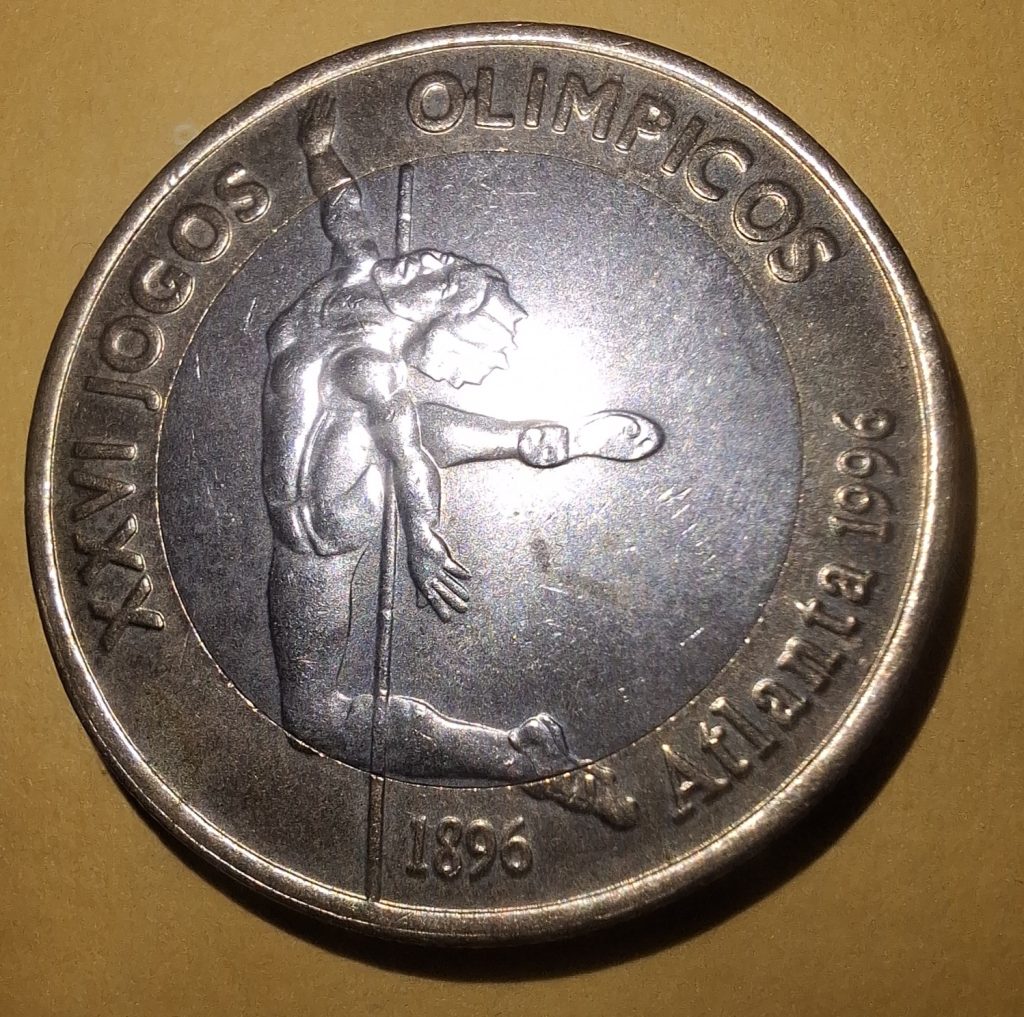
In 1996 Portugal issued a 200 escudos commemorative coin to mark the XXVI Olympic Games — Atlanta 1996 and, in some releases, also the centenary of the Olympic movement (1896–1996). There were two main formats: a bimetallic version intended for circulation or general commemorative use, and a proof version in silver for collectors.
2. Known variants and mintages
Collectors will encounter two main variants:
Bimetallic version (KM#687)
- Intended for circulation and general commemorative distribution
- Bimetallic structure (nickel-brass ring, cupronickel core)
- Diameter: 28 mm
- Weight: 9.8 g
- Mintage: approximately 1 000 000 pieces
Silver Proof version (KM#687a)
- Minted exclusively for collectors
- .925 silver (Sterling)
- Diameter: 36 mm
- Weight: about 26.5 g
- Proof finish, issued in case with certificate
- Mintage: roughly 10 000 pieces
(Portugal issued other 200-escudo commemoratives in 1996 with unrelated themes; the specs above apply specifically to the “Olympic Games — Atlanta 1996” issue.)
3. Design and engraver
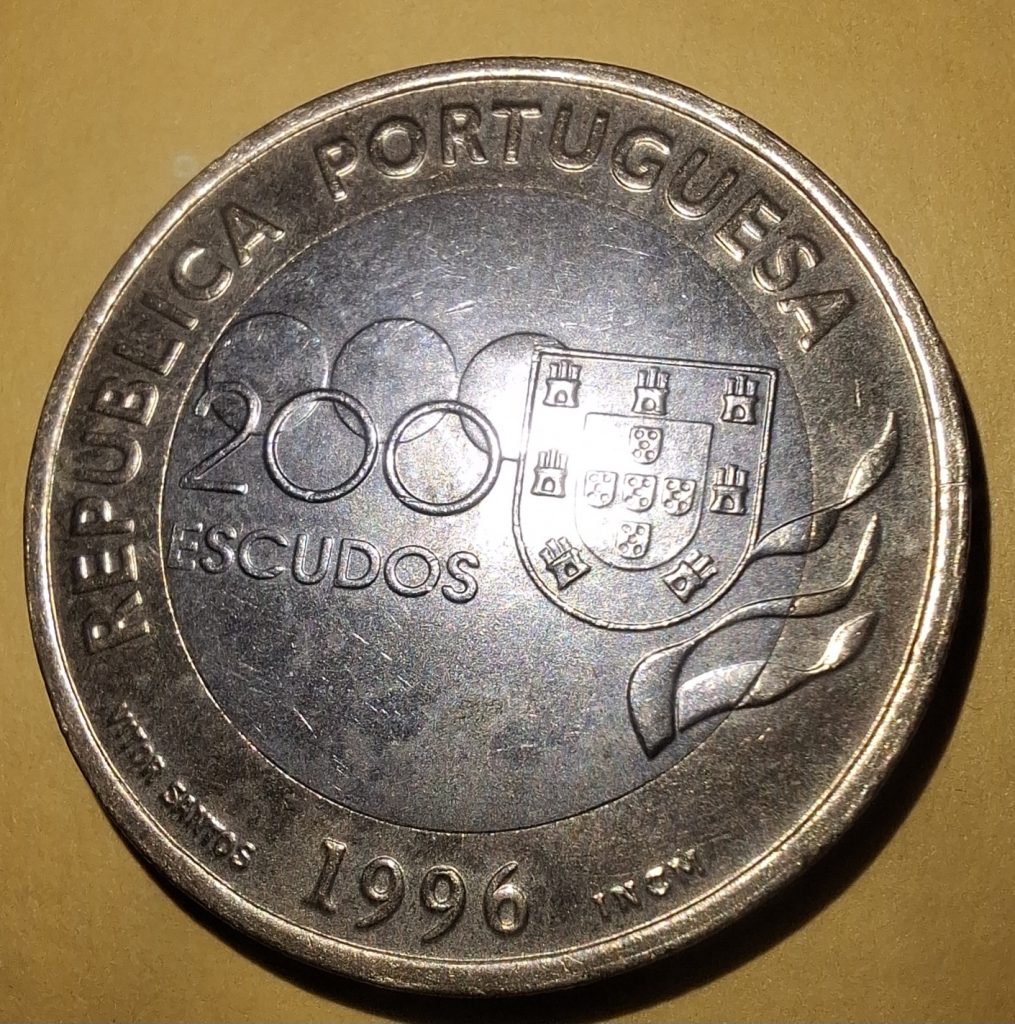
- Obverse: “REPÚBLICA PORTUGUESA”, the face value, and the year.
- Reverse: the inscription “XXVI JOGOS OLÍMPICOS 1896 Atlanta 1996” alongside stylized Olympic-themed elements.
- Engraver: catalog entries identify Vítor (Victor) Santos as the designer of the Olympic commemorative for that year.
4. Technical specifications (summary)
Face value: 200 Escudos
Bimetallic (UNC/circulation):
- 28 mm; 9.8 g; Cu-Ni core with Ni-brass ring
- Mintage about 1 000 000
Silver Proof (collector edition):
- .925 silver; 36 mm; approx. 26.5 g
- Proof finish, boxed with certificate
- Mintage about 10 000
5. Legal status
Like all pre-euro Portuguese coins, it has been demonetized since 2002 and now holds only historical and numismatic value.
6. Numismatic value — what determines the price
The coin’s market value depends on:
- Variant (bimetallic vs. silver proof)
- Condition (UNC, FDC, Proof, scratches, marks)
- Original packaging (cases and certificates add value)
- Rarity and demand
- Third-party grading (NGC/PCGS) for proof examples
Typical price ranges (2024–2025 market)
- Bimetallic version (UNC/general): usually €1.50 to €6, because the mintage was large and many pieces survived.
- Silver Proof (with case): generally €25 to €60, though certified high-grade pieces can reach higher figures at auction.
These ranges are approximate and change depending on platform, country, and market trends.
7. Tips for buyers and sellers
For buyers:
- Check for sharp, well-lit photos
- Confirm whether the coin is bimetallic or silver
- Proof coins should ideally include the original box and certificate
- Compare listings across several marketplaces
For sellers:
- Provide clear photos of obverse, reverse, edge, and the case
- Identify the exact variant
- Mention the presence or absence of the certificate
- Grading can significantly raise the price for proof editions
8. Conclusion
Portugal’s 1996 200 Escudos Olympic coin is a nostalgic piece from the late escudo era. The bimetallic version is very common, but the silver proof edition remains desirable among collectors due to its limited mintage and higher production quality. Anyone evaluating a piece should consult recent sales and, when needed, seek a professional opinion.