1. Historical Context
The 5 réis coin of 1910 was issued in Portugal during the reign of King Manuel II (1908‑1910), the last king of the Portuguese monarchy before the proclamation of the Republic on October 5, 1910.
It is one of the last coins denominated in réis, as in 1911 Portugal transitioned to the escudo as its official currency.
2. Technical Specifications
Key features of the coin include:
- Face value: 5 réis
- Year of issue: 1910
- Metal: Bronze (approximately Cu 96 %, Sn 2 %, Zn 2 %)
- Weight: around 3 grams
- Diameter: 21 mm
- Edge: smooth
- Catalog reference: KM #555
- Mint: Imprensa Nacional – Casa da Moeda (Lisbon)
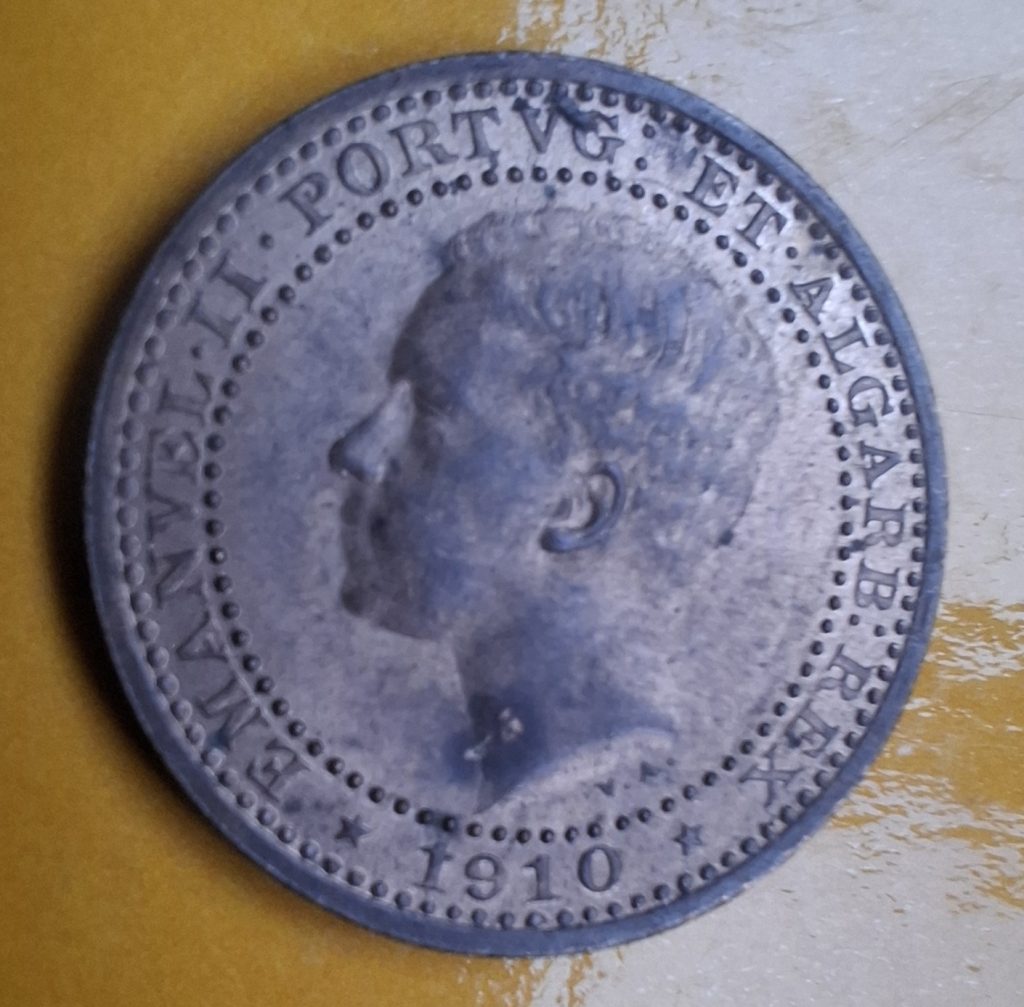
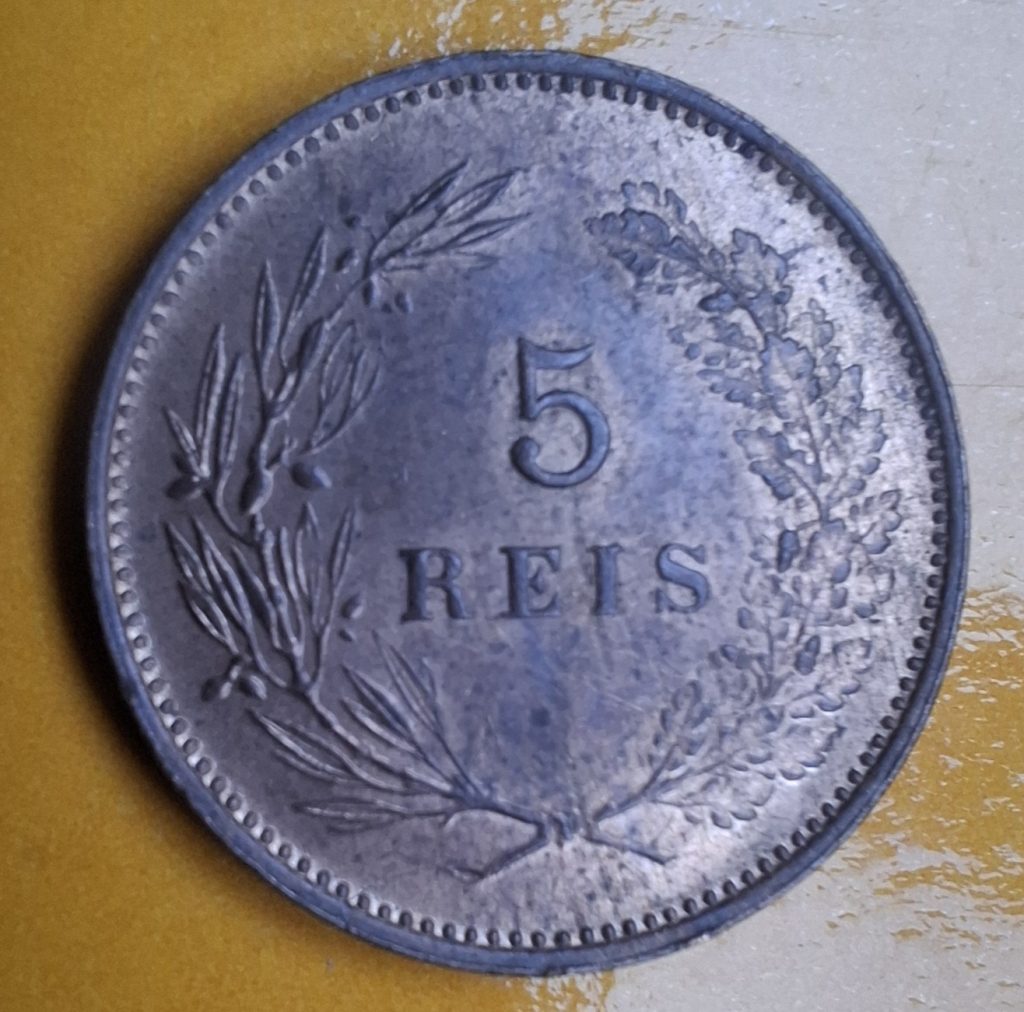
On the obverse, the coin shows the effigy of King Manuel II with the inscription “EMANVEL II PORTVG : ET ALGARB : REX” and the date “1910.” The reverse displays the value “5 REIS” surrounded by a wreath.
3. Mintage and Circulation
The estimated mintage is around 1,000,000 coins.
Despite this relatively high mintage, many coins experienced wear or damage, and the introduction of the escudo in 1911 rendered them obsolete for circulation, which affects the number of surviving specimens in good condition.
4. Numismatic / Collector Value
The market value depends heavily on the coin’s condition (wear, patina, original shine, scratches), rarity of any variant, and collector demand. Approximate values are:
- Around US$2 in “Very Good” (VG) or “Fine” (F) condition
- About US$3.80 in Extremely Fine (XF) condition
- Up to US$9–9.30 in Almost Uncirculated (AU) condition
In Portugal, examples in average circulated condition can sell for a few euros, while coins in superior condition may reach slightly higher prices. This is not an extremely rare coin, so values are generally modest compared to silver or gold issues.
5. Factors Influencing Value
- Condition: sharper details and minimal wear increase value.
- Patina: a uniform patina can enhance appeal; corrosion or spots reduce value.
- Variants / mint errors: although rare for this issue, any errors or unusual features can raise value.
- Historical context: being one of the last réis coins and from King Manuel II’s reign adds historical interest.
- Market supply: the more coins available, the more modest the value.
- Authenticity: verify weight, diameter, and minting style to avoid counterfeits.
6. Final Considerations
The 1910 5 réis coin is a great piece for collectors of Portuguese coins, particularly those completing the late-monarchy or réis series. Its appeal is mostly historical and for collection completeness rather than as a high-value investment.
For those who own a coin:
- Check its weight and diameter (≈ 3 g, 21 mm)
- Assess its condition visually or with a numismatist
- Avoid aggressive cleaning, which can reduce value
- Store it in a dry environment to preserve metal and patina