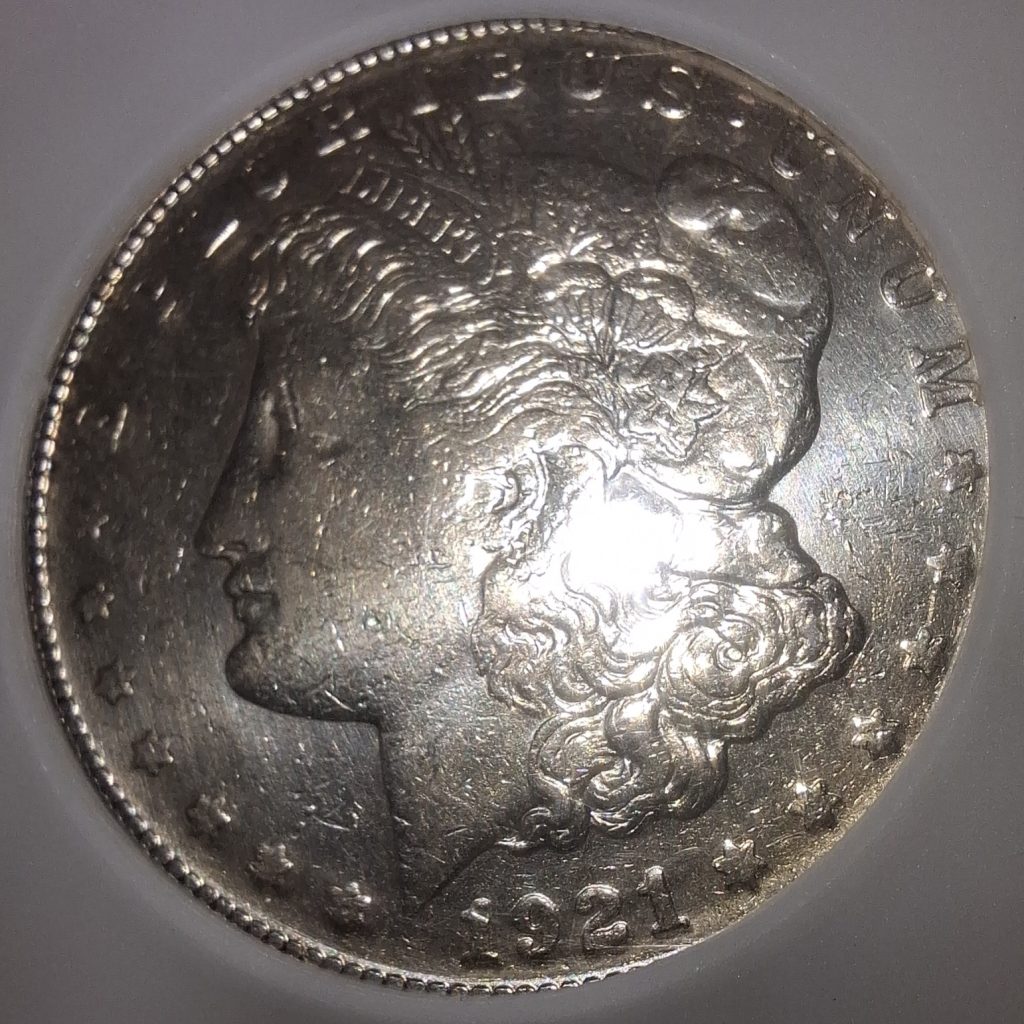
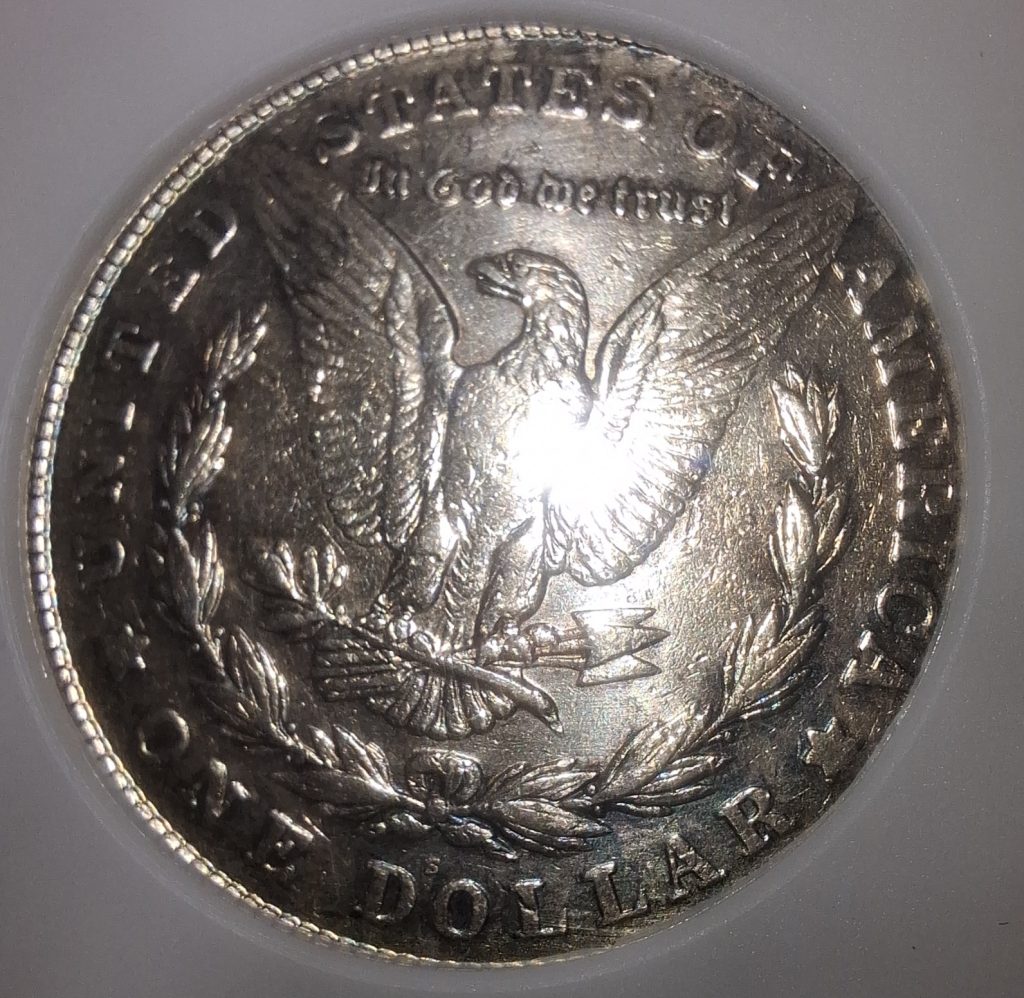
1. History and Background
The coin known as the Morgan Dollar was designed by engraver George T. Morgan and circulated in the United States from 1878 to 1904, resuming briefly in 1921.
The large-scale production of the 1921 issue was driven by several factors:
- The Pittman Act (1918) required the conversion of silver bullion into new silver dollars.
- The original dies and hubs for the Morgan Dollar had been destroyed or had become obsolete, so new hubs were created in 1921 — resulting in noticeable differences such as a lower relief.
- The year 1921 marked the end of the Morgan series, just before the introduction of the Peace Dollar later that same year.
2. Technical Specifications
- Composition: 90% silver, 10% copper
- Weight: approx. 26.73 g
- Diameter: 38.10 mm
- Designer: George T. Morgan (obverse and reverse)
- Mints and Mintages (1921):
- Philadelphia (no mintmark): 44,690,000 coins
- Denver (“D”): 20,345,000 coins
- San Francisco (“S”): 21,695,000 coins
3. Collector Features
Although mintage numbers were extremely high, the 1921 Morgan Dollar holds appeal as the final issue of the classic series.
- It is common in lower grades, given the millions struck.
- Visually, it differs from earlier Morgans due to flatter relief and less pronounced details, a result of the redesigned hubs.
- Certain special varieties exist, such as DMPL (Deep Mirror Proof-Like) or “Pitted Reverse”, which can command premium prices among collectors.
4. Estimated Numismatic Value
Values vary widely depending on condition (grade), mintmark, and eye appeal:
- Philadelphia (no mintmark):
- Circulated condition: approx. €25–40.
- Mint State (MS60–MS63): typically €50–150, depending on mint and luster.
- High grades (MS65+): may reach hundreds or even thousands of euros — one 1921-P MS67 sold at auction for €19,975.
- Denver (“D”) and San Francisco (“S”) mints:
- Slightly less common, often commanding modest premiums.
- Example: 1921-D (mintage 20,345,000) valued somewhat higher in higher grades.
A recent catalog lists 1921-P values around €68 in average condition, rising to €292 or more for uncirculated coins.
5. Considerations for Owners
- Identify the mintmark: located below the eagle on the reverse — “D”, “S”, or none (Philadelphia).
- Check the condition: scratches, wear, luster, and evidence of cleaning or polishing all affect the coin’s worth.
- Avoid cleaned coins: harsh cleaning greatly reduces collector value.
- Given the high mintage, average coins are often worth primarily for their silver content unless in exceptional condition.
- For higher-grade examples, professional certification (e.g., PCGS or NGC) is strongly recommended, as it provides authentication and can significantly raise market value.
6. Notable Varieties and Errors (1921 Morgan Dollar)
Although 1921 Morgans are not rare overall, certain error types and special variants attract collector interest:
| Type / Variety | Description / Feature | Example of Value or Relevance |
|---|---|---|
| Proof-Like / DMPL (Deep Mirror Proof-Like) | A few coins struck with mirror-like surfaces; likely unofficial or special strikings. Extremely rare. | Can be worth many times more than regular issues. |
| Struck-Through Error | Foreign object (e.g., string or fiber) on planchet during striking leaves impressions on the surface. | Example: 1921-D struck through string, MS63 — listed around €800. |
| Dot Under Date / Die Crack | A die flaw resulting in a dot or raised mark under the date; sometimes with visible die cracks. | Listed as “rare date error” with asking prices near €20,000. |
| Curved Clip / Planchet Clip | Part of the blank missing due to improper cutting, leaving a curved or straight clip. | Example: 1921 NGC MS64 curved clip Morgan — around €630. |
| Double Die (Obverse/Reverse) | Doubling of inscriptions or devices during hubbing process. | Example: “Major Errors! Double Die OBV & REV, 1921-S Morgan Silver” — offered at ~€1,199. |
| Lamination / Planchet Flaws | Metal separation or peeling due to impurity in planchet. | “Lamination reverse” or “planchet delamination” examples seen at moderate collector premiums. |
7. Final Remarks
The 1921 Morgan Dollar (S mint) represents the closing chapter of a historic U.S. silver coin series.
While common in lower grades, it remains highly collectible for its symbolic significance, silver content, and potential for rare error varieties.
For collectors, an uncirculated or well-preserved certified example — especially with proof-like fields or notable errors — can be both a beautiful display piece and a sound numismatic investment.