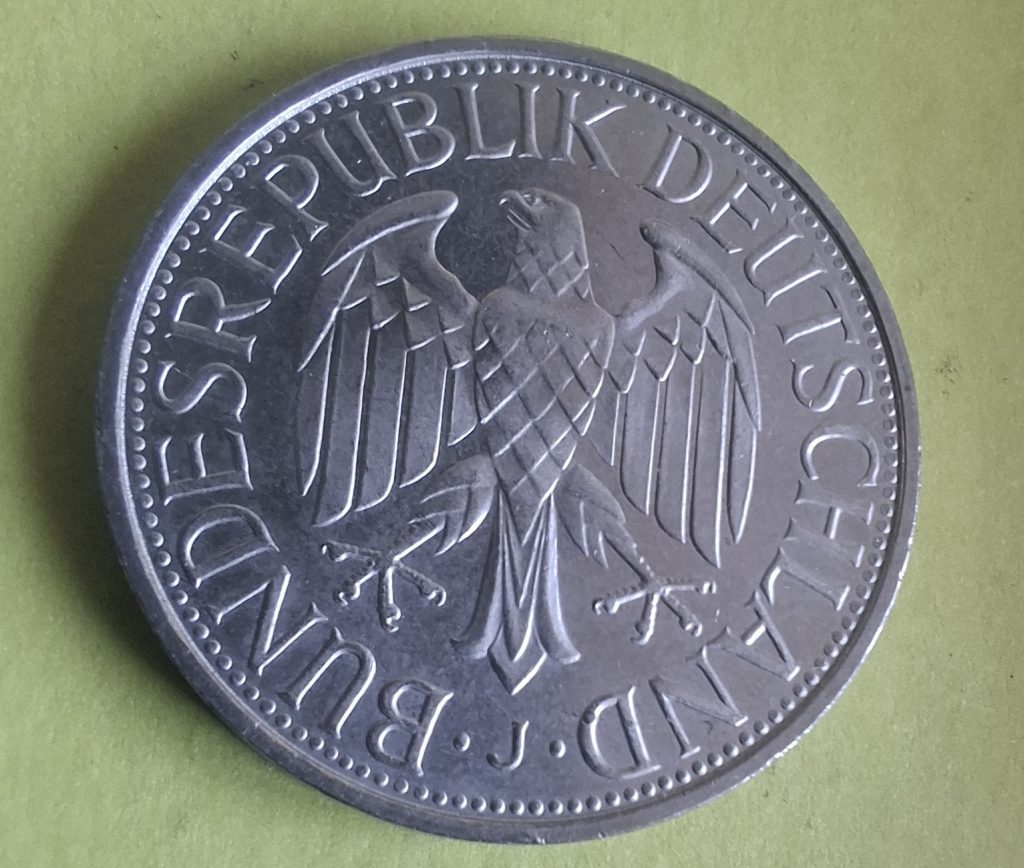
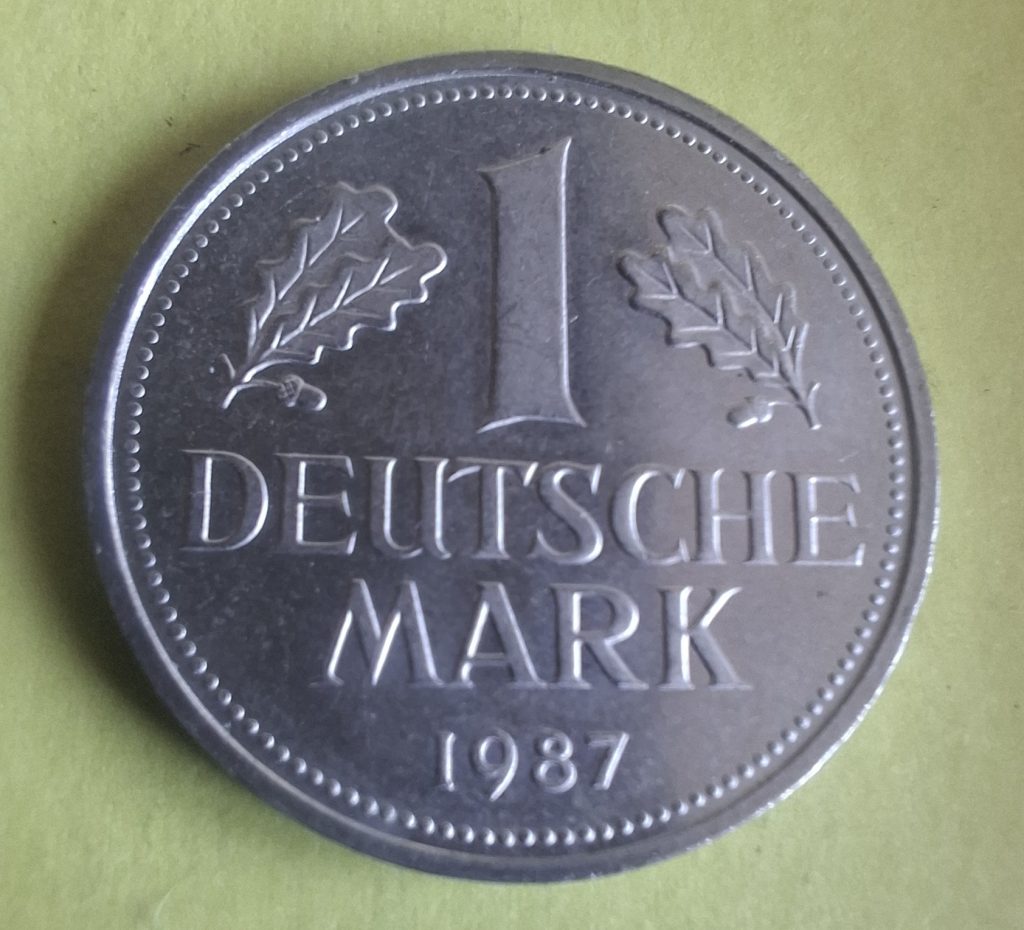
The 1987 1 Mark coin is part of the circulating coinage of the Federal Republic of Germany (Bundesrepublik Deutschland) before the introduction of the euro in 2002. Although it is a relatively recent coin, it still attracts interest among collectors due to its mint mark variations and state of preservation.
Historical Context
The Deutsche Mark (DEM) was the official currency of West Germany and, after reunification in 1990, of the whole of Germany until it was replaced by the euro. The 1 Mark coin was a common denomination, widely used in everyday transactions—similar to the 1 euro coin today—and circulated extensively throughout the 1980s.
Despite being a common currency at the time, today these coins have historical value, as they represent an important part of Germany’s post-war economic history.
Technical Characteristics
The 1987 1 Mark coin has consistent specifications across all issues:
- Face value: 1 Mark
- Year: 1987
- Country: Federal Republic of Germany
- Metal: Copper-nickel
- Weight: ≈ 5.50 g
- Diameter: ≈ 23.50 mm
- Edge: Reeded
- Designer: Josef Bernhart
- Minting: Industrial minting
- Status: Demonetized with the euro in 2002 — no longer legal tender
Mint Marks
The coin can be found with different mint letters, indicating where it was produced. The main mint marks for 1987 are:
| Mint Mark | Mint Location |
|---|---|
| D | Munich |
| F | Stuttgart |
| G | Karlsruhe |
| J | Hamburg |
Each mint produced different quantities, which can slightly influence collector interest.
Numismatic Value and Current Market
Most 1987 1 Mark coins do not have significant monetary value beyond their collectible interest because they were produced in large quantities and are not made of precious metal. However, condition plays a major role in determining price.
Estimated Market Values
Prices vary according to preservation quality and mint mark:
- 1987 D (Munich): around €2 in common circulated condition
- 1987 F (Stuttgart): often ranges €7–€12 in better condition
- Other mint marks such as G and J may have similar or slightly higher values depending on rarity and demand
These prices are indicative and may vary according to grading (UNC, XF, VF, etc.) and current collector demand. In normal circulated condition, they generally sell for only a few euros.
Factors That Influence Value
Certain elements can increase the coin’s value:
- Excellent condition (UNC / uncirculated): no wear and strong detail
- Proof or collector editions: specially struck coins hold higher value
- Minting errors or rare varieties: these can significantly attract collectors
Coins in lightly circulated condition usually have modest value, while pristine or rare variants can be worth more, especially if certified.
Conclusion
The 1987 1 Mark coin is an important symbol of Germany’s recent history, representing the everyday currency before the euro. Although it is not considered a “rare” coin, it has real numismatic value, particularly in high grades or with specific mint variations.
For beginners, it is an accessible and educational coin — and with careful research, it may reveal interesting collectible opportunities.