Historical context and significance
The 10 New Pence coin was introduced in the United Kingdom as part of the transition to the decimal monetary system, which began in 1971, when the country abandoned the old structure of pounds, shillings, and pence. This decimalisation represented a major transformation of the British monetary system, modernising the currency and aligning it with international standards.
The 1974 issue belongs to the early regular circulation series of this denomination following decimalisation. It was widely used in everyday transactions and remained legal tender until it was demonetised in 1993.
Physical characteristics and design
Technical specifications
- Denomination: 10 New Pence (0.10 pound sterling)
- Year of issue: 1974
- Composition: Cupro-nickel (typically 75% copper and 25% nickel)
- Weight: approximately 11.31 g
- Diameter: 28.50 mm
- Edge: reeded
- Mint: Royal Mint, Llantrisant (Wales)
- Mintage: approximately 92,741,000 pieces
Obverse and reverse
Obverse
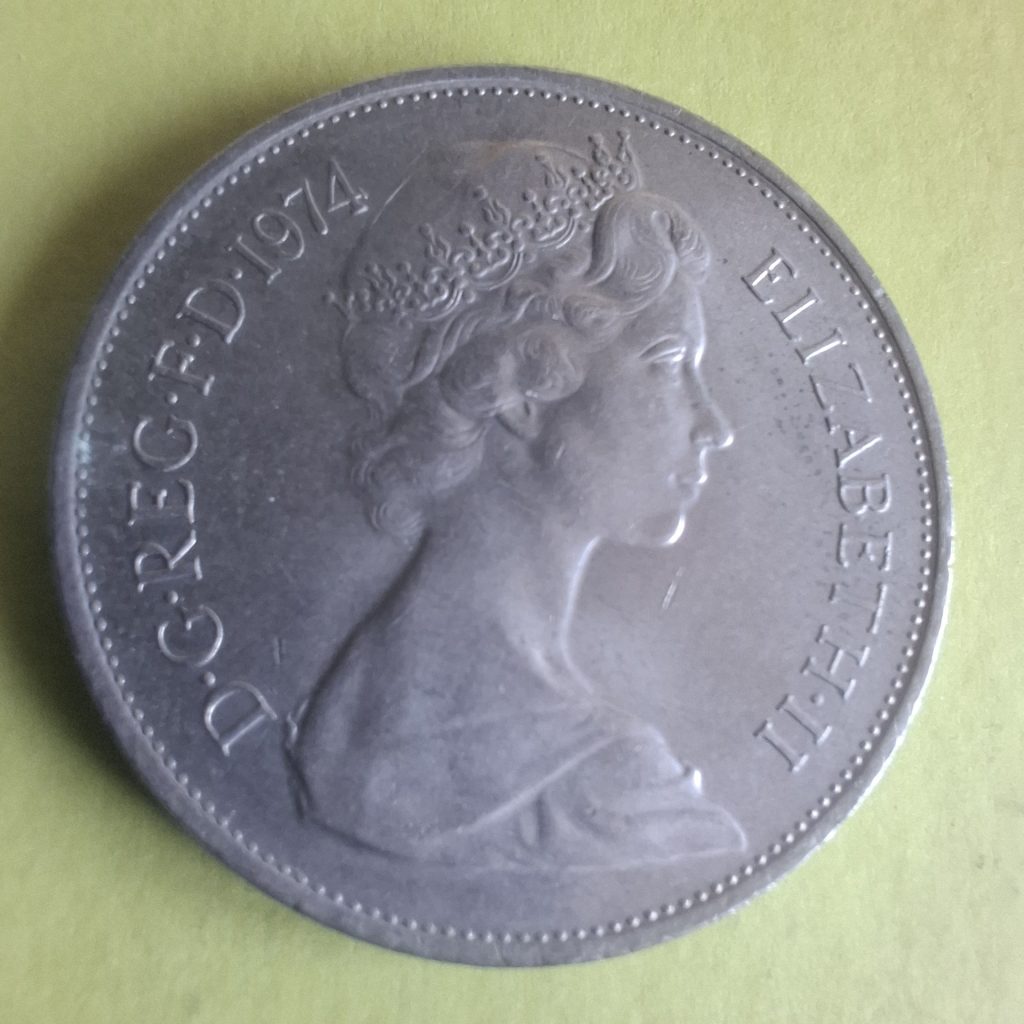
The obverse features a crowned portrait of Queen Elizabeth II, facing right. This is the so-called Second Portrait, designed by Arnold Machin, which appeared on British coinage during this period. The surrounding legend in Latin includes the Queen’s titles and the year of issue:
ELIZABETH·II D·G·REG·F·D·1974
Reverse
The reverse depicts a crowned lion passant guardant, a symbol taken from the Royal Arms of England, designed by Christopher Ironside. Below the lion is the numeral “10”, and above it the inscription “NEW PENCE”.
Circulation and usage
This coin circulated extensively throughout the United Kingdom during the 1970s and early 1980s, serving as one of the most commonly used intermediate denominations. The wording “New Pence” highlighted the relatively recent decimal system; this inscription was removed in later years once the public had fully adapted to decimal currency.
The coin ceased to be legal tender on 30 June 1993, but it remains readily available in collections and in lots of withdrawn British coinage.
Numismatic value and current market
The 1974 10 New Pence coin is generally regarded as common due to its high mintage. Nevertheless, it attracts collector interest as a representative piece from the early decimal era of British coinage.
Approximate values by condition
Market values depend heavily on the state of preservation, but typical price ranges are approximately:
- Very Fine (VF): €0.40 – €0.50
- Extra Fine (XF): €0.70 – €0.90
- Uncirculated (UNC): up to around €1.00 or slightly more in some catalogues
Coins in superior condition or offered by specialist dealers may achieve slightly higher prices, particularly if professionally graded.
Conclusion
The 1974 United Kingdom 10 New Pence coin is an important example of Britain’s decimal currency reform. While not rare, it holds historical significance and remains popular among collectors of modern British coinage. Its numismatic value is modest and largely determined by condition and collector demand for early decimal issues.