The 10 pence (10 p) coin is one of the denominations of the decimal British Pound Sterling. It was introduced as part of the decimal currency system in 1971, replacing the pre-decimal equivalents. The 2013 version is part of the standard circulating coins and is a familiar piece in daily transactions.
The 2013 10 pence coin is generally considered common, not rare, due to its large mintage and widespread circulation.
Technical Specifications
- Country of Issue: United Kingdom
- Year: 2013
- Face Value: 10 pence (£0.10)
- Issue Type: Circulation
- Metal Composition: Nickel-plated steel – from 2012/2013, the Royal Mint began producing coins in this alloy for economic reasons.
- Weight: 6.5 g
- Diameter: 24.5 mm
- Thickness: Approx. 1.85 mm
- Edge: Milled (reeded)
- Alignment: Medal type
These specifications define a durable coin designed for everyday use, with standard measurements to facilitate handling and identification.
Design and Iconography
Obverse
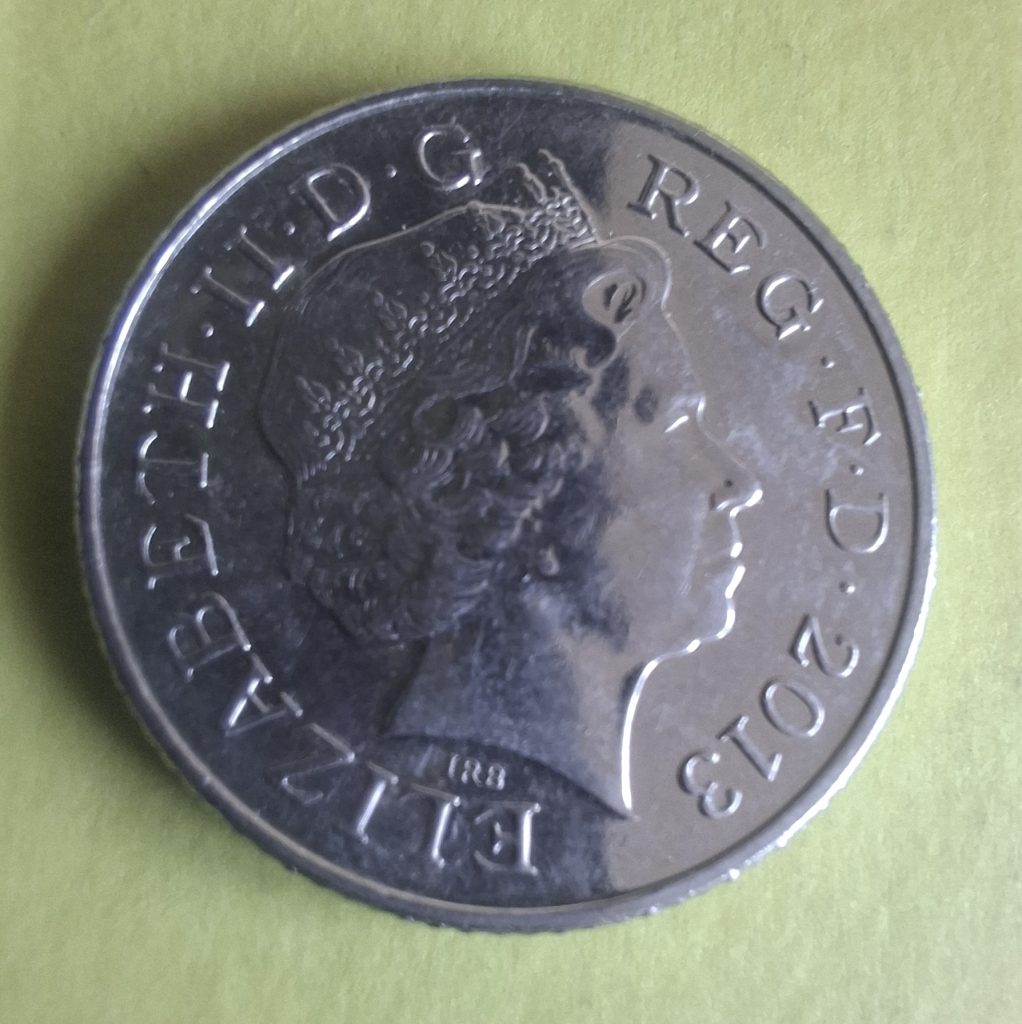
The obverse features Queen Elizabeth II in her fourth official effigy used by the Royal Mint. She is shown in profile facing right, wearing the “Girls of Great Britain and Ireland” tiara. The legend around the portrait reads:
ELIZABETH II D G REG F D 2013
(“Elizabeth II, by the Grace of God, Queen, Defender of the Faith”).
The sculptor Ian Rank-Broadley’s initials (IRB) are usually placed beneath the bust.
Reverse
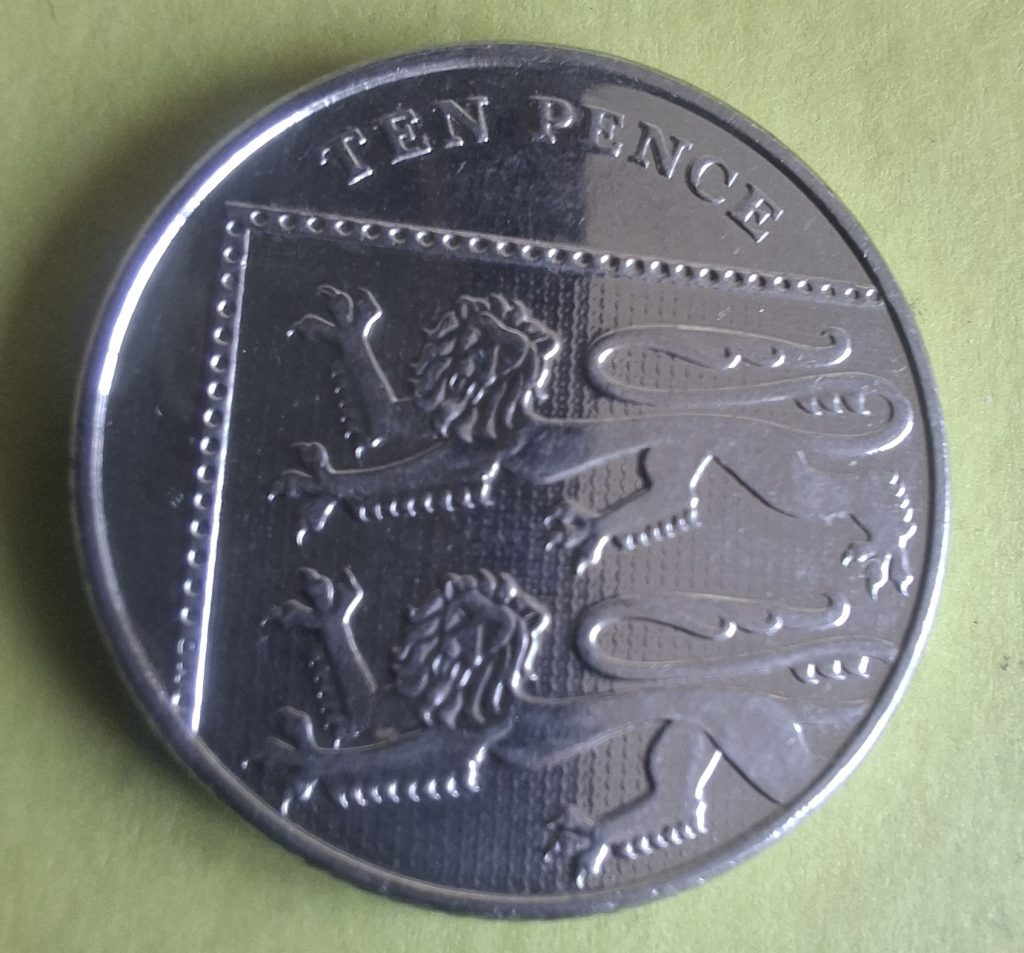
The reverse displays part of the Royal Shield of the United Kingdom, a segment of the coat of arms, designed by Matthew Dent as part of the 2008 coin redesign. The inscription includes the denomination “TEN PENCE”.
This design emphasizes the connection between the British monarchy and national heraldry, reflecting historical continuity.
Historical Context and Use
The 2010s marked the transition from cupronickel to nickel-plated steel coins, due to rising metal costs and the need to reduce production expenses. From 2012/2013, all new 5 p and 10 p coins were minted in this material.
The 2013 10 p coin remains legal tender throughout the UK, though legal tender rules specify that small-denomination coins are only required for payments up to £5.
Mintage and Availability
The 2013 10 p coin had a mintage of approximately 320,200,750 coins, making it one of the most common coins of that year. Its high production ensures it is widely found in circulation, beginner collections, and foreign coin lots.
Numismatic and Market Value
In collector markets, the 2013 10 p coin is not considered valuable in circulated condition. Reference catalogs and auction listings indicate modest values, usually only a few cents or a few dollars for coins without special condition.
Value by condition:
- Circulated: Close to face value.
- Uncirculated (UNC / Brilliant Uncirculated): Can reach a few euros in collector markets.
- Special proof or set coins: These are issued in Royal Mint sets and carry additional value linked to the set.
Conclusion
The 2013 UK 10 pence coin is an excellent example of a modern circulating coin. While it holds limited individual numismatic value, it is significant as a representation of the British currency system and is a collectible for decimal coin collections. Its high mintage and continued use make it a recognizable and collectible coin for enthusiasts.