1. Historical Context
- The 1901 100 Réis coin was minted during the First Brazilian Republic (Old Republic), following the proclamation of the republic in 1889.
- The face value “100 Réis” refers to the old Brazilian monetary unit, the real (plural réis), used until 1942.
- In 1901, the coin was minted at the Rio de Janeiro Mint.
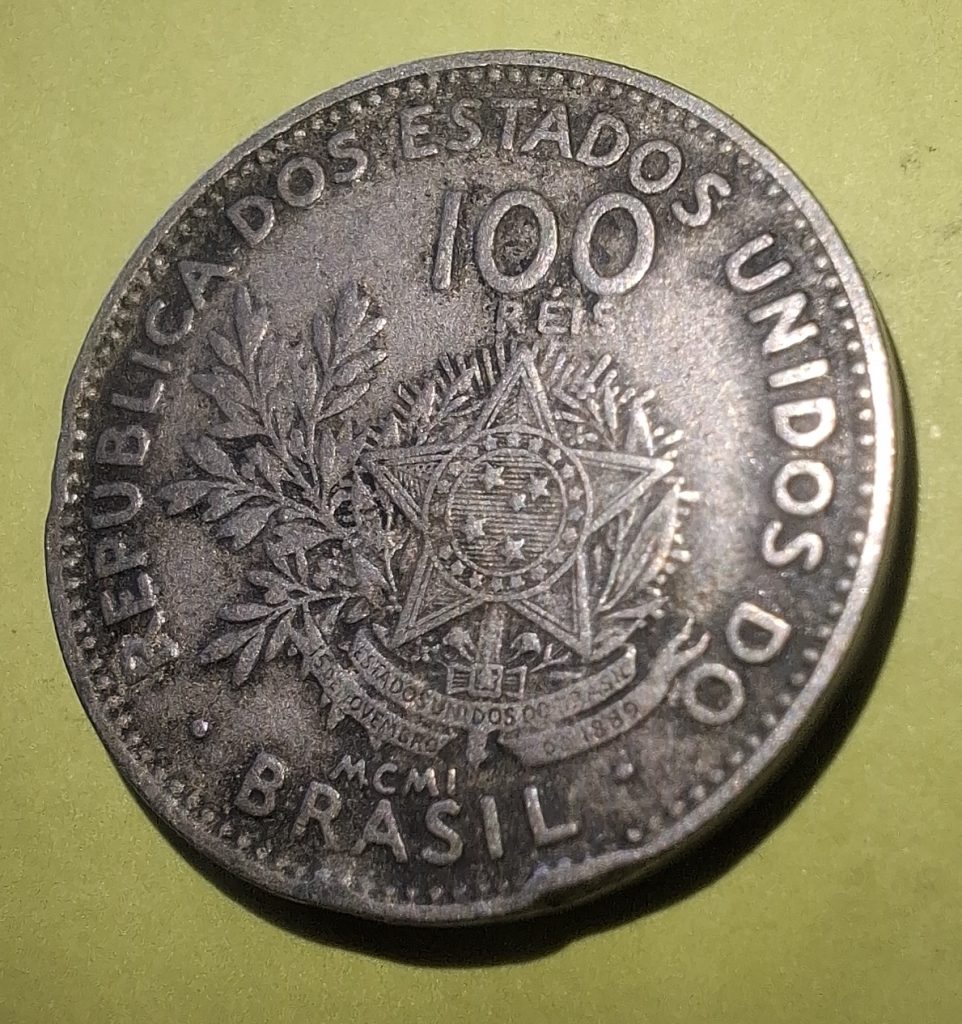
- The obverse features a star with surrounding branches and the date in Roman numerals (“MCMI” = 1901).
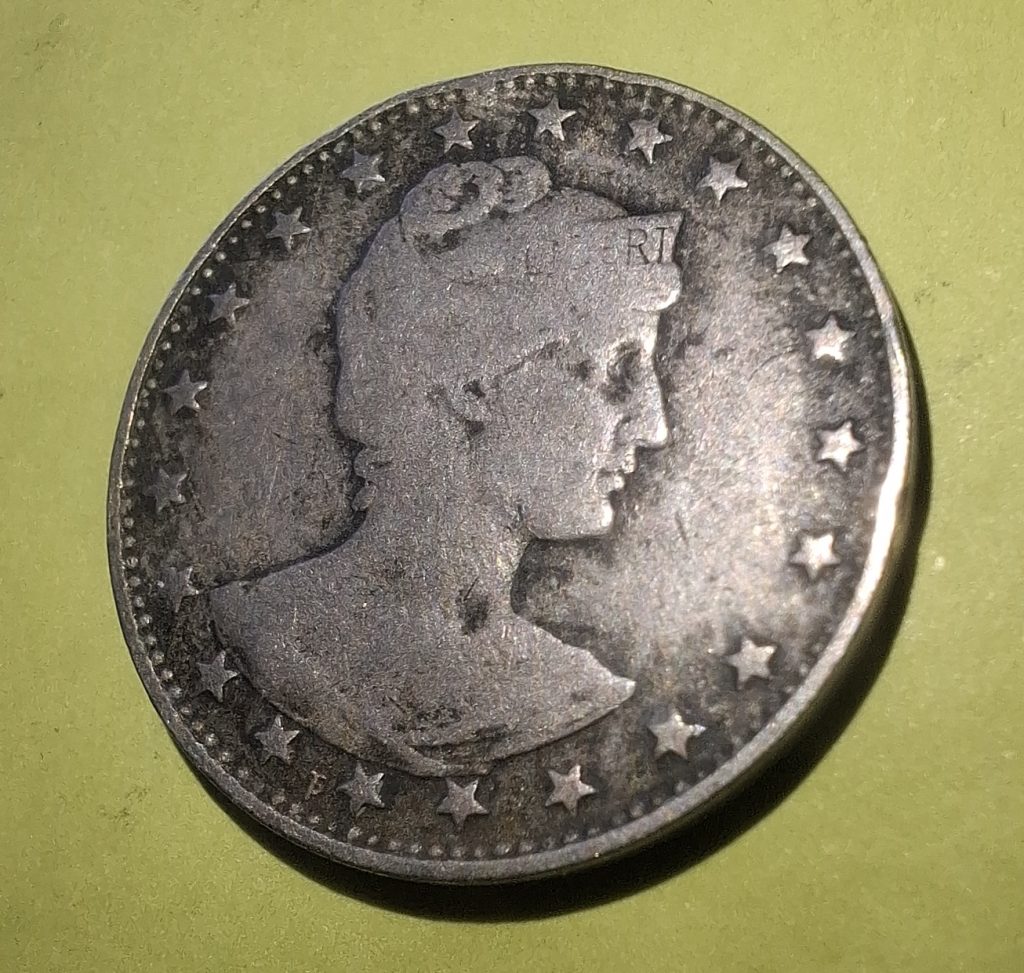
- The reverse depicts the bust of Liberty facing right, surrounded by stars.
- The Brazilian Republic’s coat of arms, with coffee and other branches, is associated with the denomination on some coins in this series.
- The coin was designed by Rodolfo Bernardelli and engraved by Ernest Paulin Tasset.
2. Physical Characteristics
- Composition: Cupronickel (75% copper, 25% nickel)
- Weight: approximately 5 grams
- Diameter: 21 mm
- Thickness: about 1.75 mm
- Edge: plain
- Alignment: coin alignment (vertical)
- Date in Roman numerals (“MCMI”)
- Several variants of the engraver’s mark (“Paulin Tasset”) exist—at least six known.
3. Mintage / Circulation
- Estimated mintage: 15,775,000 coins
- Despite a relatively high mintage, many coins are circulated and worn, which affects perceived rarity among collectors.
- The coin is no longer legal tender and is now of purely numismatic interest.
4. Valuation and Numismatic Value
Price Range
- A 1901 100 Réis coin in VF (Very Fine) condition can be found for approximately €9.95 (~ R$50–60).
- In Brazil, examples in “Superb” condition sell for around R$38–40.
- Values vary depending on conservation grade and market demand.
- Online collector listings indicate lower average prices (~US$1.10) for circulated coins, but auction prices may differ.
Factors Influencing Value
- Condition: The better preserved the coin, the higher its value.
- Minting variant: Small differences in engraver marks can make some coins more desirable.
- Collector demand: Coins from the Old Republic attract Brazilian collectors, especially in higher grades.
- Provenance and authenticity: Certified coins often fetch a premium.
5. Numismatic Significance
- The 1901 100 Réis coin represents a significant stage in Brazilian monetary history, marking the republic’s early years.
- The Liberty bust and republican symbols highlight the identity of the newly established republic.
- Collectors value it for the combination of high mintage and subtle minting variants, offering the chance to hunt for rarer, well-preserved specimens.
- It also serves as a reference point for studying other coins of the “MCMI” series (Roman numeral dated coins) from the Old Republic.
6. Collector Tips
- Always examine detailed photos (obverse and reverse) to assess the coin’s condition.
- Buy from reputable dealers or numismatic houses, and consider authentication or certification.
- Store the coin in protective capsules to prevent wear or chemical reactions (important for cupronickel coins).
- Keep purchase records, provenance, and grading information, which can help future resale value.
Conclusion
The 1901 100 Réis coin is a classic example of Brazilian numismatics, with historical relevance and collectible interest. While it is not among the rarest or most valuable coins in precious metals, it attracts collectors due to its era and minting variants. Common examples are reasonably accessible, while coins in excellent condition can command a premium.