Historical Context
In 1995, during the active period of the Portuguese Mint (INCM), Portugal issued the commemorative 200 Escudos coin dedicated to Afonso de Albuquerque as part of the Portuguese Discoveries series.
Afonso de Albuquerque (1453–1515), nicknamed the “Lion of the Seas,” was a key figure in Portuguese maritime expansion — especially for the conquest of Malacca in 1511, which consolidated Portuguese control over major spice trade routes in the East.
This commemorative issue celebrates Albuquerque’s historical role in the Age of Discoveries and the establishment of the Portuguese overseas empire.
Coin Features and Design
Technical Specifications
- Year of issue: 1995
- Denomination: 200 Escudos (200 PTE)
- Currency: Escudo (1911–2001)
- Material (most common version): Cupro-nickel (copper-nickel alloy)
- Weight: approximately 21.0 g
- Diameter: 36.0 mm
- Thickness: approximately 2.8 mm
- Edge: reeded
- Mintage: around 750,000 pieces for the cupro-nickel version
Design and Symbolism
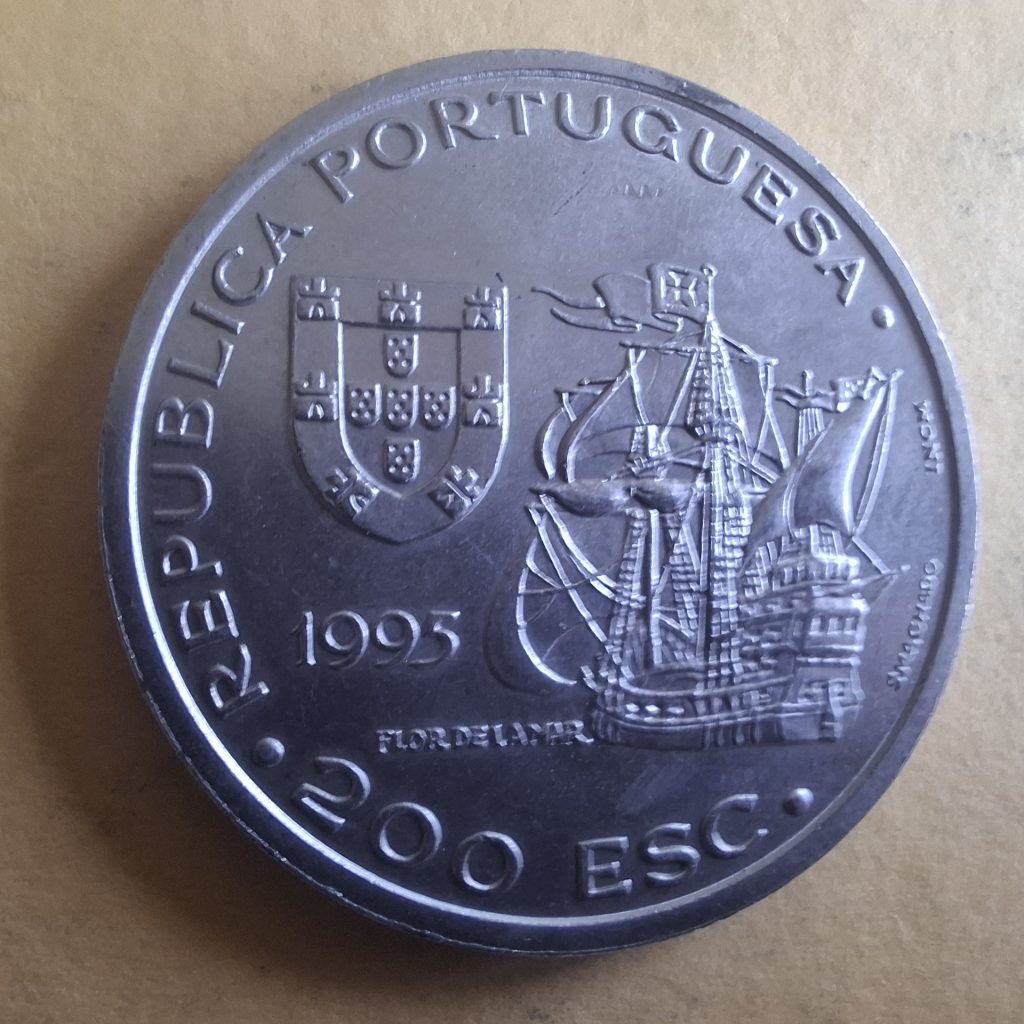
- Obverse (front): Features the Portuguese coat of arms at the center — symbolizing national sovereignty — with the ship Flor de la Mar on the right, the vessel commanded by Albuquerque during the conquest of Malacca. The legend reads: “REPUBLICA PORTUGUESA – 200 ESC – INCM – 1995 – FLOR DE LAMAR – S. MACHADO.” Designed by Raul de Sousa Machado.
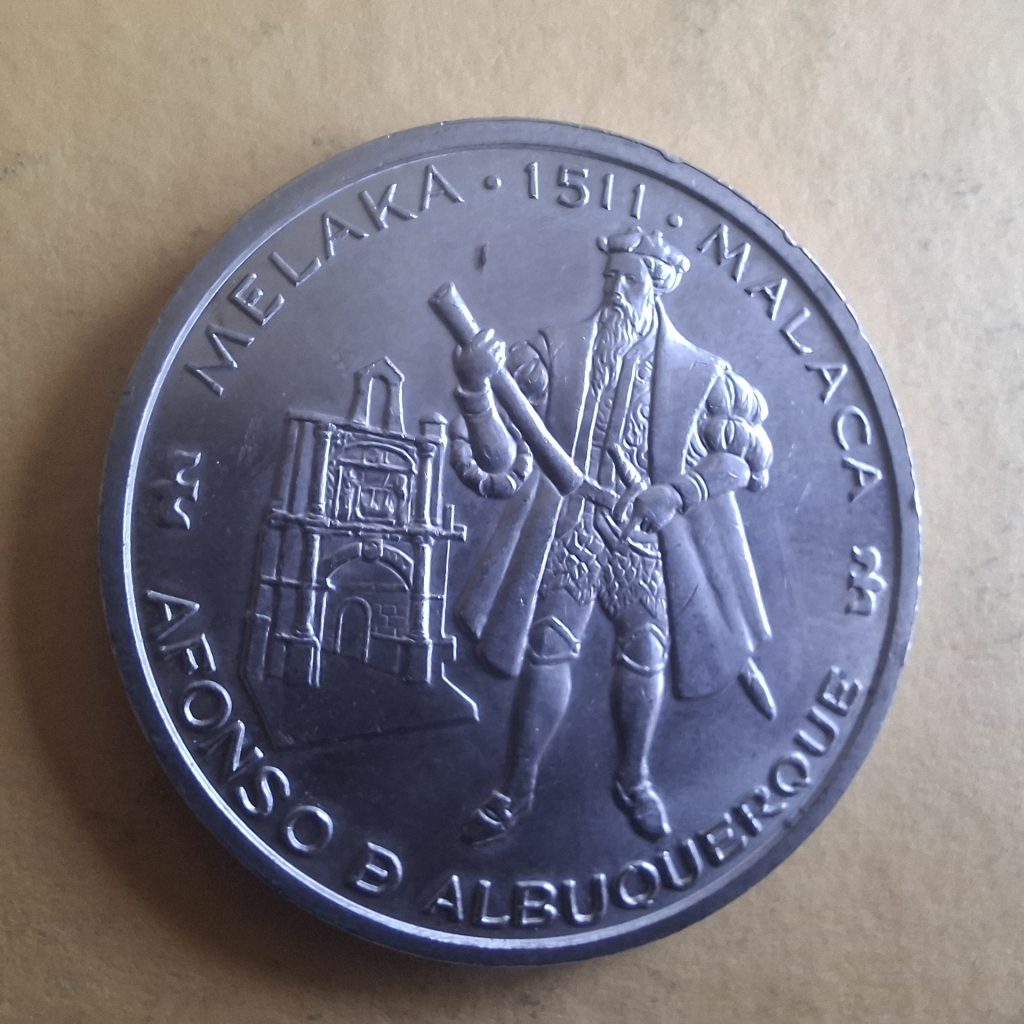
- Reverse (back): Shows Afonso de Albuquerque standing with a sword, in front of the ruins of the “Porta de Santiago” — part of the fortress built in Malacca after its conquest. The legend reads: “MELAKA • 1511 • MALACA – AFONSO DE ALBUQUERQUE.”
There are different variants of this coin: the common cupro-nickel version, and special silver and gold versions issued simultaneously as part of the commemorative collection.
Legal Status
With the adoption of the euro, the Portuguese escudo was demonetized. The official date of demonetization was February 28, 2002.
Thus, the 1995 200 Escudos coin is no longer legal tender but remains of interest for collectors.
Numismatic Value and Market
The market value depends heavily on the variant (cupro-nickel, silver, or gold), condition, collector demand, and rarity.
| Variant / Material | Estimated Mintage / Note | Approx. Market Value (common condition) |
|---|---|---|
| Cupro-nickel (common) — KM #681 | ~750,000 units | ~US$ 5–7 for coins in good condition (MS‑63 to MS‑65) |
| Silver (commemorative) — KM #681a | Special issue, less common | ~US$ 27–32.5 for mint state coins |
| Gold (collector edition) — KM #681b | Very limited mintage | Can be tens or hundreds of times more valuable, depending on gold weight, purity, and condition |
Notes
- The large mintage of the cupro-nickel version explains the relatively modest price for circulated/common coins.
- Silver versions are more sought after, which justifies the higher value.
- Condition matters significantly: scratches, wear, or aggressive cleaning can heavily affect price.
Significance for Collectors
- The coin symbolizes a key figure of the Portuguese Age of Discoveries and the country’s maritime expansion.
- As a commemorative piece, it belongs to a thematic series, giving it historical and symbolic value beyond its face value or metal content.
- For collectors of Portuguese coins — particularly commemorative issues from the late escudo period — the 1995 200 Escudos coin is notable for combining history, art (design), and memory of the former currency.
- Silver (or gold) versions are especially valued by collectors seeking historically meaningful coins made of precious metals.
Conclusion
The 1995 200 Escudos coin dedicated to Afonso de Albuquerque is more than an old unit of currency — it is a piece of Portuguese history, representing maritime expansion and the Age of Discoveries. For collectors, cupro-nickel coins are accessible and ideal for acquiring a historical specimen; silver (and occasionally gold) versions offer higher numismatic value due to rarity and precious metal content.