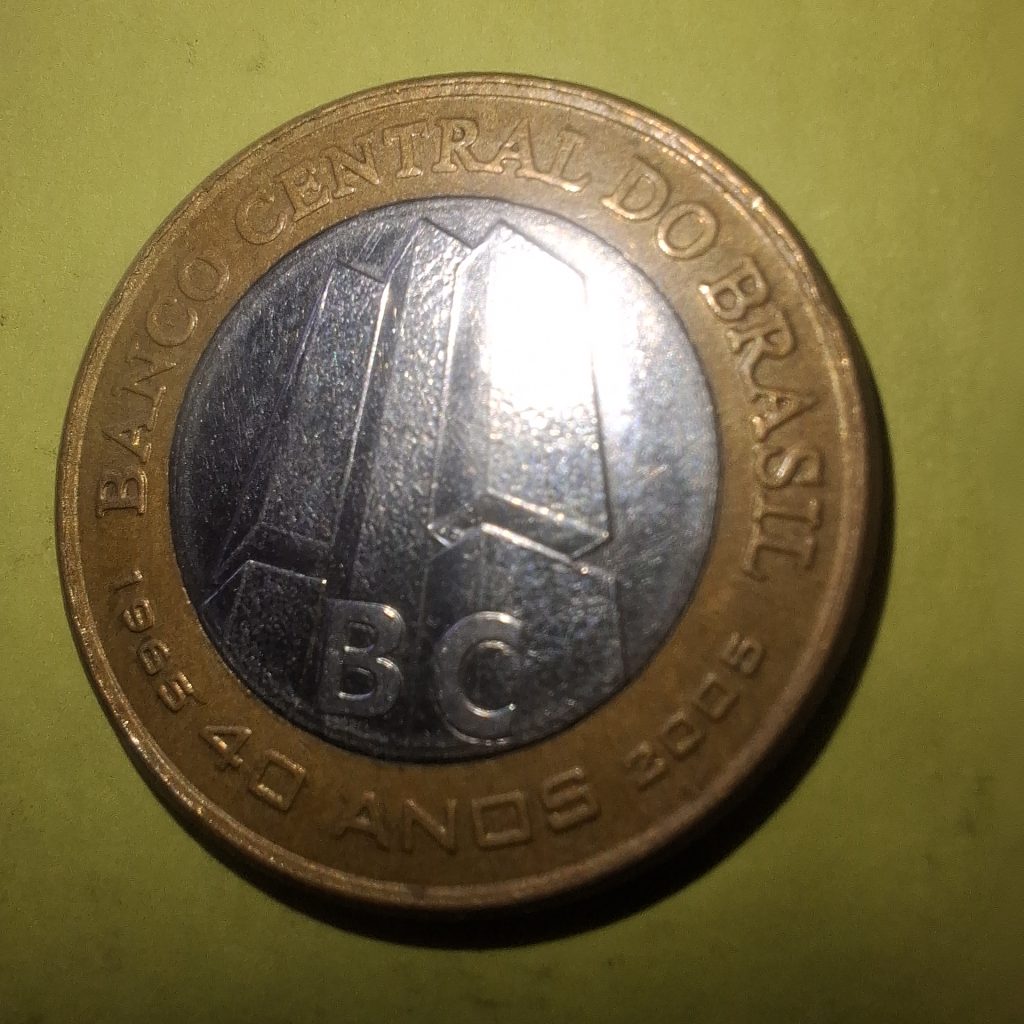
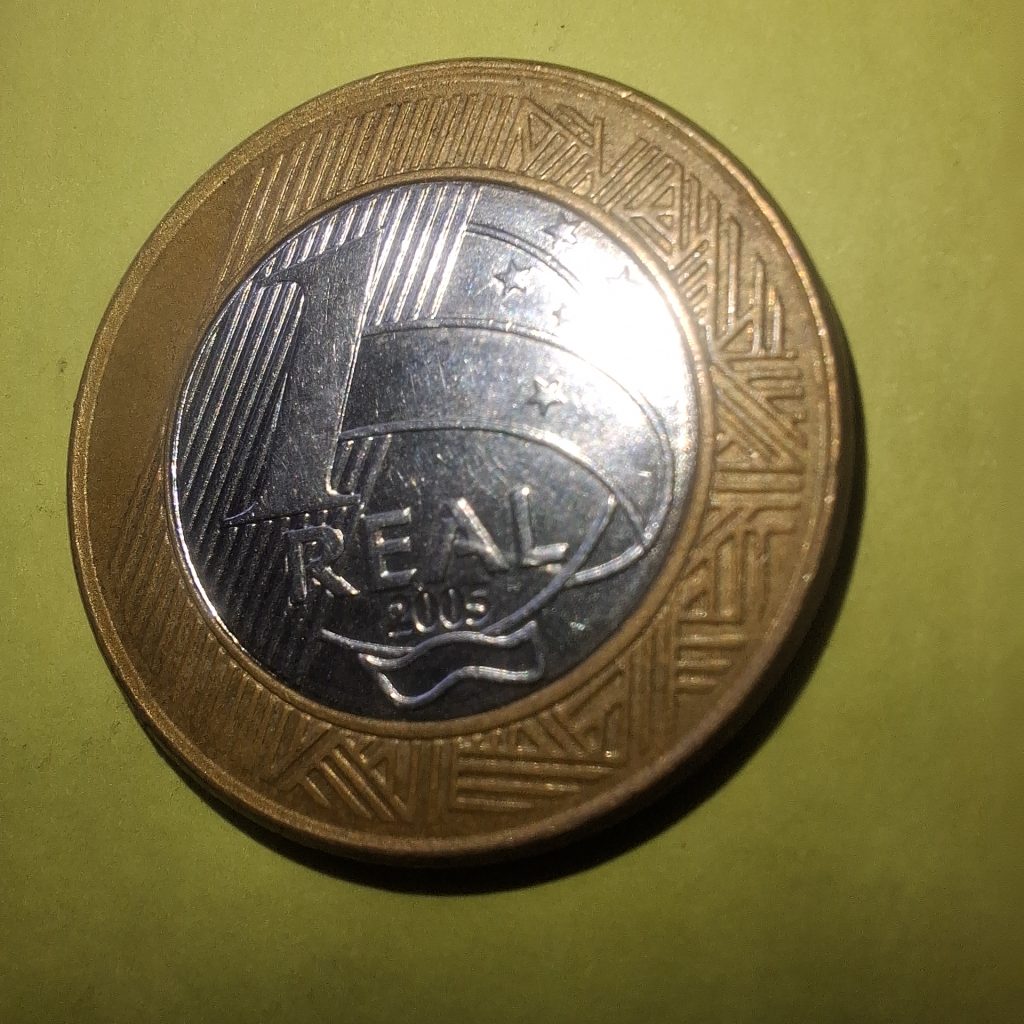
A bimetallic piece that became a point of interest for collectors: released in 2005 to celebrate the 40th anniversary of the Central Bank of Brazil (1965–2005), this commemorative R$1 coin combines institutional history, a relatively large mintage, and—in some specimens—minting variations that can increase its value on the numismatic market.
Description and Technical Features
- Face value: 1 Real
- Year: 2005 (marking 40 years of the Central Bank, 1965–2005)
- Composition: bimetallic — stainless-steel core and bronze-coated ring (core in cupronickel/stainless steel; ring with bronze coating, as listed in numismatic catalogs)
- Weight: approx. 7 g
- Diameter: approx. 27 mm
- Thickness and edge: standard for Brazilian 1 real coins (about 1.9–2.0 mm thick) and intermittently milled edge
These specifications appear in recognized numismatic references.
Obverse and Reverse — What the Coin Represents
The obverse typically features inscriptions related to the Central Bank (BANCO CENTRAL, the initials “BC,” and the anniversary dates “1965 / 40 ANOS / 2005”), along with the official 40-year commemorative emblem.
The reverse follows the standard layout of circulating 1 real coins of the period, showing the denomination “1 REAL” and the typical graphic elements of the Real series.
Minor differences between specimens (such as variations in relief or strike strength) come from the minting process and normal wear.
Mintage and Historical Context
This commemorative coin had a large mintage — around 40 million pieces — making it relatively common in circulation despite being a special issue.
Its release reflects the Central Bank’s practice at the time of marking institutional milestones through commemorative circulating coins.
Varieties, Minting Errors, and Rarities
Although the general issue is common, collectors have identified minting errors (misaligned dies, off-center strikes, incomplete ring bonding, unusual reverse marks).
These error coins can be significantly more valuable depending on rarity and collector demand.
Authenticity and proper evaluation are important, especially for high-priced error specimens.
Grading and Condition
Brazilian numismatics typically uses the following grades, from most worn to best:
C (Circulated), MBC (Very Good Condition), EB (Excellent Condition), and FC (Flor de Cunho / Uncirculated).
The difference in value between a circulated coin and an uncirculated one can be substantial, particularly for commemorative issues.
When dealing with higher-value pieces, a specialist’s evaluation is strongly recommended.
Numismatic Value — Typical Market Prices
Because of its high mintage, most 2005 1 real commemorative coins are inexpensive unless they are in excellent condition or present a remarkable minting error.
Typical market ranges (subject to variation over time):
- Common circulated pieces: usually only slightly above face value — about R$1 to R$10.
- Good-condition pieces (MBC to EB): often found between R$30 and R$150.
- Uncirculated / Flor de Cunho pieces or ones still in original packaging: commonly R$100–R$250.
- Error coins: depending on rarity, they can reach several hundred reais.
These values represent ranges observed in catalogs, collector markets, online listings, and specialized numismatic publications.
Where to Buy/Sell & Practical Tips
- To buy: numismatic shops, coin auctions, collector groups, and marketplaces such as eBay or Mercado Livre. Always request clear photos of both sides of the coin.
- To sell: get a preliminary evaluation from a numismatist, photograph the coin clearly, state its grade, and—if you suspect a minting error—seek expert confirmation.
- Authentication: weigh and measure the coin, check its bimetallic structure, and examine strike quality. Professional grading increases buyer confidence for valuable specimens.
Conclusion — Is It Worth Keeping?
Yes — it’s a collectible with historical appeal (celebrating the Central Bank’s anniversary), easy to find, and accessible to beginners.
Coins in excellent condition or with rare minting errors can be worth much more than face value.
For new collectors, it’s a great entry-level piece: historically meaningful, relatively abundant, and with occasional valuable variants.