The 50-Cruzeiros coin issued in the early 1980s is a common piece in Brazilian collections — yet it holds interesting details (and some variants that are valued by the market). Below is a complete overview: physical specifications, design, mintage, historical context, and a practical sense of its numismatic value today.
Historical context
This 50-Cruzeiros coin is part of the Cruzeiro series (the currency used in Brazil between the 1970s and 1980s) and was minted during the period when the country used the monetary standard called “Cruzeiro” (before later reforms to Cruzado, Cruzeiro Novo, etc.). Coins from this group circulated widely between 1981 and 1986.
Design / Visual elements
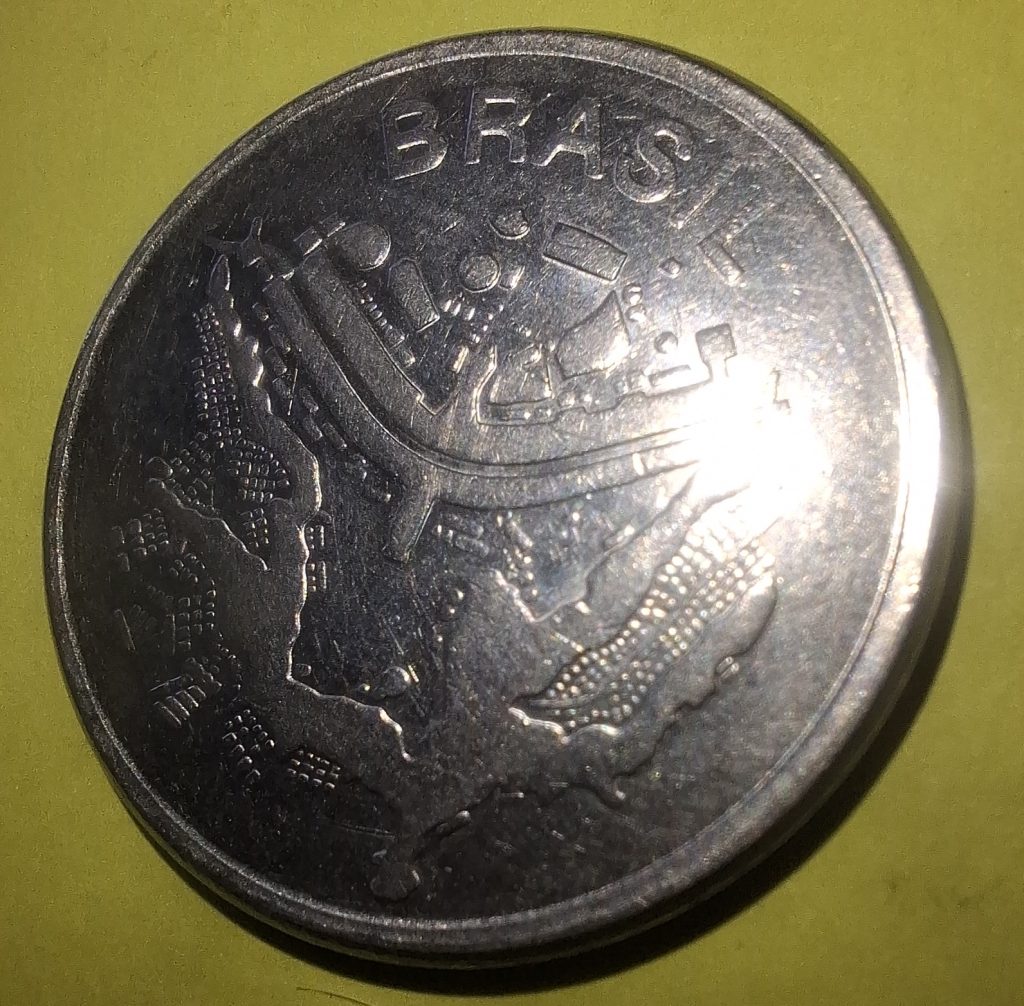
- Obverse (national side): features the inscription BRASIL at the top and, below it, the layout of the Plano Piloto of Brasília — highlighting the urban design of the capital.
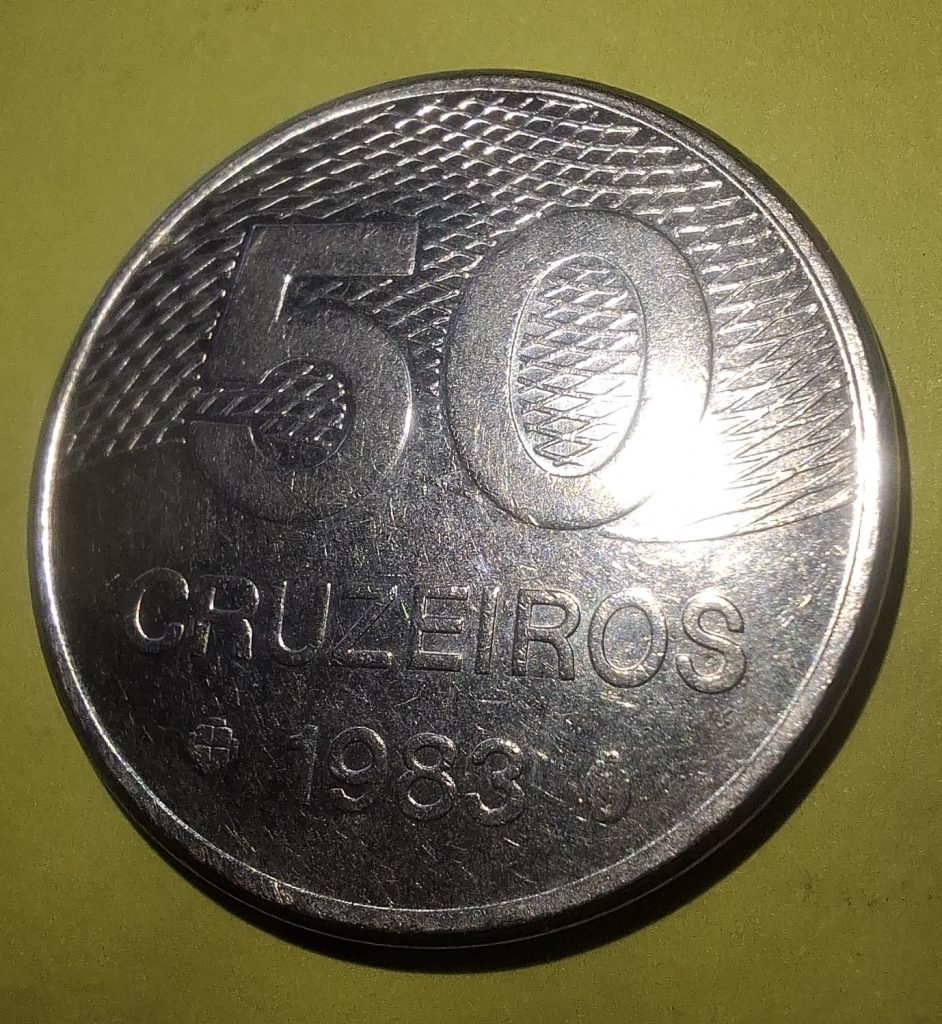
- Reverse (value side): displays the large number “50”, with “CRUZEIROS” below, the date (1983), and small micro-symbols near the date (the Central Bank symbol and a traditional “conch/zimbo” symbol) depending on the version.
Typical images show the master plan of Brasília on the obverse and wavy background lines on the reverse.
Technical specifications (measurements and material)
Values vary slightly among references, but the most cited data are:
- Composition: stainless steel.
- Diameter: ≈ 28.0 mm.
- Thickness: ≈ 1.6 mm.
- Weight: sources list 6.35 g (some catalogs) and 7.34 g (many online catalogs and listings). Because of this, both references appear frequently; for precise evaluation, weighing your own coin is recommended.
- Edge: plain.
Note: the discrepancies in weight among catalogs (6.35 g vs 7.34 g) occur due to reference differences (years/varieties, minting tolerances). For cataloging or selling, always record the exact weight of your piece.
Mintage
The mintage for the year 1983 is commonly listed as around 181.8 million units, making this a widely circulated issue — which explains the coin’s relative abundance among collectors.
Numismatic value (practical range)
Market value depends strongly on condition (grades such as VF, XF, UNC) and on the presence of variants/errors (which can greatly increase prices). Based on current listings, sales, and collector guides in the Brazilian market:
- Common circulated example (VF/XF): usually R$ 1–R$ 10.
- Uncirculated / Mint State (UNC): may range R$ 10–R$ 50 or more, depending on luster and sharpness.
- Coins with rare errors (e.g., cracked die, double strike, rotated reverse) have reached hundreds of reais in certain cases — reports mention values around R$ 250–R$ 400 for sought-after errors.
These values are averages from listings, auctions, and collector publications; exact prices vary with supply, demand, condition, and proper authentication/grading.
Notable variants/errors sought by collectors
Collectors especially look for:
- Minting errors (die cracks, double strikes, rotated reverse) — these typically command premium prices.
- High-grade uncirculated coins (original mint luster, no scratches) — more valuable.
How to identify and preserve a potentially valuable coin
- Weigh and measure: confirm diameter and weight with caliper/scale to check against references (or reveal anomalies).
- Examine micro-symbols: use a 10× loupe to check the small symbols near the date — key for identification.
- Do NOT clean the coin: abrasive cleaning (steel wool, chemicals) greatly reduces value. Use gloves and store in acrylic capsules or proper coin albums.
- If you suspect a rare error: photograph the coin (obverse and reverse), weigh it, and consult a numismatist before selling — authentic errors have value, but also attract counterfeits and misleading listings.
Conclusion
The 1983 50-Cruzeiros coin is mostly common due to its high mintage, but becomes interesting when found in excellent condition or with rare minting errors. To determine the value of your specific piece: weigh/measure it, check its condition, take clear photos, and compare with numismatic guides or listings; if you suspect a rare error, seek professional authentication/grading to obtain the best price.