1. Introduction
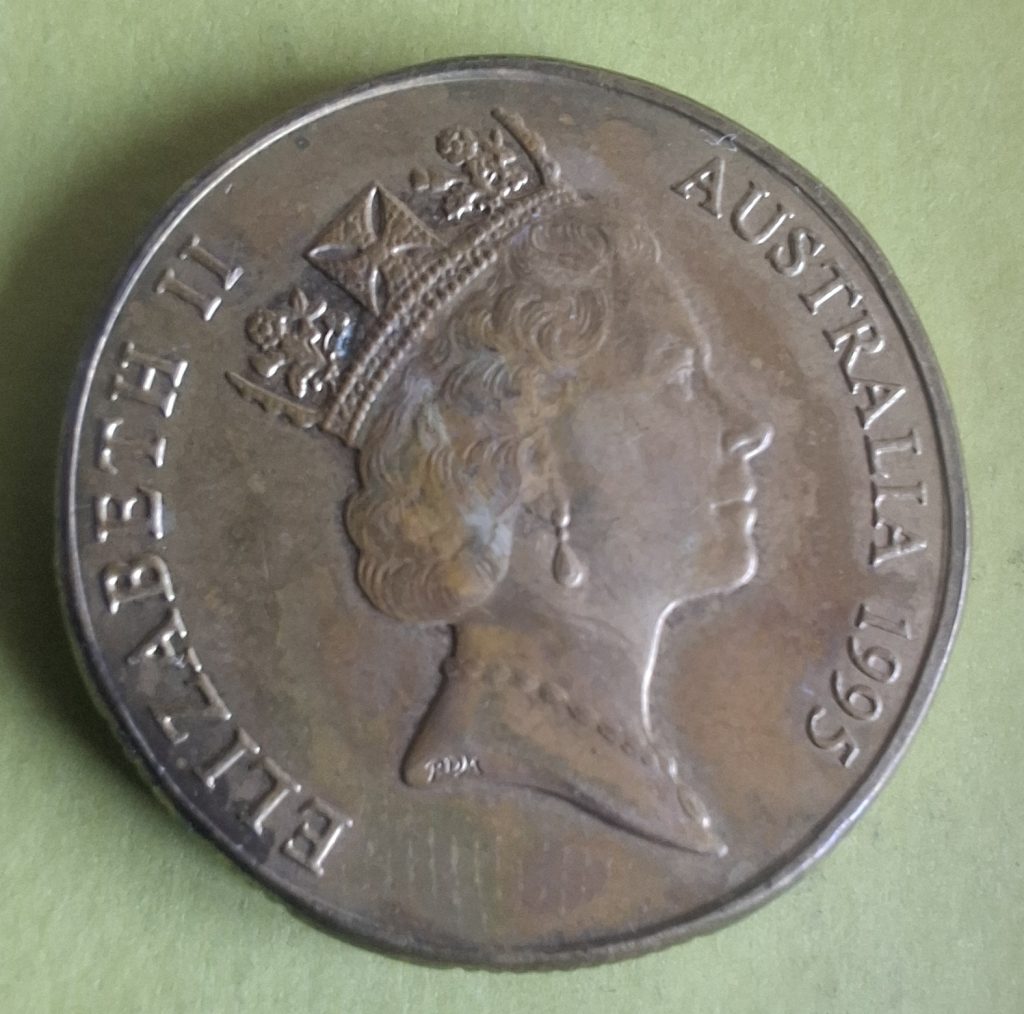
The Australian One Dollar coin has been in circulation since 1984 and is one of the most recognizable coins in Australia. The 1995 issue is of interest to collectors in two main categories:
- the standard circulating coin featuring the “mob of roos” (group of kangaroos), and
- non-circulating or collector versions, including proof and precious-metal issues.
2. Technical specifications (1995 standard circulating coin)
- Reverse: “Mob of Roos” design (kangaroos)
- Obverse: Portrait of Queen Elizabeth II
- Composition: Aluminium-bronze (approximately 92% copper, 6% aluminium, 2% nickel)
- Diameter: ~25.0 mm
- Weight: ~9.0 grams
- Edge: Milled (reeded)
3. Design
The kangaroo design was created by sculptor Stuart Devlin and has been the standard reverse design of the Australian $1 coin since its introduction.
4. 1995 varieties and special issues
In addition to the regular circulating coin, there were several collector versions issued in 1995:
- Proof and Uncirculated (Mint Set) coins: Produced by the Royal Australian Mint for collectors, usually sold in official mint packaging.
- Silver and gold Kangaroo coins: Collector and bullion pieces (for example, 1 oz silver Kangaroo coins dated 1995). These are not the standard circulating aluminium-bronze coins.
5. Numismatic value (approximate market ranges)
The value of a 1995 Australian One Dollar coin depends heavily on condition and type:
- Circulated condition: Usually worth face value (AUD $1) unless in exceptional condition.
- Uncirculated (BU/Mint State): Often worth a small premium to collectors, typically a few dollars up to a few tens of dollars.
- Proof versions: Can be worth more, especially if graded by services like PCGS or NGC.
- Silver bullion versions: Value depends mainly on the silver spot price plus a collector premium.
Prices can vary widely depending on the market and demand.
6. How to identify a valuable example
- Check the design (standard coins have the “mob of roos” design).
- Check the weight and color (the standard coin is aluminium-bronze, not silver-colored).
- Look for original mint packaging or third-party grading (PCGS/NGC).
7. Collector tips
- Always compare prices across auctions and dealer listings.
- High-grade coins with official certification are easier to sell and authenticate.