1. Historical Context
- Period of Issue
The 200 réis coin belongs to the final phase of the monetary system based on the réis, which was in use in Brazil until 1942. That year, the country adopted the cruzeiro as its monetary unit, marking the end of the “réis” currency. - Getúlio Vargas Era
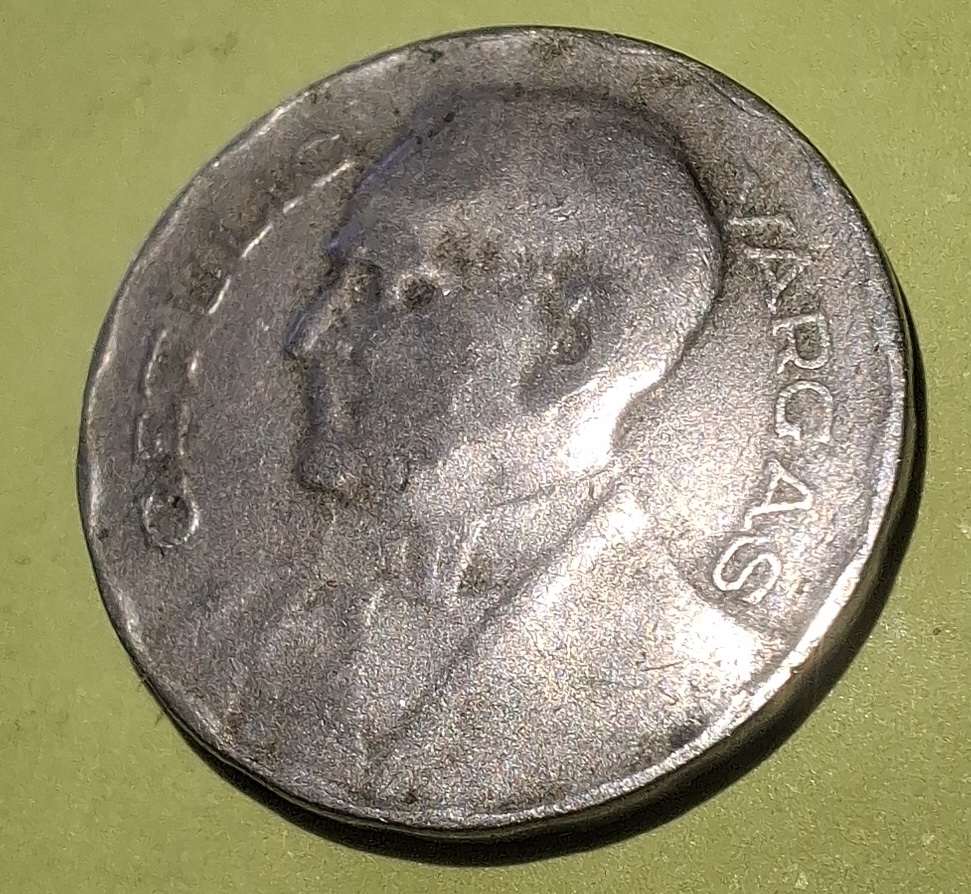
The coin features the bust of Getúlio Dornelles Vargas, then President of Brazil. His figure symbolizes the Estado Novo period (1937–1945), a time of strong centralization and emphasis on presidential power. - Mint
The coin was minted by the Casa da Moeda do Brasil (Brazilian Mint) in Rio de Janeiro. - Mintage
In 1940, approximately 10,161,000 units of this coin were minted.
2. Physical and Artistic Characteristics
- Denomination: 200 réis
- Composition: cupronickel
- Weight: approximately 3.44 g
- Diameter: about 18.82 mm
- Thickness: around 1.6 mm
- Edge: reeded/indented
- Orientation: coin alignment
Design:
- Obverse (front): portrait of Getúlio Vargas facing left, with the inscription “GETULIO VARGAS.” Engraver: Leopoldo Alves de Campos.
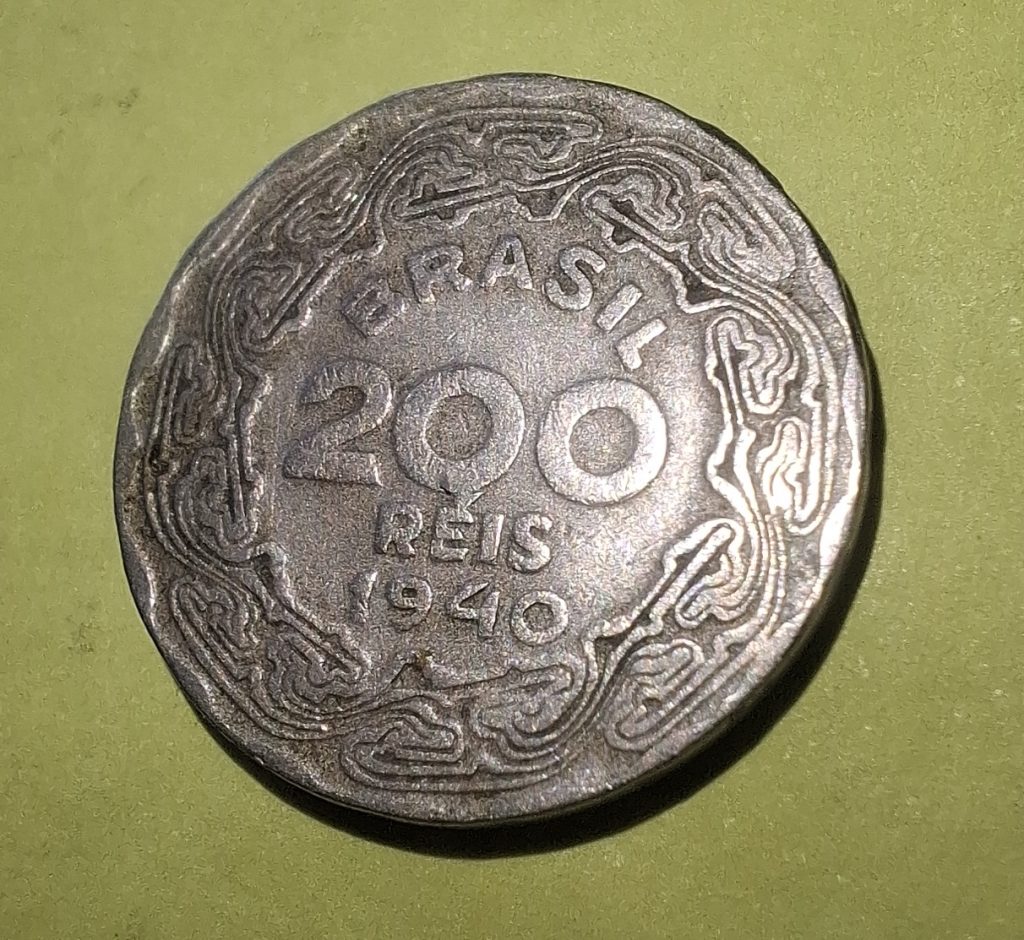
- Reverse (back): in the center, the denomination “200 RÉIS” above the date “1940,” with “BRASIL” above. Around it, a decorative collar inspired by Marajoara indigenous art. Engraver: Basílio Nunes.
- Decorative Significance: the Marajoara-style collar pays homage to Brazil’s indigenous culture, adding a cultural and ornamental element.
3. Numismatic Importance
- End of an Era
Being one of the last coins issued in the réis system, it has symbolic value for collectors of Brazilian monetary history. - Popularity and Circulation
With a relatively high mintage (over 10 million in 1940), it is not considered rare among collectors. - Varieties
There are different preservation grades (states of conservation), which affect market value.
4. Market Value (Numismatic Value)
The coin’s value varies depending on its condition:
| Condition | Approximate Market Value (BRL) |
|---|---|
| Regular (R) | ~ R$ 2.00 |
| Well Preserved (BC) | ~ R$ 4.00 |
| Very Well Preserved (MBC) | ~ R$ 8.00 |
| Superb (SOB) | ~ R$ 28.50 |
Estimates in USD range from around $0.26 (Good) up to $2.10 (Uncirculated) depending on the coin’s condition.
5. Collector Considerations
- Authenticity: Being a common coin, counterfeits are rare, but weight, diameter, and design details should be checked.
- Preservation: Small scratches, worn relief, or loss of luster can significantly reduce value.
- Historical Significance: Ideal for collectors of Vargas-era coins or the réis monetary system.
- Investment: Not a high-value coin, but it is an accessible and meaningful addition to historical collections.
6. Conclusion
The 1940 200 Réis coin is interesting both historically and numismatically. It represents Brazil during Getúlio Vargas’ Estado Novo and is part of the final phase of the réis monetary system. With a high mintage, it is accessible for many collectors, though its market value depends on its condition. For anyone interested in early 20th-century Brazilian coins, it is a noteworthy piece.