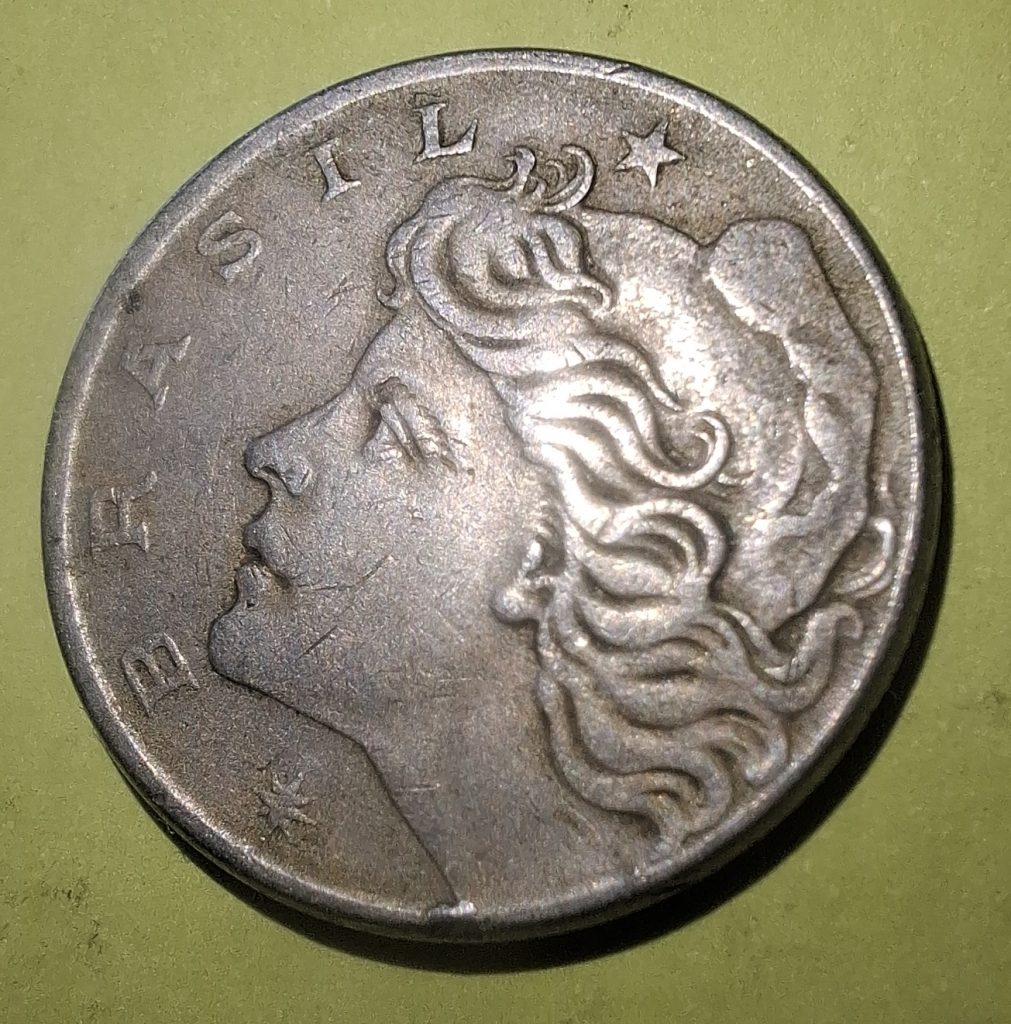
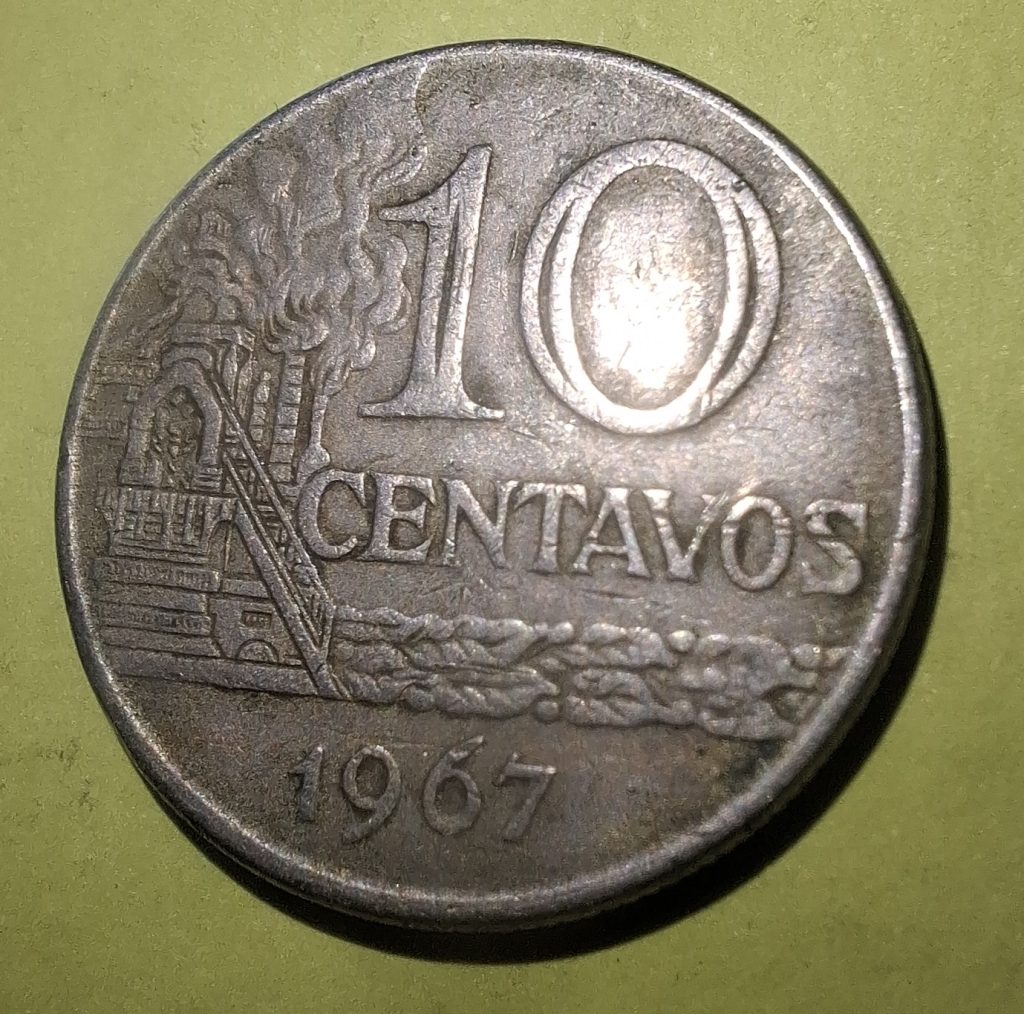
The 10 centavos coin issued in 1967 is part of Brazil’s Cruzeiro Novo monetary period. It is a common piece among collectors—easy to find in batches—but it has interesting technical details and some varieties/errors that attract attention. Below is a detailed, accessible article for anyone wanting to know everything (or almost everything) about this coin.
1. Historical Context
In 1967, Brazil used the Cruzeiro system (later specifically called the Cruzeiro Novo starting that same year). Coins from this series were struck in cupronickel and circulated widely; today they are demonetized and found in collections of 20th-century Brazilian coins.
2. Technical Specifications
- Year: 1967
- Face value: 10 centavos (Cruzeiro Novo)
- Material: Cupronickel (commonly 75% copper / 25% nickel)
- Weight: ~5.52 g
- Diameter: 23 mm
- Thickness: ~1.7 mm
- Edge: reeded (serrated)
- Orientation: coin alignment (↑↓)
3. Design and Symbolism
- Obverse: Bust of the Republic (a female allegory wearing a Phrygian cap) facing left with the legend BRASIL.
- Reverse: Elements symbolizing industrialization to the left; to the right, the inscription 10 CENTAVOS and the date below.
This iconography reflects the official themes of the time, emphasizing progress and industrial development.
4. Catalogue References
Useful for identification:
- KM#578 (Krause World Coins)
- Numista #2243
- Amato V-296 / Bentes 721.01, including known local varieties
5. Mintage
The 1967 coin had a high mintage — around 108 million pieces according to catalog and dealer sources. This explains why the coin is common in today’s market.
6. Numismatic Value — How Much Is It Worth Today?
Short answer: It is generally a common coin, and circulated examples have low market value. The price depends heavily on condition and on whether a specimen has errors or varieties.
Typical values (market observations from numismatic dealers and online listings):
- Circulated (worn) examples: very low value — often sold cheaply or in bulk lots.
- Better preserved pieces (Fine to Very Fine): modest prices, often in the R$10–R$50 range depending on seller.
- Uncirculated (UNC) examples: can reach higher prices, though still not expensive due to the large mintage. Certified pieces may sell internationally for a few euros/dollars.
- Errors/varieties (off-center strikes, double strikes, clipped planchets, etc.): these can fetch significantly higher prices, sometimes tens or even hundreds of euros/dollars depending on rarity and visual appeal.
Note: Values fluctuate depending on platform (eBay, Mercado Livre, etc.), condition, certification, and demand.
7. How to Evaluate Your Coin (Step-by-Step)
- Check the design: confirm the year (1967), inscriptions, and design details using catalog photos.
- Assess condition: look for wear on high points; use standard grading categories (Fine, VF, EF, UNC).
- Look for errors/varieties: off-center strikes, doubled letters, planchet flaws, etc.
- Weigh and measure: confirm approximately 5.52 g and 23 mm. Significant differences may indicate alterations or counterfeits.
- Compare prices: check recent listings for coins in similar condition.
8. Where to Buy or Sell
- Online marketplaces: eBay, Mercado Livre, Enjoei — many circulated and some uncirculated examples.
- Numismatic shops and collector fairs: ideal for professional evaluation and selling rarer pieces.
- Numismatic auction houses / specialized groups: recommended for rare errors or high-grade pieces.
9. Final Tips for Collectors
- Beginners: this is an inexpensive “must-have” to complete the Cruzeiro Novo series.
- Advanced collectors: look for uncirculated examples, prooflike specimens, or documented errors.
- Preservation: store in capsules or flips, avoid humidity, and hold coins by the edges.
10. Conclusion
The 1967 Brazilian 10 centavos coin represents an important period in Brazil’s 20th-century monetary history. While common and low-value in circulated condition, it becomes more interesting in high grades or when featuring minting errors. Whether buying or selling, accurate grading and good photos are key to maximizing value.