History and Context
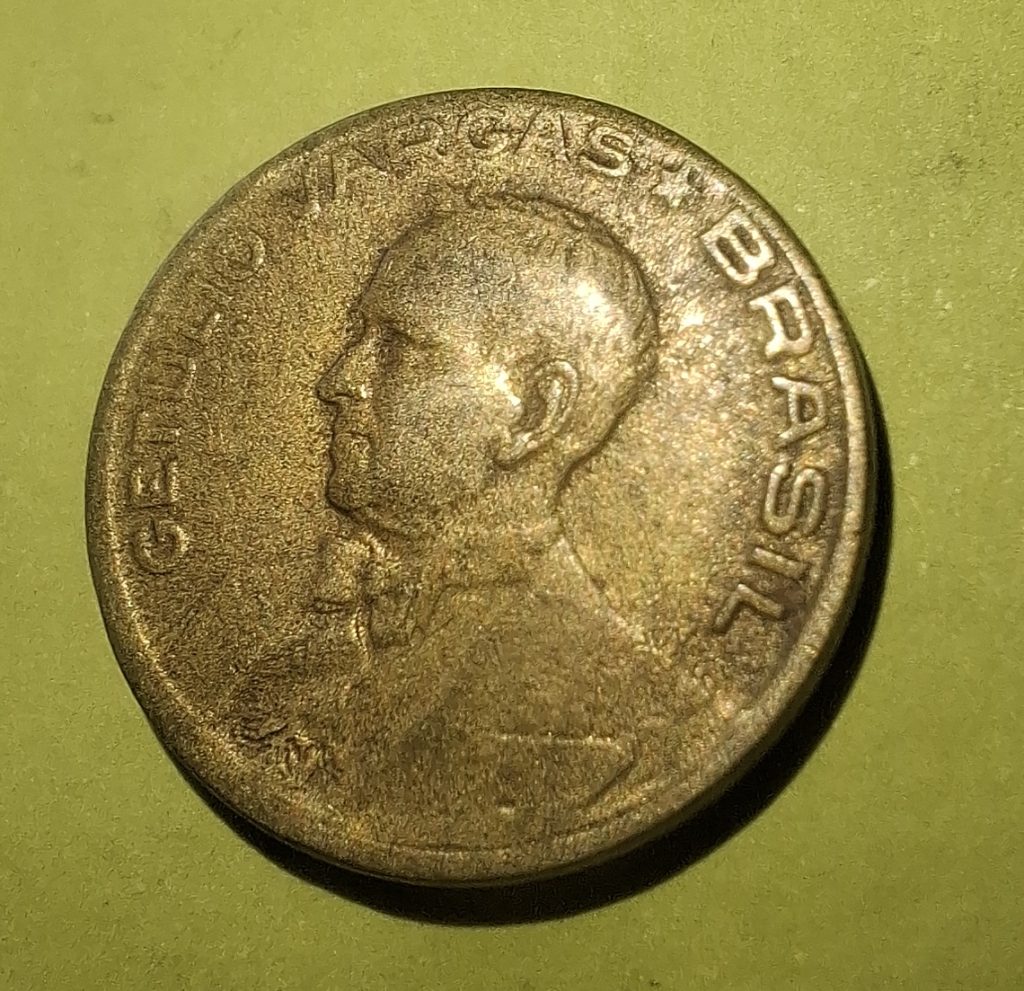
The 10 centavos coin of 1946 belongs to the first Cruzeiro period, when Brazil adopted this monetary unit after the 1942 currency reform. Its obverse features the effigy of Getúlio Dornelles Vargas, a central political figure at the time. This design started being minted during Vargas’ government and continued for several years.
In historical context, 1946 was a transitional year in Brazilian politics: Vargas had been deposed at the end of 1945, and the country was returning to a democratic regime with the new Constitution enacted that year. Therefore, the coin carries symbolism of a period of reforms and political instability.
Technical Characteristics
Key specifications of the coin:
- Composition: bronze-aluminum alloy
- Weight: approximately 2.84–3 g
- Diameter: about 17.2 mm
- Edge: smooth
- Mintage: around 35,159,000 pieces
- Catalog reference: KM #561 in numismatic catalogs
- Legal status: demonetized (no longer legal tender)
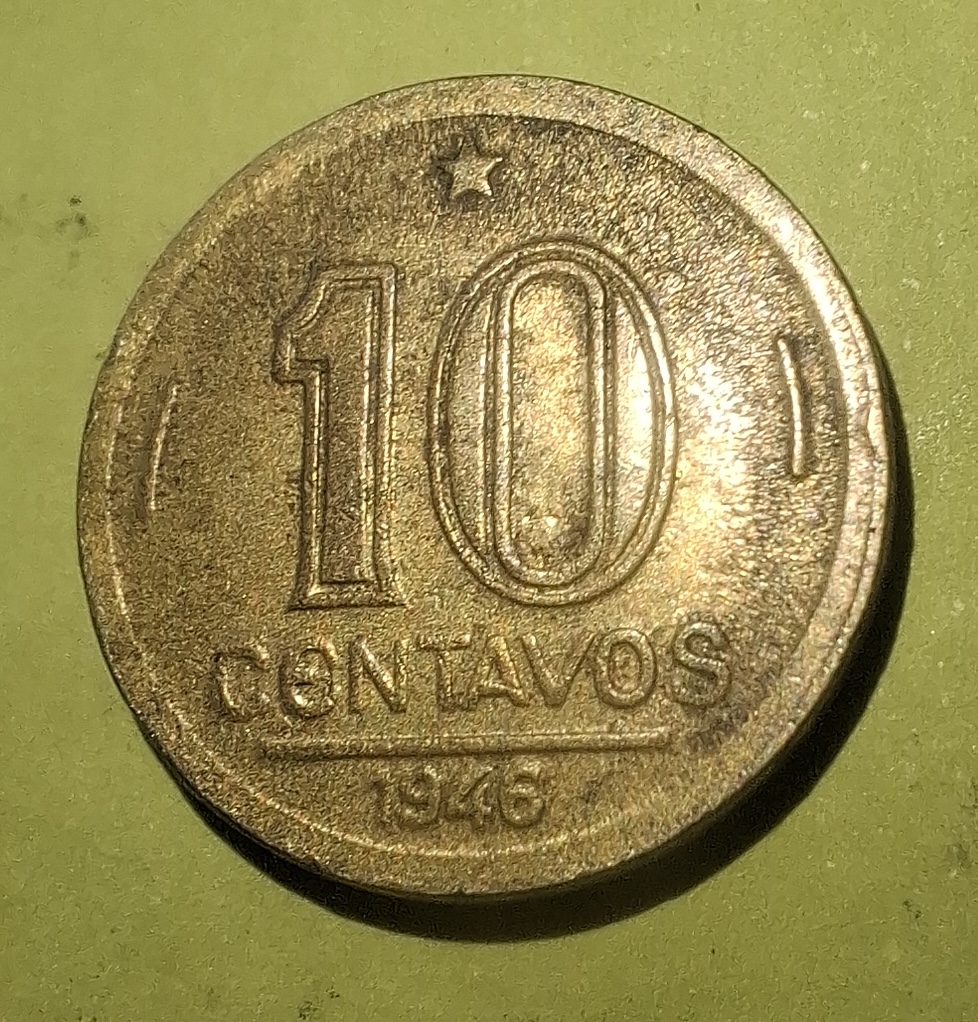
The design is simple but iconic: the obverse shows a profile portrait of Getúlio Vargas; the reverse displays the denomination (“10 CENTAVOS”), the year (1946), and a star above.
Numismatic Value
Common Coin (standard version)
- According to Numista, the value varies greatly depending on condition. Circulated coins are worth around US$0.56, while uncirculated (UNC) coins can reach US$0.95.
- The World Coins Catalog lists prices between US$0.20–1.05 depending on condition.
- In Brazilian numismatic markets, well-preserved (MBC) coins are sold for about R$4.00, while Brilliant Uncirculated (Flor de Cunho) examples can reach R$19.00.
Varieties and Rarities
Although relatively common, some varieties are highly prized:
- With engraver’s initials (“c/ sigla”)
- Rare 1946 coins carry initials of the engravers: “OM” (Orlando Mountinho Maia) on the obverse and “BR” (Benedito de Araújo Ribeiro) on the reverse.
- Cataloged as V‑182c, this variant is highly sought after.
- MBC condition coins with these initials have been offered for up to R$19,900, while some channels report values up to R$30,000, depending on preservation and authenticity.
- Minting errors
- Some coins feature a misaligned reverse, which makes them less common and slightly more valuable than regular circulated coins, though not extremely rare.
- Market value typically ranges from R$15–20, depending on error type and condition.
Importance for Collectors
- The 1946 10 centavos coin is historically significant, representing post-war Brazil with Vargas’ portrait.
- Standard coins are affordable and accessible for beginner collectors.
- Rare varieties (engraver initials or minting errors) make it a more exciting target for experienced numismatists.
- High circulation (over 35 million minted) means common coins remain plentiful, but real value lies in exceptional or rare variants.
Conclusion
In summary, the 1946 10 centavos coin is a popular numismatic item with modest value in most circulated examples. However, rare varieties such as the V‑182c with engraver initials or misaligned reverse coins can reach significantly higher prices in collector markets.
If you own one of these coins, it’s worth inspecting it closely or consulting a numismatist to check for special variants—this can make all the difference in its value.