Introduction
The 1 Dinar coin of 1938 belongs to the period of the Kingdom of Yugoslavia, issued during the reign of King Peter II. It is a common piece among collectors of Balkan coins from the pre–World War II period and is often listed in catalogs as KM#19.
Technical Specifications
- Denomination: 1 Dinar
- Year: 1938
- Catalog Reference: Krause KM#19
- Composition: Aluminum-bronze alloy (approx. 91% copper / 9% aluminum)
- Weight: ~3.5 g
- Diameter: 21 mm
- Edge: Plain
- Orientation: Coin alignment (180°)
Design and Legends
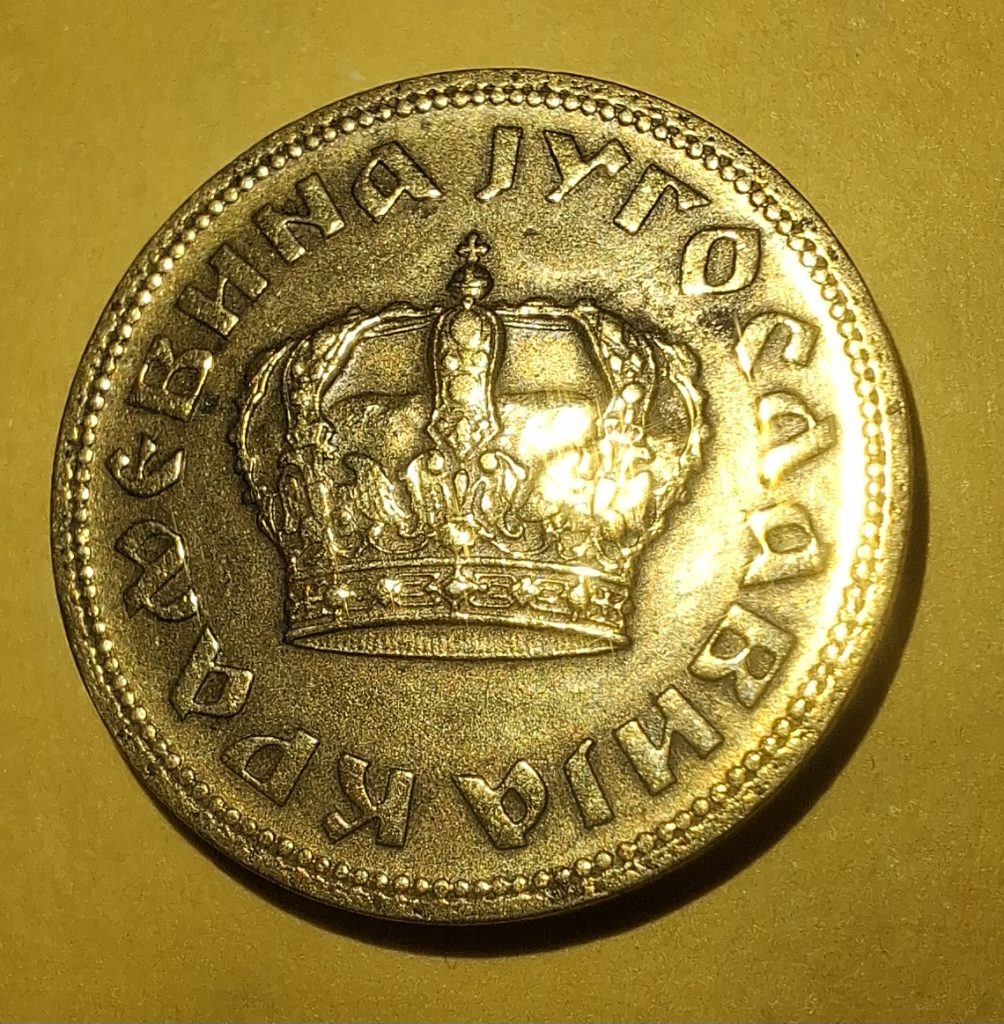
- Obverse: Displays the royal crown — symbol of the Kingdom — with the Serbian Cyrillic inscription “КРАЉЕВИНА ЈУГОСЛАВИЈА”, meaning “Kingdom of Yugoslavia.”
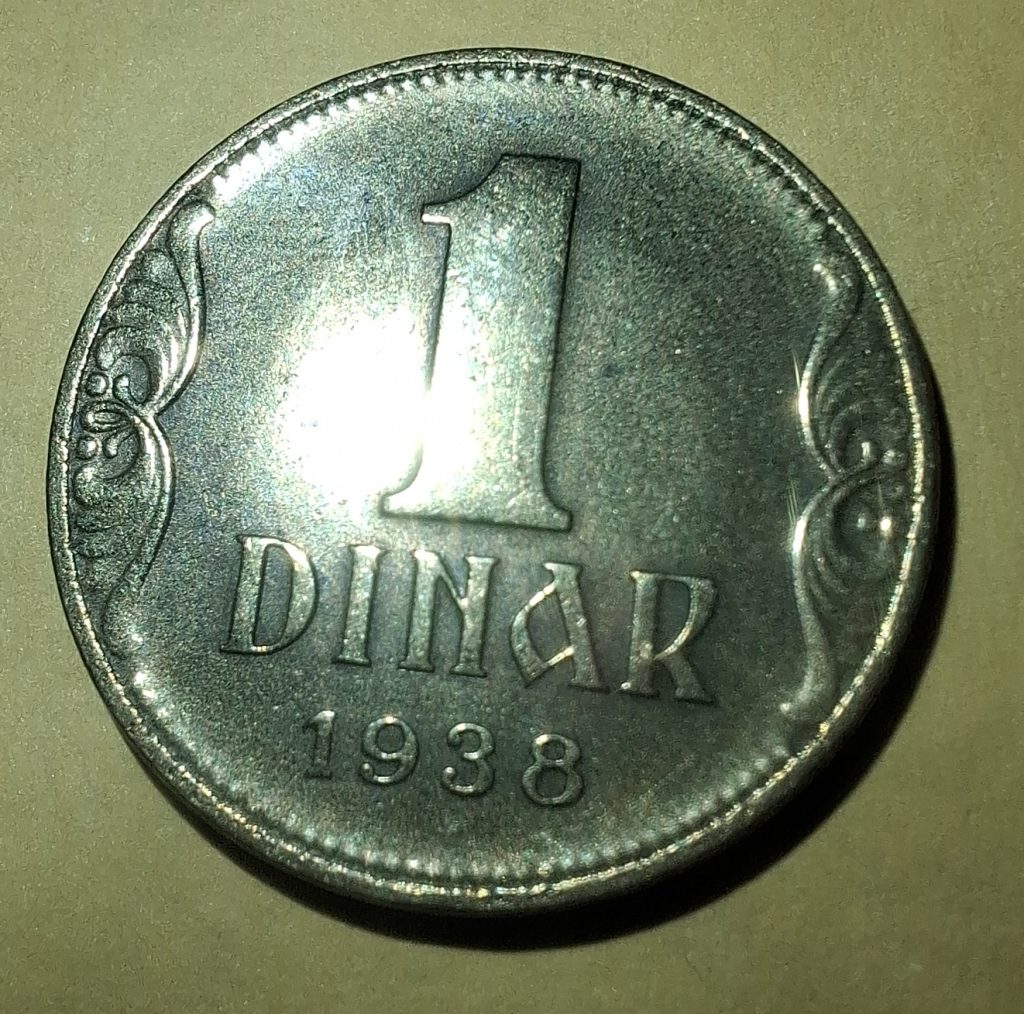
- Reverse: The face value “1 DINAR” is centered above the year “1938”. The design is sober and functional, typical of small-denomination issues of the era.
Historical Context
King Peter II ascended the throne in 1934 as a child. By the late 1930s, coins still bore monarchical symbols despite the increasingly unstable political situation in Europe. The 1938 issue was among the last large circulation mintings of the kingdom before the collapse and occupations during World War II.
Mintage and Variants
The total mintage cited by catalogs and specialized dealers is very high — around 100 million pieces, making this coin common in circulated grades. Small numbers of proof coins and collector-quality strikes also exist. Some references note that certain batches were struck at the Monnaie de Paris (Paris Mint).
Numismatic Value (Indicative Ranges)
Note: Market prices fluctuate depending on condition, demand, and venue (auctions vs. dealers vs. online marketplaces).
- Heavily circulated (Fine–VF): Typically sell for €3–€10.
- Extra Fine (XF–AU): Around €8–€25, depending on patina and whether the coin has been cleaned.
- Uncirculated (UNC / Mint State): Certified high-grade examples (MS63–MS66) can sell from €30–€150+; MS67 or proof-like pieces may reach higher prices.
- Proofs and rarities: Significantly higher, evaluated case by case.
Sources include NGC and NumisMaster guides, eBay and CoinArchives listings, and results from specialized auction houses.
Authenticity and Grading Tips
- Weight and diameter: Check for ~3.5 g / 21 mm; large deviations may indicate a fake or an error coin.
- Metal color: Aluminum-bronze should appear golden-yellow, not silvery.
- Mint details: Inspect the crown and lettering for natural wear vs. harsh cleaning. Over-polished coins lose value.
- Certification: For higher-value pieces, NGC or PCGS certification increases trust and marketability.
Where to Research or Sell
- Catalogs: Numista, Krause World Coins, NGC World Coin Price Guide.
- Marketplaces: eBay, VCoins, specialized numismatic dealers, and auction archives (CoinArchives).
Conclusion — Is It Worth Collecting?
The 1938 1 Dinar is an affordable and interesting coin for those collecting coins of the Kingdom of Yugoslavia or pre-1945 Europe. Its large mintage makes it easy to find in circulated condition, but uncirculated or proof examples still attract solid premiums. For beginners, it’s a great entry-level historical coin; for investors, only top-grade or certified rarities hold significant value.