Introduction
The 1940 100 Réis coin belongs to the final period of the Brazilian “Réis” currency system, used until 1942, when it was replaced by the Cruzeiro. It was minted during the government of Getúlio Vargas, specifically during the Estado Novo period (1937–1945), a time marked by major political, economic, and social changes.
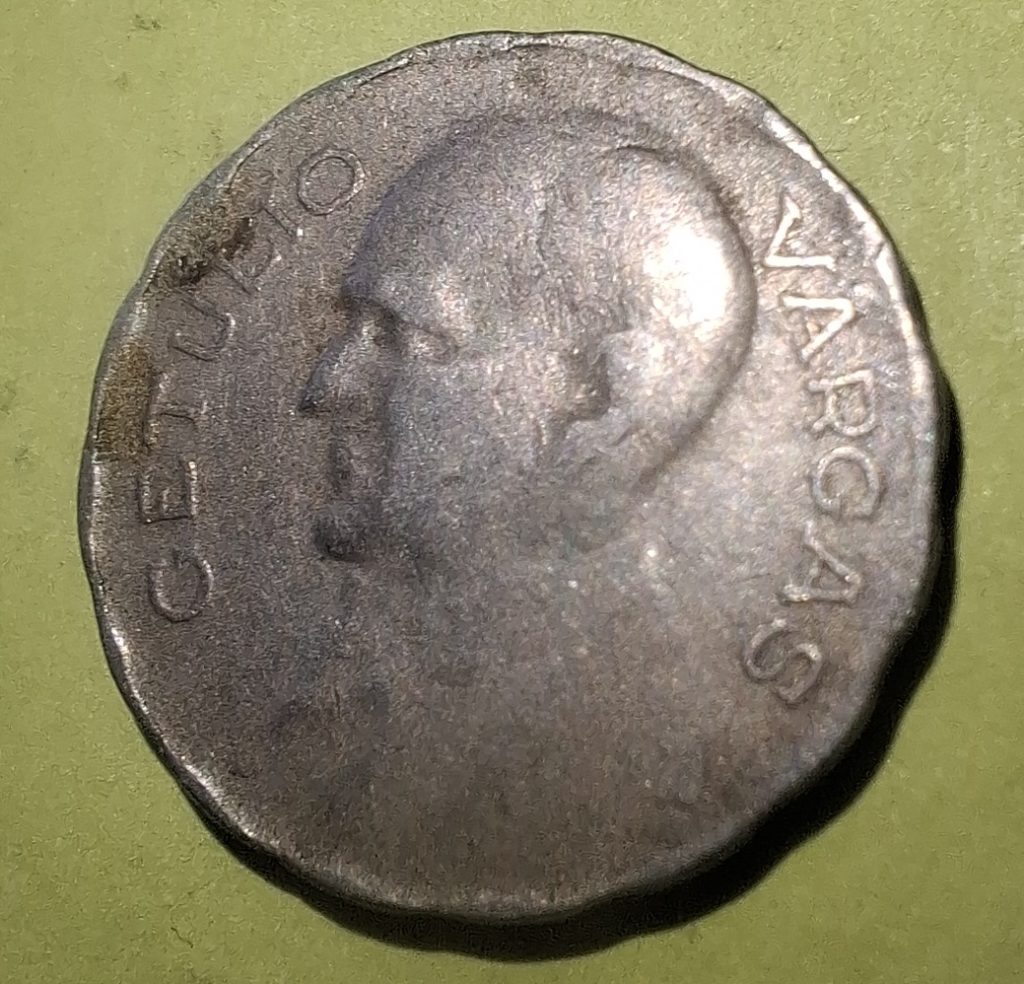
Vargas’s portrait appears on the obverse of the coin, symbolizing his central role in power and the modernization of the Brazilian state. The issuance of these coins reflects both everyday economic circulation and an attempt to reinforce presidential and institutional imagery.
Technical Specifications
Key characteristics of the 1940 100 Réis coin:
- Issuer: Republic of the United States of Brazil, under Getúlio Vargas.
- Composition: Cupro-nickel.
- Weight: About 2.50 g (some sources indicate 2.53 g).
- Diameter: Approximately 16.87 mm.
- Edge: Reeded (or wavy).
- Thickness: Around 1.4–1.5 mm.
- Minting technique: Struck, minted at the Rio de Janeiro Mint.
- Coin orientation: “↑↓” alignment.
- Engravers: Leopoldo Alves de Campos (obverse) and Orlando Moutinho Maia (reverse).
Design
- Obverse: Bust of Getúlio Vargas facing left, with the legend “GETULIO VARGAS” around the edge.
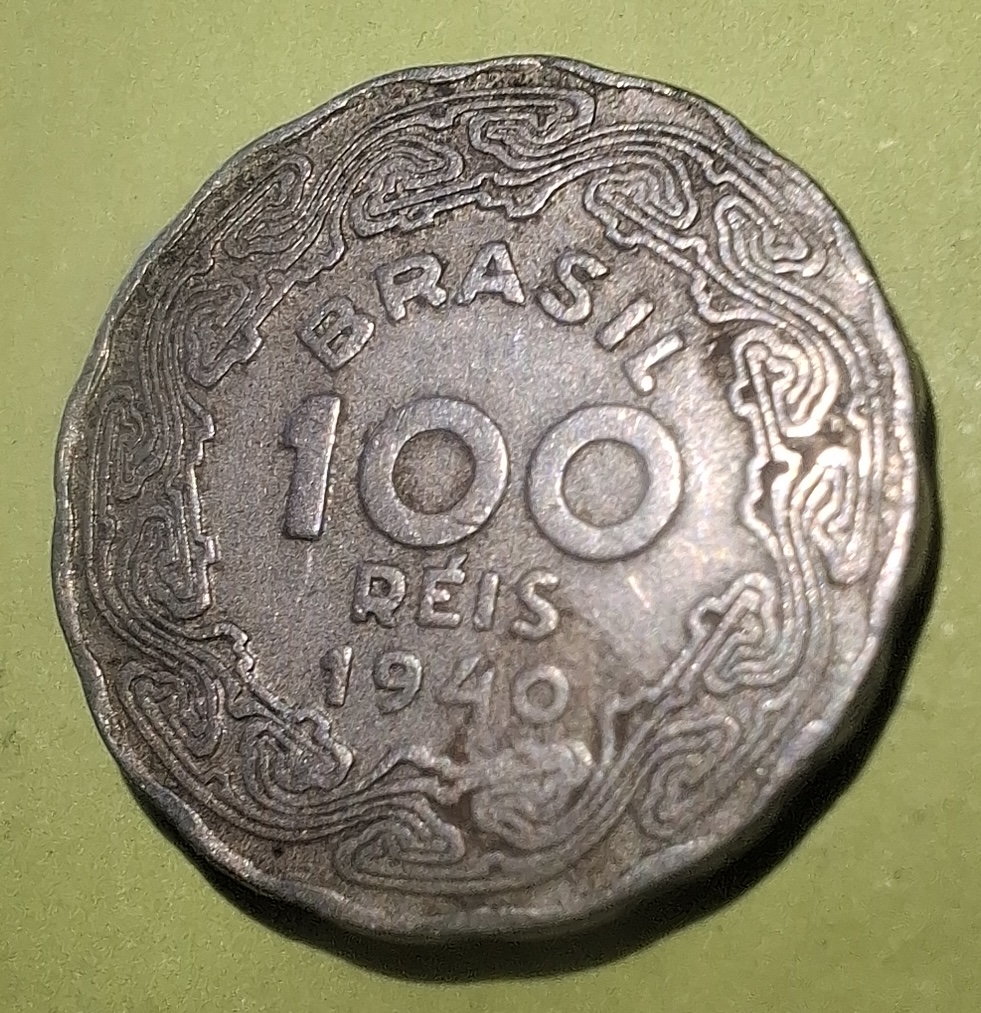
- Reverse: The inscription “BRASIL” at the top, below “100 RÉIS” and the date “1940.” The central field is surrounded by decoration inspired by Marajoara art, giving it a distinctive regional and aesthetic character.
Mintage and Variants
- In 1940, the 100 Réis coin had a mintage of 8,977,000 units.
- There are minting variants, such as differences in the reverse (horizontal reverse or double strike), which can affect collector interest.
- Some coins have minting errors, like “cut-disc” specimens, which are especially sought after by collectors of mint errors.
Monetary Context
- This coin is one of the last issues of the Réis standard, as in October 1942, Brazil adopted the Cruzeiro as its new currency.
- As a low-denomination coin (100 Réis), many circulated heavily, which explains the abundance of circulated examples today.
Numismatic Value
Price Range
- According to Numista, market value varies greatly depending on the coin’s condition. Circulated coins are around US$ 0.28, while uncirculated or mint state (MS) coins can reach approximately US$ 2.10.
- In the Brazilian market, a coin in Very Fine (VF) condition may sell for around R$ 30.
- Coins in Extremely Fine/Mint State (XF/MS) condition can go up to roughly R$ 55.
- Variants, like double-struck coins, may have higher or different prices.
Rarity and Collectibility
- The 1940 100 Réis coin is not particularly rare, with a mintage of nearly 9 million, making it common in many collections.
- However, its historical value (representing Vargas and the end of the Réis) and aesthetic appeal (Marajoara decoration) attract beginner and intermediate collectors.
- Well-preserved coins (AU, UNC, MS) are more valuable because minimal wear enhances visual appeal and numismatic importance.
Final Thoughts
The 1940 100 Réis coin is an excellent example of a transitional piece in Brazilian monetary history—it symbolizes the end of a currency system (the Réis) and the symbolic modernization during the Vargas era. While not extremely rare, its collectible value is accessible to many enthusiasts, especially in intermediate conditions. It is a great coin for those starting to collect Brazilian Réis coins and also appeals to more advanced collectors, particularly if it has variants or exceptional condition.