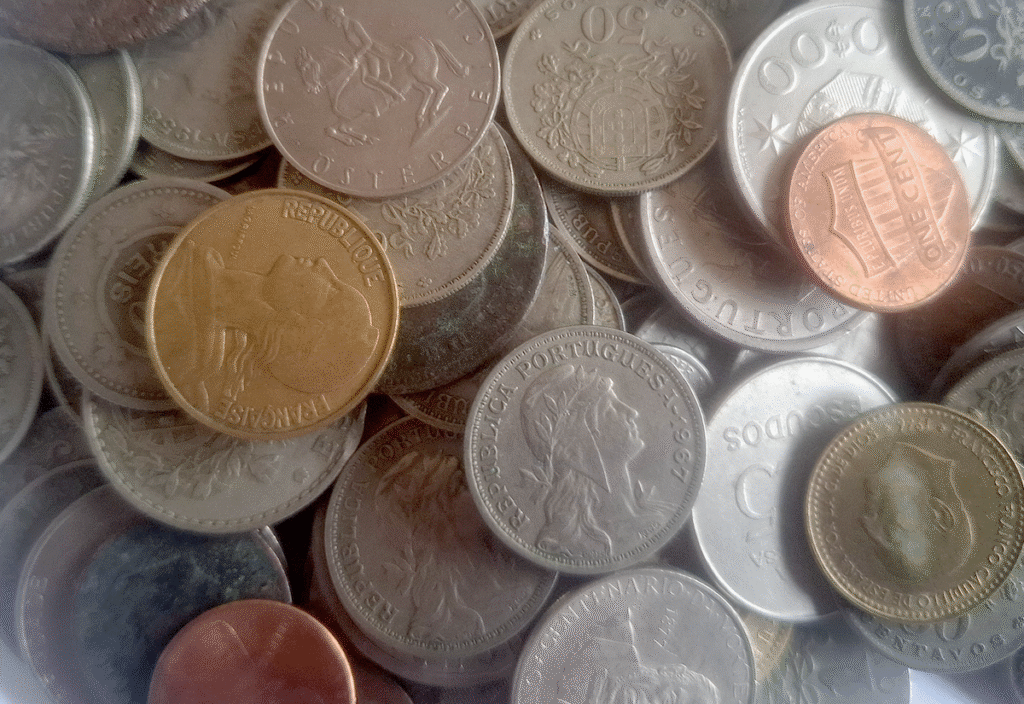
Below is a step-by-step, practical guide you can use as a checklist whenever you have a coin in hand.
1. Initial Observation (Condition and Context)
- Examine the coin visually — note its wear, color, and dirt.
- Record the approximate diameter (using a ruler) and take a clear photo of both sides.
- Look for obvious signs of forgery: irregular edges, visible seams between layers, or a weight that feels very different from what’s expected.
Why start here?
The overall condition and first impressions help determine what tests to apply next — there’s no point in performing complex analyses on a heavily corroded coin.
2. Metal and Appearance (Alloy, Color, Patina)
- Observe the color:
- Reddish/orange tones → copper/bronze
- Grayish tones → silver or nickel
- Golden shine → gold or brass
- Check for patina (oxidation layer): natural patinas (olive-green on bronze, brownish tones on silver) indicate age when consistent.
- Perform a density test (if possible): weigh the coin and, knowing its approximate volume, compare the density to reference values — this helps distinguish real silver from lighter imitations.
Practical tip:
Never clean the coin with harsh methods — cleaning can destroy patina and lower its value.
3. Weight (Accurate Measurement)
- Use a precision scale (0.01 g if possible).
- Weigh the coin several times and record the average.
- Compare this weight with catalog or database references for the type and period. Deviations from the expected may indicate:
- Metal loss (corrosion or wear)
- Different minting variant
- Forgery (lighter metal or altered core)
How to use weight in identification:
Weight, combined with diameter and thickness, drastically narrows possibilities — a coin with correct design but very low density should be investigated further.
4. Inscriptions (Legends, Date, and Keywords)
- Carefully read the legends around each face (look for terms like REI, REI DE PORTUGAL, names of monarchs, dates).
- Note abbreviations or missing letters (many old coins use Latin abbreviations).
- Look for a date — not all coins have one; sometimes the reign is indicated only by the monarch’s name.
How to interpret inscriptions:
Identify the monarch or main legend and search that phrase in catalogs (e.g., “João V,” “Manuel I,” “D. Sebastião”) to find corresponding coin types.
5. Coat of Arms and Symbols (Heraldry and Icons)
- Observe the coat of arms: shield with quinas, castles, crown — heraldic details help determine the date and attribution.
- Identify common symbols: crosses, armillary spheres, globes, hands, characters, or animals — each element can indicate a specific period or mint.
- Note their position (obverse/reverse), relief quality, and symmetry.
Connection between heraldry and chronology:
Changes in the coat of arms (e.g., inclusion of Brazil, armillary sphere, crown style) mark specific historical moments — heraldic catalogs can help trace these evolutions.
6. Edge, Dies, and Mint Marks
- Examine the edge: reeded, smooth, or inscribed.
- Look for mint marks (small symbols or letters identifying the mint).
- Check for minting errors — misalignments, double strikes, or blanks can increase value or collector interest depending on the type.
7. Compare with References (Catalogs and Databases)
- Use printed or online catalogs specializing in Portuguese numismatics.
- Search by combination: metal + approximate weight + inscription + coat of arms.
- Confirm variants (the same reign may have multiple types and weights).
Useful online tools:
Museum databases, past auction records, numismatic forums, and online catalogs are excellent sources for image and description comparison.
8. Simple Complementary Tests
- Magnetic test: silver and gold coins are non-magnetic; if attracted by a magnet, suspect a modern alloy.
- Sound test: silver and copper coins produce distinct tones when gently tapped — useful as a supporting, not conclusive, method.
- Magnifying inspection: use a loupe or microscope to see fine details of minting and wear.
Recommended Tools
- Loupe / USB microscope — for details of inscriptions, mint marks, and patina.
- Digital precision scale (0.01 g) — for accurate weight measurement.
- Caliper or ruler (mm) — for diameter and thickness.
- Small magnets — for quick metal testing.
- Online catalogs & databases — specialized in Portuguese numismatics, auction records, and museum collections.
- Numismatic terminology guide — to understand abbreviations and terms.
- Cotton gloves — to handle coins without transferring oils from your hands.
- Notebook or app — to record photos, measurements, and observations.
Common Mistakes to Avoid
- Aggressively cleaning the coin to “improve” its look.
- Relying only on appearance without weighing or comparing.
- Accepting an identification based on just one feature (e.g., only the coat of arms).
- Buying without a certificate or provenance, especially for valuable pieces.
Practical Summary for Beginner Collectors
- Start with observation — photo, diameter, and weight.
- Record everything: apparent metal, color, patina, inscriptions, and symbols.
- Use tools: loupe for details, scale for weight, catalogs for comparison.
- Compare: combine metal + weight + legend + coat of arms with trusted references.
- Be cautious: if a simple test (magnet, density) doesn’t match, investigate further.
- Don’t clean or make purchase decisions without consulting a reliable reference or expert for valuable pieces.
- Learn by example: keep each identification with photos and sources — you’ll build a personal mini-catalog that makes future identifications easier.
Good luck starting your collection!
Practice this method with various coins — over time, you’ll quickly recognize styles, weights, and legends with greater ease.