Historical Context
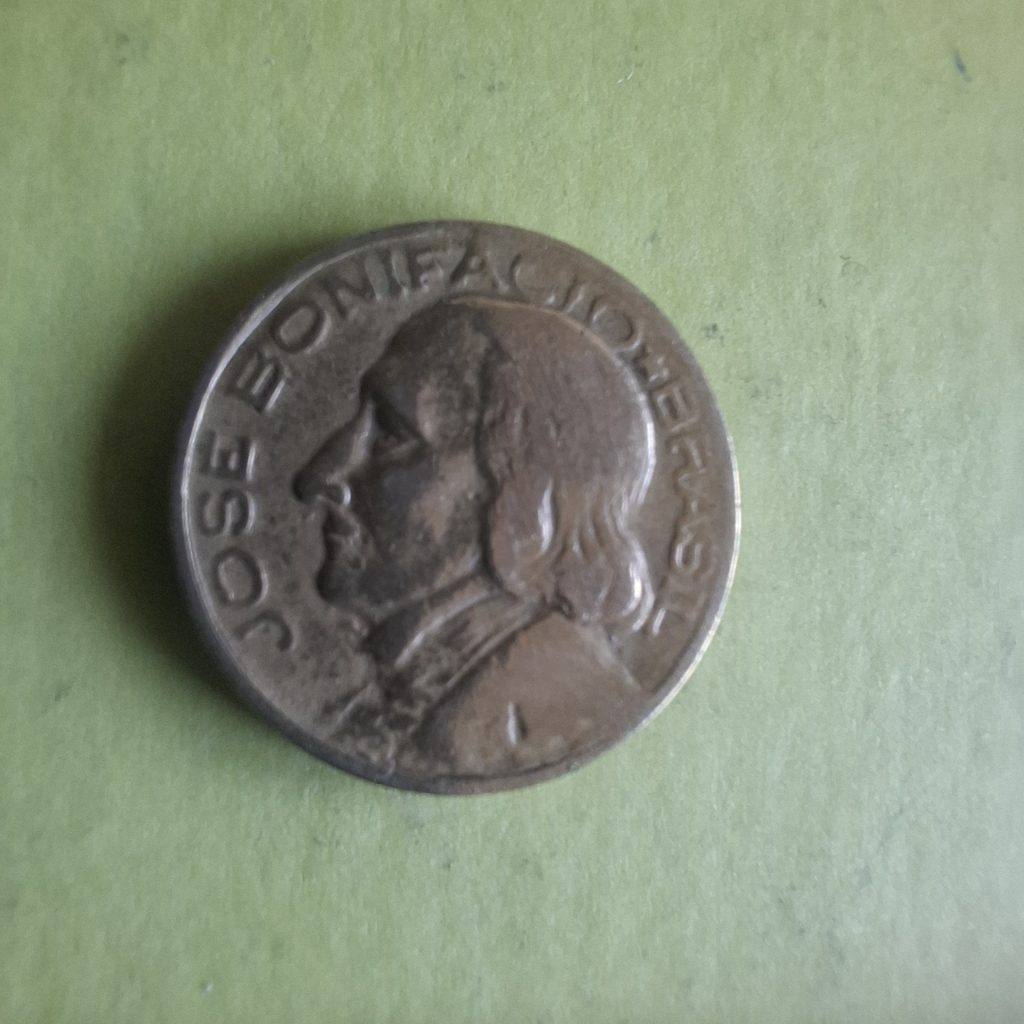
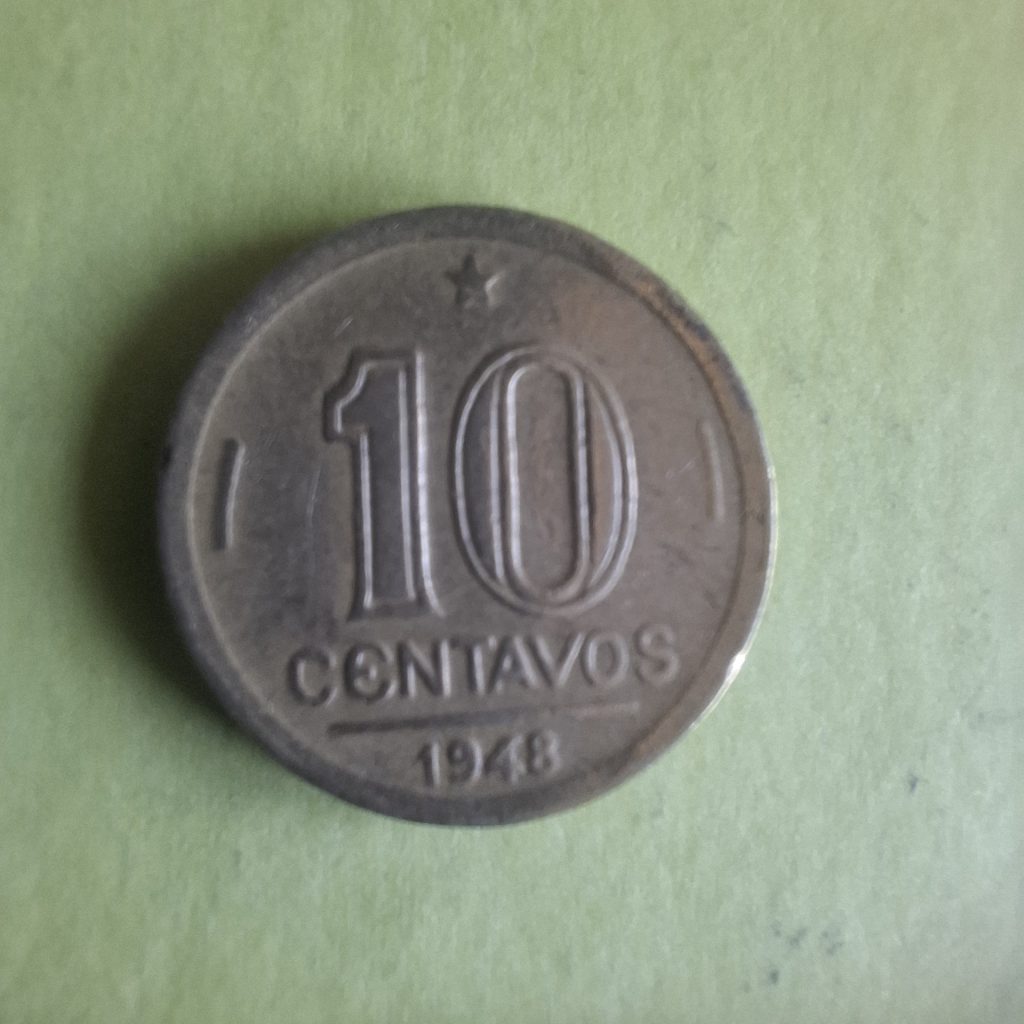
The 10 centavos coin is part of the Cruzeiro currency system, adopted in Brazil in the 1940s. The type featuring the portrait of José Bonifácio de Andrada e Silva was minted between 1947 and the mid-1950s and circulated widely. José Bonifácio, a central figure in Brazil’s independence, appears on the obverse, while the reverse shows the denomination “10 / CENTAVOS” with a line and the year below, and a star above.
Technical Specifications
- Denomination: 10 centavos (0.10 BRZ) — Cruzeiro
- Year: 1948
- Composition: bronze-aluminum alloy (approx. 90% copper, 8% aluminum, 2% zinc)
- Weight: ~2.96 g
- Diameter: 17.04 mm
- Thickness: ~1.86 mm
- Edge: smooth
- Mint: Casa da Moeda do Brasil (Rio de Janeiro)
These measurements and composition are consistent with collector catalogs and references.
Mintage
The 1948 mintage is reported at approximately 45,041,000 pieces, making the coin relatively common in circulated condition.
Design — What to Look For
- Obverse: portrait of José Bonifácio with legend “JOSÉ BONIFÁCIO * BRASIL”
- Reverse: denomination in numerals and “CENTAVOS” over a line; above the line, a small star; below, the year.
Details such as relief depth, sharpness of the date, and lines on the face are important for evaluating condition and detecting varieties.
Known Varieties and Common Errors
Collectors report certain varieties/errors for this series that can affect value:
- Die cracks / broken dies: radial or fractured marks on the relief caused by worn dies.
- Weak strikes: some later issues show shallow relief.
- Axis marks or unusual striations: rare production errors that can be more valuable if verified.
Rare errors or distinct varieties may significantly increase a coin’s value.
Numismatic Value — Indicative Prices
Value depends heavily on condition (grading: G, VG, F, VF, XF, UNC/FDC) and the presence of errors/varieties. Approximate ranges based on current catalogs and listings (2025):
- Circulated common (G–VG): usually a few Brazilian reais (R$2–R$20).
- Fine to Very Fine (F–VF): better preserved coins typically R$10–R$40.
- Almost uncirculated / Uncirculated (UNC / FDC): coins with original mint luster can reach higher prices; exceptional pieces certified by grading services may be worth more.
- Rare errors/varieties: certain die cracks or unusual strikes can fetch hundreds of reais in exceptional cases.
Note: these ranges are indicative — the market varies depending on sales channel, certification, and collector interest.
Evaluating Condition — Quick Guide
- G / VG (Good / Very Good): worn portrait and lettering, date readable.
- F / VF (Fine / Very Fine): many details preserved, minor wear on high points.
- XF (Extremely Fine): clear details, minimal wear, partial original luster.
- UNC / FDC (Uncirculated / Mint State): no circulation signs, original shine, minor contact marks; FDC (Flor de Cunho) is the top grade.
Coins with scratches, corrosion, or amateur cleaning lose value. Cleaning is generally discouraged.
Practical Tips for Collectors and Sellers
- Identify the coin carefully: check year, obverse/reverse details, compare with catalog references.
- Avoid cleaning: amateur cleaning can ruin patina and reduce value.
- Look for varieties: die cracks and unusual errors can increase value; document with photos.
- Compare recent sales: check marketplaces, auctions, and numismatic stores for actual sale prices.
- Consider certification: rare or valuable coins benefit from grading for authenticity and price.
- Where to buy/sell: numismatic shops, coin fairs, specialized auctions, and online marketplaces — each with different costs and audience.
Conclusion
The 1948 10 centavos coin is generally common in terms of mintage (tens of millions), but it remains of interest to collectors for its historical design, potential varieties, and role in the mid-20th-century Cruzeiro period. Most circulated coins have modest value, making it ideal for beginner collectors, while uncirculated coins or those with rare errors can fetch higher prices. Before buying or selling, always check recent sales, compare conditions, and consider professional evaluation.