Introduction
The 1927 1000 Réis coin from Brazil is a representative piece of the period known as the First Brazilian Republic (1889–1930). Produced for regular circulation, it belongs to the popular Fortuna Series, characterized by its symbolic design and use of more affordable metals, reflecting the economic and social context of the time.
Physical Details and Design
Technical Specifications:
- Denomination: 1000 Réis
- Year: 1927
- Composition: bronze-aluminum — a mix of copper (~91 %) and aluminum (~9 %)
- Weight: around 8 grams
- Diameter: ~27.0 mm (commonly listed as 26.8 mm)
- Thickness: ~2.1 mm
- Edge: reeded (serrated)
Art and Symbolism:
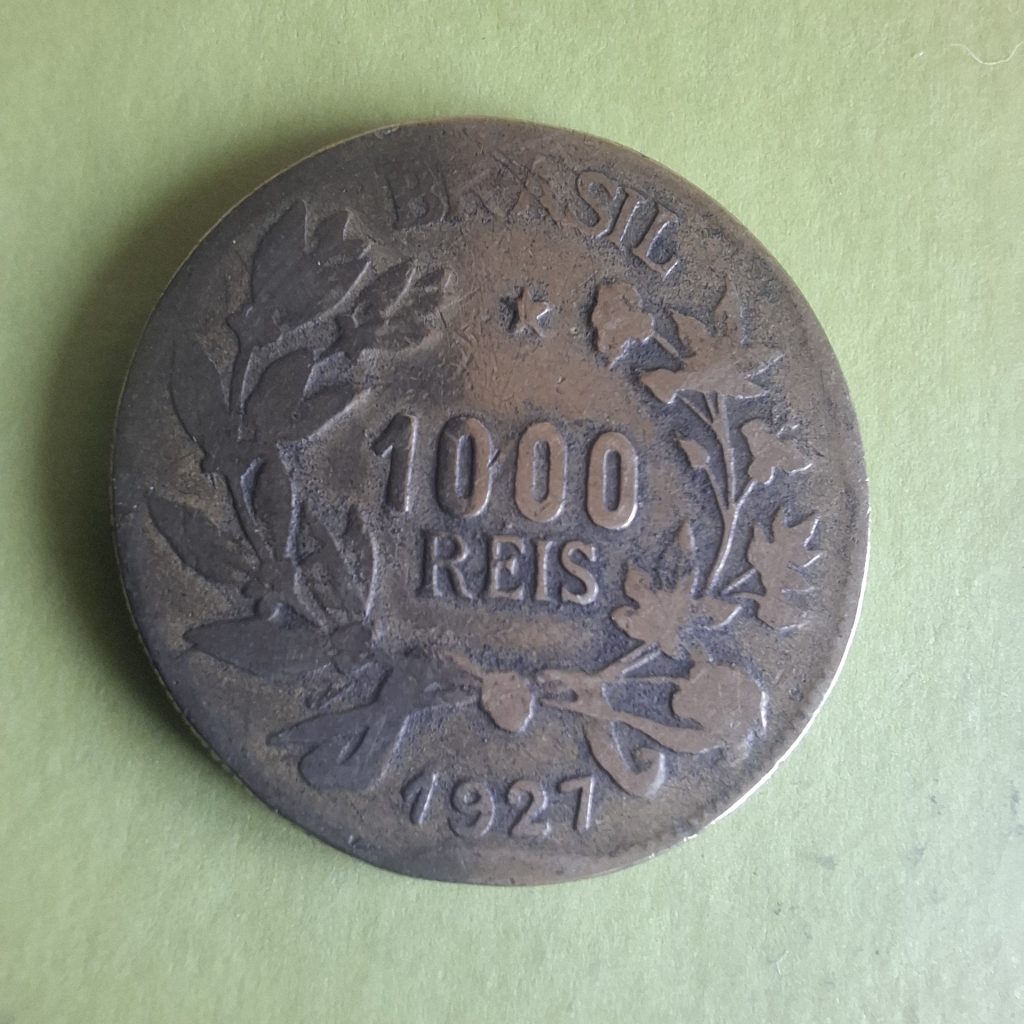
- Obverse: features the value “1000 RÉIS” between coffee and cotton branches — key agricultural products of Brazil at the time — with a star above and the inscription “BRASIL” at the top. The year “1927” appears at the bottom.
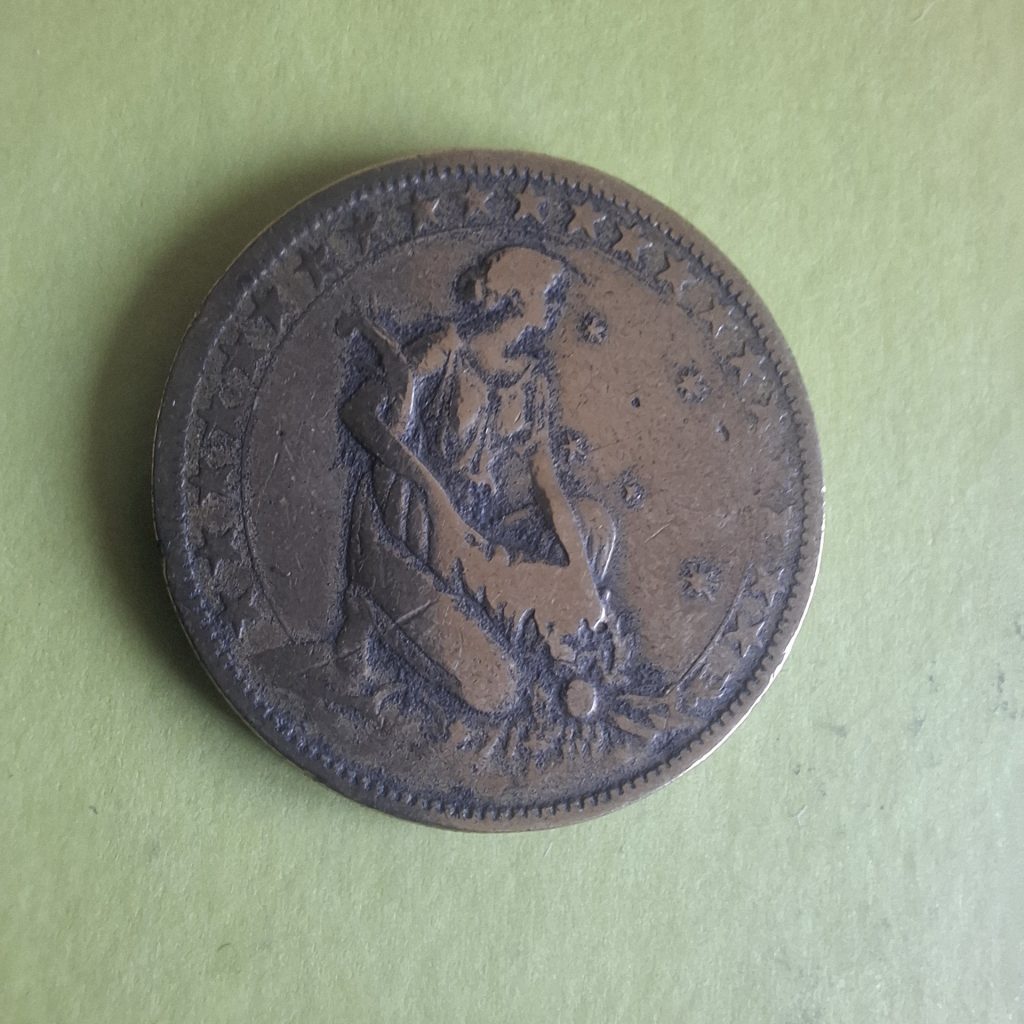
- Reverse: depicts the allegorical figure of “Abundance” — a kneeling woman holding a cornucopia (symbol of prosperity) alongside the Southern Cross constellation. Around the design, 21 stars represent the federation states at the time.
- The design was created by engraver João da Cruz Vargas.
This artistic style, with allegorical figures and national symbols, reflected republican ideals of progress, abundance, and national identity, as well as the importance of agriculture to Brazil’s economy at the time.
Production and Circulation
- Approximately 35,817,000 coins were minted in 1927.
- The coin was part of regular circulation in the monetary system of the era (the “old real” or “Réis,” used from colonial times until the currency change in 1942).
- Despite the high mintage, many coins were lost, worn out, or melted down over the years, giving it historical and numismatic value for collectors today.
Numismatic Value — How Much is a 1927 1000 Réis Coin Worth?
The market value of a 1927 1000 Réis coin depends heavily on its condition (wear, scratches, cleaning, original patina, shine, etc.) and any minting variants (sometimes rare, such as “inverted reverse” or “dot on elbow”).
Some reference price ranges:
- In circulated condition (Fine), the coin may be valued around US$ 0.77.
- In Brazilian auctions or coin shops, common specimens typically sell between R$ 4.00 and R$ 8.00, depending on condition.
- Coins in very fine or superb condition (almost uncirculated, sharp details, no harsh cleaning) can fetch higher prices, though these vary with market demand.
- Heavily worn or aggressively cleaned coins usually have low collector value.
Note: Prices often come from collector sales or catalogs, and actual market value may vary depending on the buyer, conservation, rarity, and whether the coin is certified.
Historical and Numismatic Importance
- The 1927 1000 Réis coin is a symbol of Brazil’s economy and society in the 1920s, highlighting agricultural production (coffee and cotton). The figure of “Abundance” reinforces the image of prosperity and hope for growth.
- It represents a transitional period in Brazilian coin design — the “Fortuna Series” replaced earlier coins made from more expensive metals, reflecting economic changes and the need for widely circulated coins.
- From a numismatic perspective, it is easily identifiable, with multiple variants and a large mintage, making it popular among beginner and intermediate collectors. While not extremely rare in good condition, it holds historical interest.
- For collectors of Brazilian monetary history, the coin has value not just as a collectible, but as a tangible artifact of an agricultural, republican Brazil in the early 20th century.
Conclusion
The 1927 1000 Réis coin is a landmark of Brazilian numismatics during the First Republic, combining history, symbolic art, and monetary utility. Despite its large mintage, it now represents a tangible link to Brazil in the 1920s. Depending on condition, it can still hold collector value. If you own one, it’s worth preserving carefully (avoiding harsh cleaning) and, if possible, getting a professional evaluation to determine its historical and market value.