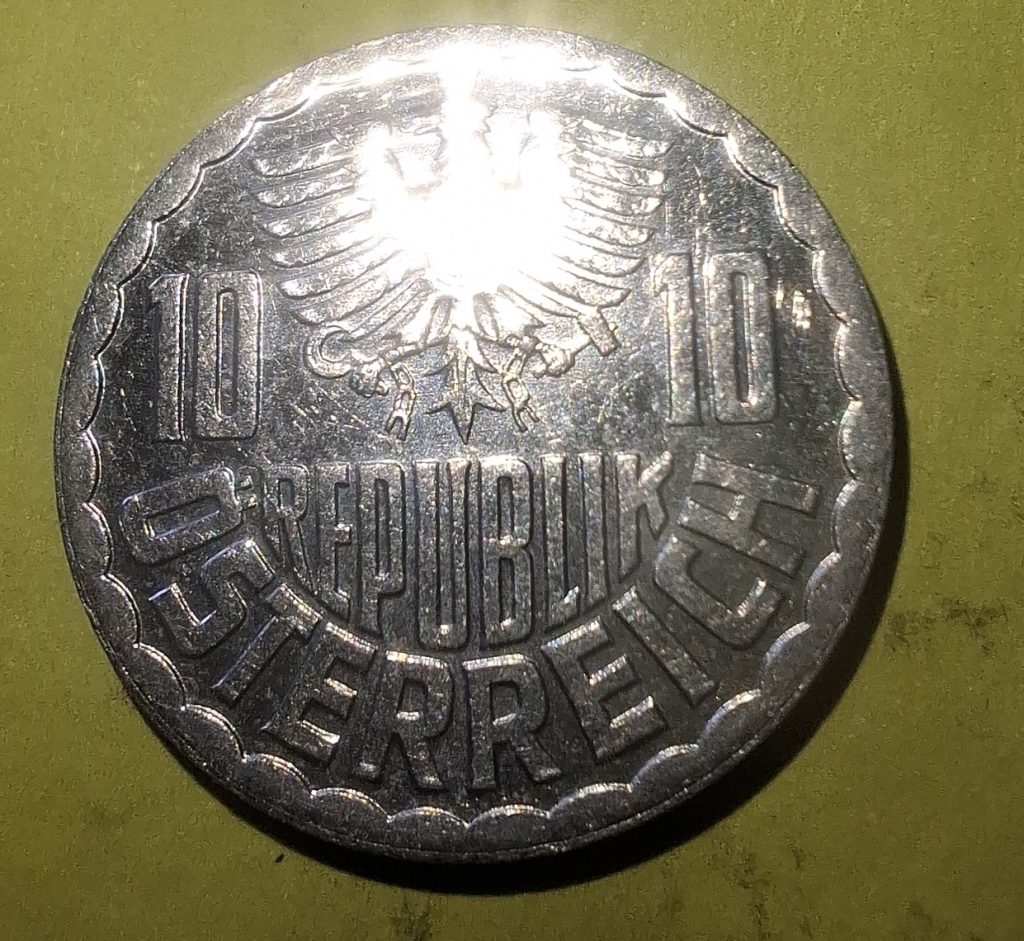
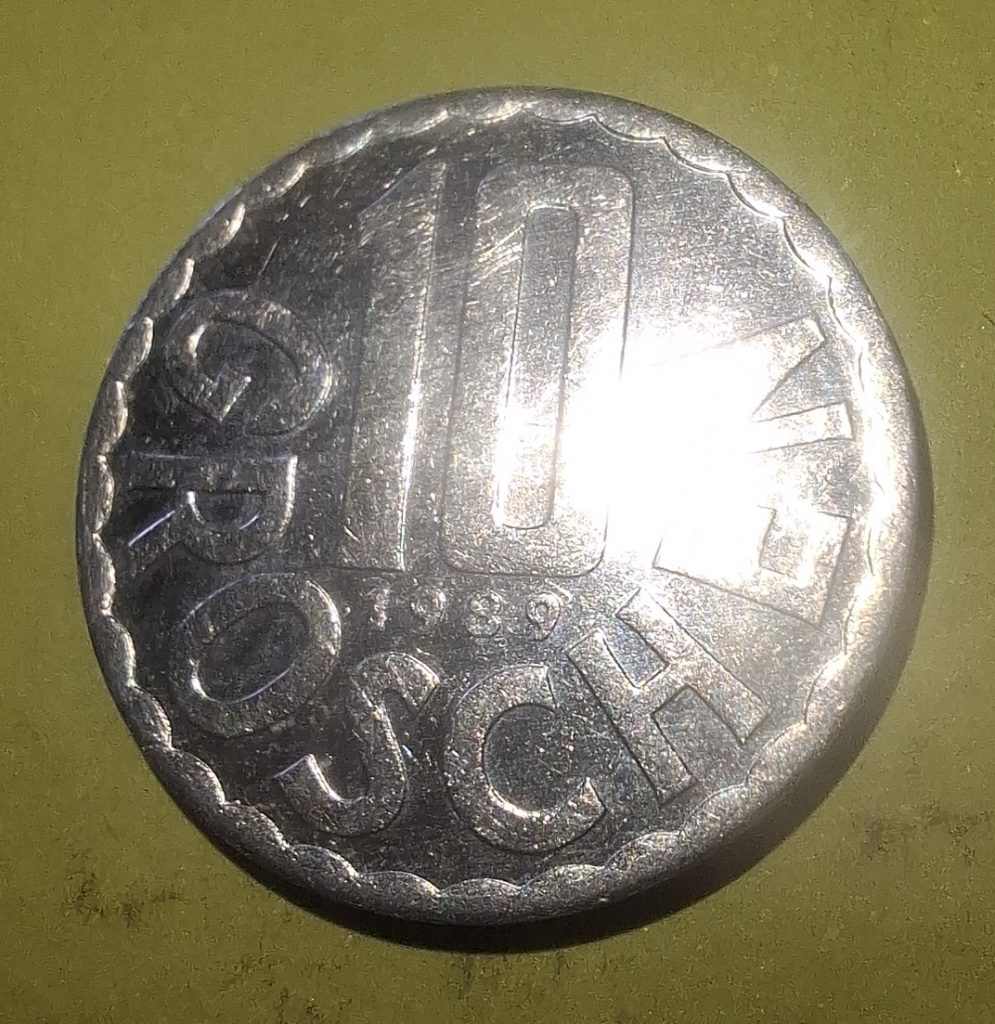
The 10 Groschen coin from 1989 is part of the circulation series of the Second Austrian Republic (Austrian Schilling) and is a common item among collectors of 20th-century European coins. Below is detailed information about its specifications, design, historical mintage, and practical numismatic value today.
Technical Specifications
- Denomination: 10 Groschen (0.10 Schilling)
- Year: 1989
- Metal: Aluminum (mostly Al)
- Weight: ~1.10 g
- Diameter: 20.0 mm
- Thickness: ~1.5 mm
- Edge: Plain
- Orientation: Medal alignment
These specifications are recorded in numismatic catalogs and price guides.
Design and Designer
- Obverse (front with coat of arms): Features the Austrian heraldic eagle with the shield on its chest; the legend REPUBLIK ÖSTERREICH and the denomination are inscribed around the edge.
- Reverse: Displays a large “10” above the word GROSCHEN and the year (1989), with a characteristic border motif of the series.
- Designer/Engraver: Hans Köttenstorfer is credited for this modern coin design.
Mintage and Production
The 1989 10 Groschen coin had a high mintage for circulation — catalogs report around 127.7 million pieces minted in Vienna (figures may vary slightly by source). There are also proof coins with much smaller mintage (tens of thousands).
Historical Context and Usage
Groschen were subdivisions of the Schilling (100 Groschen = 1 Schilling). Aluminum coins like the 10 Groschen were produced over decades for everyday use, so most units survived in circulation until the euro replaced the Schilling in 2002. Therefore, these coins are common in collections and coin lots from European countries.
Condition and Variants
Being a low-denomination circulation coin, most surviving 1989 coins show wear. UNC / BU (uncirculated / brilliant uncirculated) or MS (mint state) coins are rarer and more valuable. Proof coins are particularly sought after. There are no major minting variations for 1989 other than normal wear and condition differences.
Numismatic Value — What to Expect
- Common circulated coins: modest value — typically a few euros or less (often below €2 for worn examples).
- High-grade UNC/MS coins: higher value but still relatively inexpensive; catalog references place them from €0.50 up to a few euros, depending on market and condition.
- Proofs and exceptional coins: Proof coins from 1989 have higher collector interest; their limited mintage makes them more valuable than circulation coins.
Factors Affecting Price
- Condition (grade): most important — sharp details, original luster, and no scratches increase value.
- Rarity of variant: proofs or mint errors (if any) command higher prices.
- Collector demand: collectors prefer complete series; single circulated coins have less appeal.
- Seller source: reputable auction houses often achieve higher prices than general online marketplaces.
Recommendations for Collectors or Sellers
- Selling: photograph both sides, indicate the coin’s condition, and check comparable auction or shop prices.
- Buying: choose coins with clear photos and reputable sellers; request certification for UNC/MS or proof coins.
- Storage: keep in capsules or coin holders free of PVC, avoid touching with bare hands (use gloves), and store in a dry, stable environment.